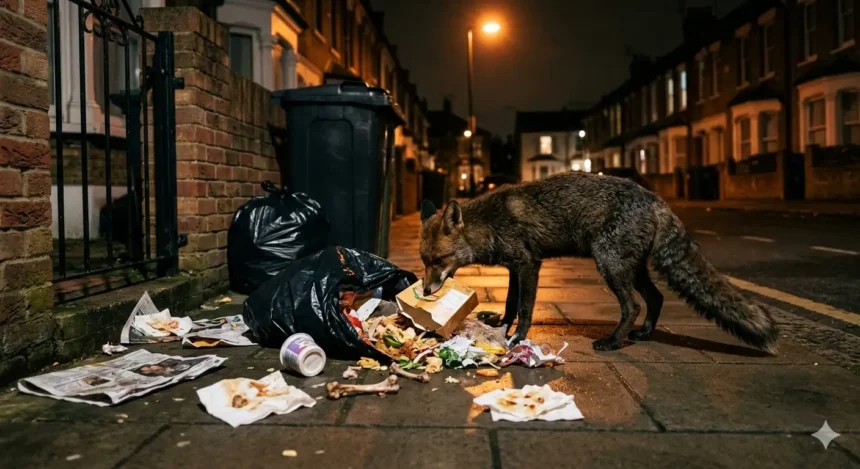
Foxes tear bin bags because they smell food and find it easy to rip thin plastic. The quickest solution is to keep all rubbish in lidded bins or secure containers and only put bags out shortly before collection. In most of North London, councils will not control foxes, so the focus is on securing waste, working with neighbours, and reporting persistent mess through the relevant street cleansing or environmental health services.
Why this issue matters to local residents
Foxes tearing open bin bags leaves food and packaging scattered across pavements, front gardens, and communal areas, which looks unsightly and can quickly become a hygiene issue. It can attract rats, mice, and other pests, especially where food waste is left out regularly.
For many homes in Brent, Barnet, Enfield, Camden, Haringey, and Islington, there is limited storage space for wheelie bins, so households rely on sacks collected from the kerbside. When foxes get into these sacks, the mess can block pavements, upset neighbours, and create extra work for local residents who end up having to clean up the street themselves. It can also lead to complaints to the North London council covering the area, and in some cases to warnings about incorrect waste presentation.

Step-by-step actions to solve the problem
Follow these steps to reduce or stop foxes tearing up bin bags in London:
- Contain all rubbish securely
- Use council-issued wheelie bins or food caddies wherever they are provided.
- Make sure bin lids and caddy locks are fully closed and not overfilled.
- Where only sacks are used, place bags inside a rigid container (storage box, dustbin, or shared bin store) if you have space.
- Time your waste presentation
- Put bin bags out as close as possible to the collection time, not the night before if foxes are a regular problem.
- If you must put bags out overnight, keep them off the ground where possible, such as in a lidded bin or inside a communal store.
- Reduce smells that attract foxes
- Double-bag any strong-smelling waste such as meat, fish, or nappies.
- Wrap food scraps in newspaper or compostable liners before putting them into sacks.
- Rinse food containers briefly before recycling so less odour attracts foxes.
- Physically protect loose sacks
- Use heavy-duty sacks rather than thin supermarket-style bags.
- Place sacks in a robust container or under a close-fitting lid weighted with a brick or bungee strap.
- In flats with shared frontages, agree a single spot where secure bins or boxes are kept so foxes cannot drag bags apart.
- Remove other attractants
- Do not leave pet food, bird feed, or uncovered compost outside overnight.
- Clear up any spilt food or takeaways from steps and front gardens as soon as possible.
- Work with neighbours
- Speak to neighbours whose bags are regularly left open or ripped, and suggest simple steps such as using bins, not leaving food in loose sacks, and putting rubbish out later.
- If there is a shared bin area, agree basic rules on how to stack sacks so lids close properly.
These practical measures usually solve the problem without needing any form of pest control and are in line with North London council advice to secure waste at source.
Which council service handles it
Foxes themselves are generally not controlled by Brent, Barnet, Enfield, Camden, Haringey, or Islington councils, because they are considered part of urban wildlife and not a statutory pest in the same way as rats. Councils usually focus on the waste and cleanliness issues instead.
Depending on the borough and the exact problem, you will normally deal with:
- Waste and recycling services: for missed collections, extra bins, food caddies, or guidance on how to present waste.
- Street cleansing or environmental services: to report bin bags that have been ripped open and rubbish spread over the street.
- Environmental health / nuisance teams: if a neighbour’s ongoing waste habits are causing persistent mess, odours, or vermin.
On the council’s website you can usually search for “report a street cleanliness issue” or “waste and recycling” for your borough (for example, Brent Council, Barnet Council or Haringey). That is the route local residents in North London generally use when fox activity around rubbish leads to a recurring problem.
Information or documents needed
When you contact your council about foxes tearing up bin bags, you usually do not need formal documents, but clear information helps the service respond quickly. Prepare:
- Your address and postcode.
- The exact location of the problem (outside a specific house, on a particular corner, in a communal bin store, etc.).
- Dates and times when bin bags are usually put out and when the mess appears.
- Whether the waste is your household’s, a neighbour’s, or from a business.
- Photographs of the scattered rubbish, especially if the problem is frequent or linked to a particular property.
If you are asking for a replacement or extra bin to help manage waste securely, you may be asked for:
- Property type (house, flat above a shop, purpose-built block).
- Number of people in the household.
- Existing bin sizes and how many you already have.
Each North London council sets its own criteria for issuing larger or additional bins, so approval is not automatic, but supplying accurate details will support your request.
Expected response time
Response times vary between boroughs and between services, but local residents can usually expect:
- Street cleansing: a visit within a few working days to clear rubbish from public pavements and roads once it has been reported.
- Waste and recycling queries: acknowledgement within a few days and a resolution at the next practical collection, such as delivering a replacement bin on a scheduled round.
- Environmental health complaints about ongoing waste issues: an initial assessment and, if appropriate, contact with the responsible occupier, which may take longer because officers must investigate, write to the household, and allow time for them to change their behaviour.
Fox-related reports are normally prioritised according to the level of health and safety risk, so a one-off incident is likely to be dealt with more slowly than persistent accumulations or waste blocking pavements.
What to do if follow-up is required
If the problem continues after you have tried securing your bin bags and contacted the council:
- Keep a record
- Note dates and take photos each time foxes tear up bags or rubbish is left scattered.
- Record when collections happen and any missed collections that may be contributing.
- Contact the council again
- Refer to your previous report or reference number if you have one.
- Explain that this is a recurring issue and provide your record of recent incidents.
- Raise persistent neighbour issues
- If a neighbour’s habits (such as leaving food waste in open bags) are causing the problem, report it as a waste or nuisance issue via environmental health, not just as litter.
- The council may send advice, warnings, or, in serious cases, consider enforcement measures related to waste rather than foxes.
- Consider local escalation
- In blocks of flats or housing association properties, you may need to contact your managing agent or landlord as well as the council, especially if the problem is within private bin stores.
- Residents’ groups or tenants’ associations can sometimes help coordinate changes to bin storage or arrange secure communal bins.
The key is to show that you have taken reasonable steps and that the issue is ongoing, so councils can justify further action under their waste and cleanliness powers.
Rights and responsibilities under UK rules
In the UK, foxes are protected from unnecessary suffering under animal welfare and wildlife legislation, and it is illegal to use cruel or unlawful methods to control them. Residents must not use poisons, illegal traps, or any methods that could cause avoidable harm to foxes or other animals.
However, you do have the right to protect your property and keep your surroundings clean by:
- Securing waste so it is not easily accessible to foxes or other animals.
- Asking your council for appropriate containers and clear guidance on waste presentation.
- Reporting accumulations of waste or repeated street litter issues linked to rubbish being torn open.
Local residents also have responsibilities:
- Present bin bags and containers correctly and only at the times allowed by their borough.
- Avoid leaving loose sacks on the street outside collection times.
- Manage food waste sensibly so it does not create smells or attract pests.
- Follow any specific instructions from their London borough (for example, using food caddies, separating recycling, or closing wheelie bin lids).
If you are considering any form of fox deterrent (such as approved repellents or physical barriers), it is your responsibility to make sure they are humane, do not harm other wildlife or pets, and comply with UK law.
Practical tips to avoid the problem in future
To keep the problem under control and make your street less attractive to foxes over the long term:
- Use the right containers
- Make full use of any wheelie bins, food caddies, and recycling containers your borough provides.
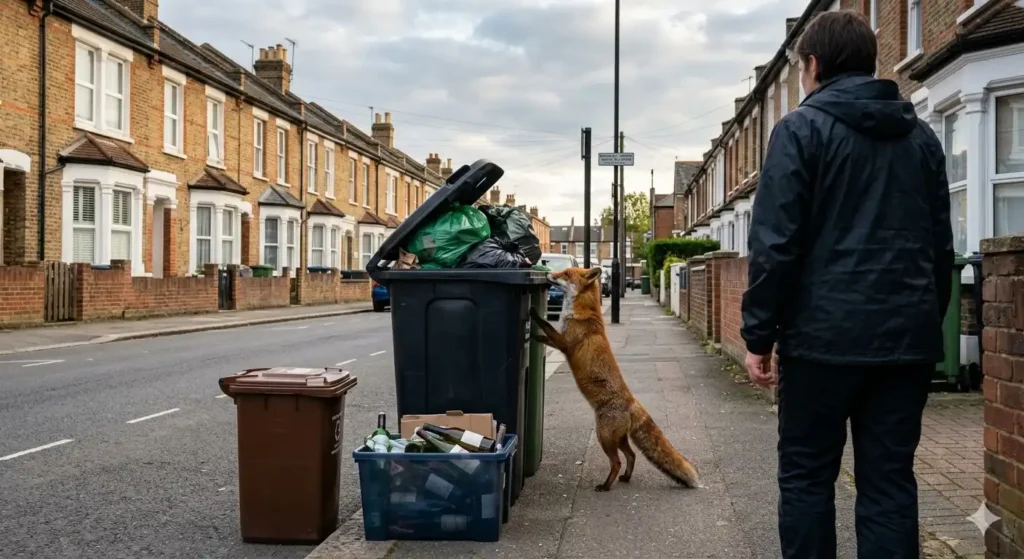
- If you are in a borough that still uses sacks, invest in a sturdy, lidded bin or storage chest for the sacks to sit in until collection.
- Improve your routine
- Put rubbish out shortly before collection wherever possible.
- Avoid leaving bags on the pavement overnight, especially in areas where fox activity is high.
- Think about design and layout
- In front gardens, consider simple barriers such as low fencing or a purpose-built bin store so foxes cannot easily reach sacks.
- For flats and HMOs, discuss with your landlord or managing agent whether locked communal bin stores or additional containers can be provided.
- Coordinate as a street
- Talk to neighbours about the timing and presentation of waste so the whole road becomes less attractive to foxes.
- If several properties have problems, you can make a joint approach to the relevant North London council to review local bin provision or collection arrangements.
By focusing on secure containers, good timing, and cooperation with neighbours and council services, you can significantly reduce the chances of foxes tearing up bin bags in London while staying within UK rules and local procedures.
Why do foxes rip open bin bags in London?
Urban foxes are attracted to the smell of food waste. In areas like London, easy access to household rubbish makes bin bags an easy food source.
When are foxes most likely to tear open bin bags?
Foxes are most active at night, especially late evening and early morning, which is when most bin bags are left out for collection.
How can I stop foxes ripping open my bin bags?
Use a secure wheelie bin with a tight-fitting lid. If you don’t have one, store bags indoors or in a shed until collection day.