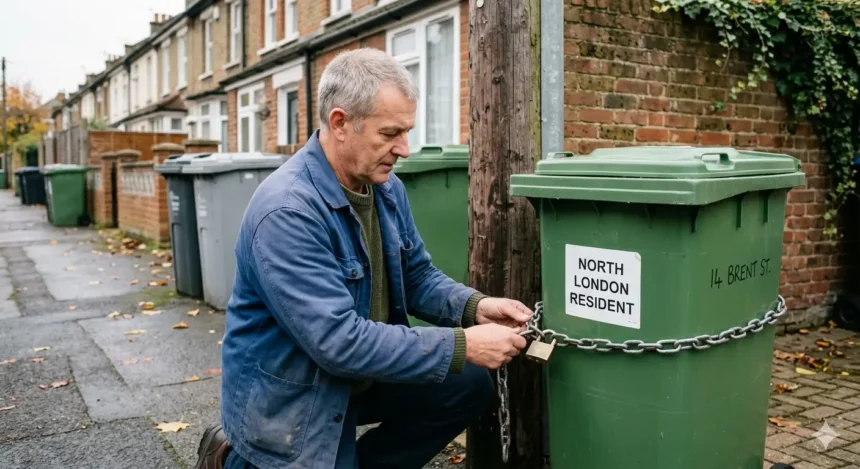
Contact your local North London council immediately to report the theft and request a replacement bin, which is often provided free of charge. Secure your new bin with a sturdy lock or chain it to a fixed point like a fence or wall post-collection. This practical approach resolves the issue quickly and legally for residents in Brent, Barnet, Enfield, Camden, Haringey, and Islington.
Why This Issue Matters to Local Residents
Bin theft disrupts weekly waste collections across North London, leaving residents with overflowing rubbish that attracts pests like foxes and rats, common in urban areas such as Brent and Haringey. In densely populated boroughs like Camden and Islington, stolen bins force households to bag waste temporarily, risking fines for improper disposal under UK environmental rules. This not only creates unhygienic conditions but also strains council resources, delaying services for all local residents.
The problem peaks during busy collection days in Barnet and Enfield, where neighbours might take bins mistakenly or deliberately to fill them with their own rubbish. For families and elderly residents, dragging heavy replacements or storing waste indoors becomes a safety hazard, especially on uneven pavements. Addressing it promptly maintains community harmony and ensures compliance with local waste management standards.

Step-by-Step Actions to Solve the Problem
Start by inspecting your bin area after collection to confirm if it’s been moved or filled by others. Document the issue with dated photographs showing your house number on the bin label and any signs of misuse, such as extra rubbish bags inside.
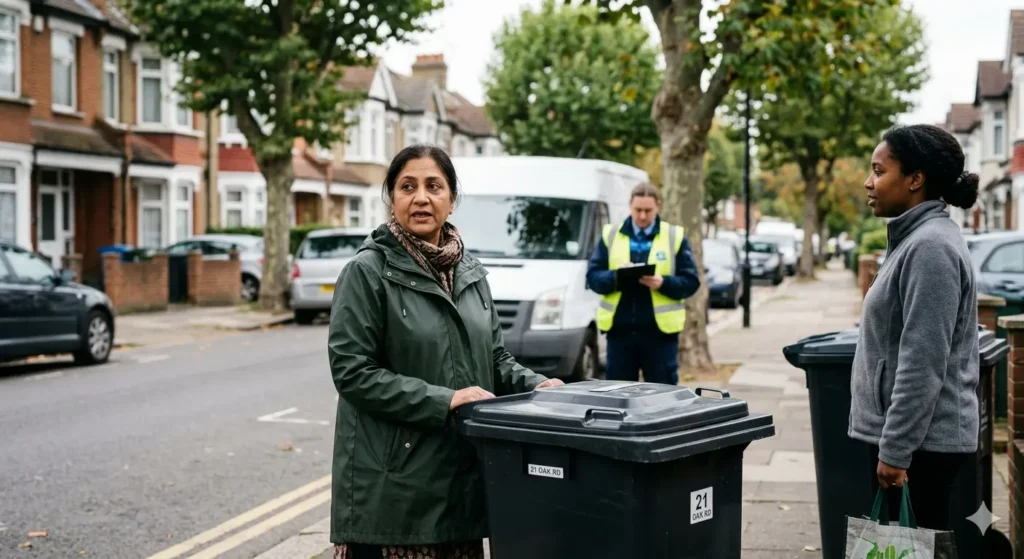
Next, speak politely to your neighbour if you suspect them, explaining calmly that the bin belongs to your household and asking them to return it after use. Keep the conversation neutral and brief to avoid escalation.
If direct talk fails, report the theft to your North London council via their online portal or waste services line. Provide your address, bin serial number (usually stamped on the lid or rim), and evidence photos. Request an assisted collection sticker if mobility is an issue, which instructs collectors to return the bin to your property.
Order a replacement bin through the same channel, noting that most councils like Brent Council and Barnet Council supply them free for proven theft cases. Once received, apply a weatherproof label with your address and fit a bin lock immediately.
Which Council Service Handles It
North London councils delegate bin issues to their Waste Management or Environmental Services departments. In Brent, Barnet, Enfield, Camden, Haringey, and Islington, contact the “Report a Missed Bin” or “Bin Replacement” service on each borough’s website.
These teams investigate theft reports, coordinate with collection crews to track bins via serial numbers, and enforce local bylaws on fly-tipping or unauthorised use. Environmental Health officers step in for persistent neighbour disputes involving waste.
Local residents find these services efficient, as crews often spot misused bins during rounds and return them to the rightful owner. Each council tailors responses to borough-specific needs, like Haringey’s focus on high-density streets.
Information or Documents Needed
Gather your full address, including postcode, and the bin’s serial number for quick processing. Councils require proof of residency, such as a recent council tax bill or utility statement.
Photographic evidence is essential: clear images of the empty bin space post-collection, your labelled bin if recovered, or neighbour’s property if directly involved. Note collection dates and any witness statements from fellow local residents.
For replacement requests, specify bin type (black refuse, blue recycling, brown food waste) and size (usually 140L or 240L standard). Vulnerable residents may need a doctor’s note for priority assisted collection.
Expected Response Time
Councils typically acknowledge reports within 24-48 hours via email or an online reference number. Replacement bins arrive in 5-10 working days across Brent, Barnet, and Enfield, with urgent cases in Camden and Islington expedited to 3 days.
Collection crews may recover stolen bins within a week if spotted on rounds. Follow-up investigations by Environmental Services take 2-4 weeks, depending on evidence volume.
Peak periods around holidays slow responses slightly, but North London council prioritises verified thefts to prevent wider service disruptions.
What to Do If Follow-Up Is Required
If no response after 48 hours, chase your report using the reference number through the council’s online portal or customer service. Politely reference prior evidence and request an update from the Waste Management team.
Escalate to the council’s complaints procedure if delays exceed two weeks, outlining impacts like pest issues. Involve your ward councillor for boroughs like Haringey or Islington to advocate on behalf of local residents.
For ongoing theft, request a site visit from Environmental Health to assess and mediate neighbour disputes formally. Keep records of all communications for potential involvement of mediation services.
Rights and Responsibilities Under UK Rules
Under the Environmental Protection Act 1990, residents own their council-issued bins, granting rights to report theft as anti-social behaviour. Councils must investigate fly-tipping or unauthorised bin use, with powers to issue fixed penalty notices up to £400.
Your responsibility includes proper bin placement on collection day and not overfilling, as per Clean Neighbourhoods and Environment Act 2005. Neighbours cannot legally use your bin without permission, risking enforcement if reported.
Local residents in North London benefit from these rules, ensuring fair access to services while promoting mutual respect in shared spaces.
Practical Tips to Avoid the Problem in Future
Chain bins to a sturdy garden fixture or wall anchor after each collection, using heavy-duty padlocks resistant to weather. Position them in a less accessible spot, like behind a gate, visible only to collectors.
Affix large, durable stickers stating “Property of [Your Address] – CCTV Monitored” to deter thieves without accusing anyone. Opt for assisted collection if eligible, where crews handle wheeling bins back.
Label bins prominently with your postcode and house number using permanent marker or vinyl stickers. Store spares indoors and report any suspicious activity immediately to build a council record.
In shared driveways common in Barnet and Camden, agree communal rules with neighbours via a friendly group chat. Regularly check bins mid-week for early signs of misuse.
These steps empower Brent, Barnet, Enfield, Camden, Haringey, and Islington households to protect their waste setup long-term.
How do I stop neighbours from using my bin?
Label your bin clearly with your house number, keep it on your property until collection day, and report repeated misuse to your local council if the problem continues.