Key Points
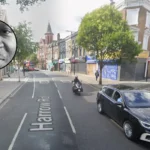
- Vandalism Sparked by Anger: Parking signs outside a crucial parade of shops in Mays Lane, Underhill, have been completely obliterated with black paint, which is widely believed to be an indication of extreme anger and frustration among residents and local shoppers.
- Cabinet Agrees to Re-Think: Following six continuous months of intense community protests, formal objections, and petitions, Barnet Council’s cabinet has officially agreed to re-evaluate the controversial pay-by-phone parking scheme.
- Drastic Reductions Proposed: Instead of the current penalising all-day parking charges, the local authority is actively examining a fresh proposal to scale back restrictions to just one hour per day.
- One-Hour Restriction Window: Under the new proposal, pay-by-phone charges would only apply between 2:00 pm and 3:00 pm, leaving parking entirely free for the remainder of the day in the service road.
- Alignment with Surrounding CPZ: The proposed one-hour operational window mirrors the rules of the adjoining Controlled Parking Zone (CPZ), which is designed specifically to prevent long-stay commuters from clogging up local spaces all day.
Barnet Council (North London News) June 19, 2026 – The decision by Barnet Council’s cabinet to reassess the controversial pay-by-phone parking scheme outside the parade of six shops on Mays Lane comes after a half-year of sustained community resistance. According to reporting by local municipal correspondents for The Barnet Society, the implementation of all-day parking charges sparked instantaneous friction within the Underhill ward.
- Key Points
- Who Vandalised the Mays Lane Parking Signs and What Was the Council’s Reaction?
- How Will the Proposed One-Hour Pay-By-Phone Scheme Actually Work?
- Will parking become free for local shoppers again?
- Why Is the New Scheme Being Aligned with the Adjoining Controlled Parking Zone (CPZ)?
- Background of the Pay-By-Phone Parking Scheme in Barnet
- Predictions: How This Development Can Affect Local Small Businesses and Shoppers
- Projected Impacts on Shoppers and Motorists
For six months, residents, business owners, and regular shoppers coordinated a series of formal petitions and public protests aimed directly at the council’s executive leadership.
The pressure culminated in a cabinet meeting where senior leadership acknowledged the community’s economic and logistical grievances, signaling that the current enforcement mechanism is unsustainable.
As documented in local civic records, there is now every indication that the existing parking restrictions and monetary charges will be dramatically scaled back rather than maintained in their current restrictive format.
Who Vandalised the Mays Lane Parking Signs and What Was the Council’s Reaction?
While no individual or group has claimed legal responsibility for the property damage, the physical obliteration of municipal infrastructure has become the defining visual symbol of the local dispute. As reported by neighborhood observers for The Barnet Society, multiple parking signs along the designated service road were systematically covered in thick black paint, rendering the pay-by-phone instructions completely unreadable.
The act of vandalism is widely understood by community leaders and local commentators to be a direct physical indication of the deep-seated anger and frustration felt by Underhill residents toward Barnet Council’s top-down imposition of parking charges.
The local authority has historically maintained that damaging public property is a criminal offense that strains public resources, yet the timing of the blacked-out signs directly coincided with the height of the public gridlock over the scheme, highlighting a severe breakdown in communication between the council and the electorate.
How Will the Proposed One-Hour Pay-By-Phone Scheme Actually Work?
Instead of an all-day charging model that penalises short-stay shoppers, Barnet Council is currently examining an alternative proposal that compresses the enforcement window down to a single hour in the afternoon. Under this revised framework, the pay-by-phone parking charges would strictly apply between 2:00 pm and 3:00 pm.
Will parking become free for local shoppers again?
As detailed by local administrative reporters, if the council formally ratifies this compromise, parking would once again become completely free of charge in the service road directly in front of the six local businesses for twenty-three hours a day.
The sole exception remains that specific sixty-minute window in the early afternoon when motorists must use the remote payment app to legally occupy a space.
Why Is the New Scheme Being Aligned with the Adjoining Controlled Parking Zone (CPZ)?
The operational logic behind selecting the specific hour of 2:00 pm to 3:00 pm is rooted in structural uniformity across the Underhill traffic network. Parking restrictions at the Mays Lane parade would be brought directly in line with the rules governing the adjoining Controlled Parking Zone (CPZ).
In that neighboring residential zone, a matching 2:00 pm to 3:00 pm restriction exists, a time during which parking is strictly permitted only for residents who hold valid municipal parking permits.
By implementing an identical one-hour ban outside the commercial parade, the council relies on a proven structural deterrent.
The primary intent of this early afternoon restriction is to prevent all-day free parking by non-residents. Without this one-hour block, commuters could use the service road as a free, long-stay park-and-ride space, displacing local shoppers.
The same legal principle will now apply outside the Mays Lane shops, ensuring that cars cannot be left abandoned all day by individuals heading into central transport links.
Background of the Pay-By-Phone Parking Scheme in Barnet
The dispute over the Mays Lane parking infrastructure sits within a broader, multi-year transition by Barnet Council away from traditional cash-handling parking meters toward digital-only, pay-by-phone frameworks. Over the past decade, local authorities across Greater London have systematically dismantled physical coin machines to reduce maintenance costs, combat localized street theft, and streamline municipal revenue collection.
However, this digitisation strategy has frequently run into significant friction in outer London boroughs like Barnet, where suburban shopping parades rely heavily on high-turnover, short-stay parking spaces for economic survival.
In Underhill, the parade of six shops on Mays Lane serves as a vital neighborhood hub, featuring independent convenience retailers, service providers, and small businesses that depend entirely on passing trade.
When Barnet Council originally introduced the all-day pay-by-phone charges, the justification presented was centered on traffic management and generating predictable revenue to maintain highway infrastructure.
Local business owners countered that the barrier of downloading an app and paying a premium just to stop for five minutes to buy basic goods drove customers away to larger supermarkets with dedicated free parking lots.
This economic friction turned a minor regulatory alteration into a prolonged six-month political standoff, forcing the cabinet to recognize that uniform digital enforcement strategies can severely damage micro-economies if implemented without local consultation.
Explore More Barnet Council News
Barnet Council Demolishes Unsafe Coppies Grove Tower Blocks Brunswick Park 2026
City Hall Overturns Barnet 1,700 Homes Decision City Hall; North London 2026
Predictions: How This Development Can Affect Local Small Businesses and Shoppers
The proposed shift from an all-day charging model to a highly targeted one-hour restriction window is expected to fundamentally alter the daily operational dynamics for both the independent business owners and the consumer base utilizing the Mays Lane parade.
- Restoration of Foot Traffic: By removing charges for twenty-three hours a day, the primary economic barrier dissuading casual, short-stay shoppers will be eliminated. Businesses are likely to see an immediate recovery in spontaneous, low-transaction visits, which form the financial baseline for convenience stores and small independent shops.
- The Afternoon Footfall Slump: Retailers must prepare for a distinct drop-off in customer arrivals between 2:00 pm and 3:00 pm. Because the pay-by-phone requirement will be active during this hour, casual shoppers will likely avoid the parade entirely during this timeframe to escape the hassle of digital payment, effectively creating a daily one-hour commercial dead-zone.
- Protection from Commuter Congestion: Because the one-hour restriction disrupts continuous parking, it effectively prevents long-term commuters from occupying the storefront spaces from dawn until dusk. This ensures that outside of the 2:00 pm to 3:00 pm window, parking turnover remains high, meaning spaces will constantly free up for genuine customers rather than remaining blocked by static vehicles.
Projected Impacts on Shoppers and Motorists
- Increased Convenience for Local Residents: Shoppers running brief, essential errands will regain free access to the service road for the vast majority of the day, restoring the historical utility of the local shopping parade as an accessible neighborhood asset.
- Risk of Compliance Confusion: Forcing motorists to navigate a highly specific, single-hour enforcement window can introduce consumer confusion. Shoppers unaccustomed to checking the exact hourly timing on parking signage risk picking up fine notices if they inadvertently park at 2:15 pm assuming the space is entirely free, potentially leading to a secondary wave of frustration directed at local parking enforcement officers.