Key Points
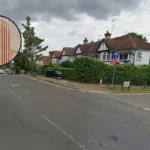
- Demolition Approvals: Barnet Council has officially advanced plans to demolish Holmsdale House and Stanhope House tower blocks on the Coppies Grove Estate in Brunswick Park.
- Structural Collapse Risk: A structural report commissioned in 2021 by the local authority identified that both tower blocks face a “disproportionate risk of collapse” if left unaltered.
- Leasehold Acquisition: Naisha Polaine, Barnet Council’s Executive Director of Growth, formally authorised the acquisition of the Holmsdale House leasehold on 19th May, marking a critical step in the land assembly process.
- Project Funding: The redevelopment scheme is backed by a £7.5 million grant from the Greater London Authority (GLA) alongside £640,000 from the cross-government One Public Estate Brownfield Land Release Fund specifically allocated for demolition.
- Financial Cap: While individual transaction details remain confidential, official documents confirm the total direct cost to acquire the Holmsdale House leasehold is capped at £343,272.
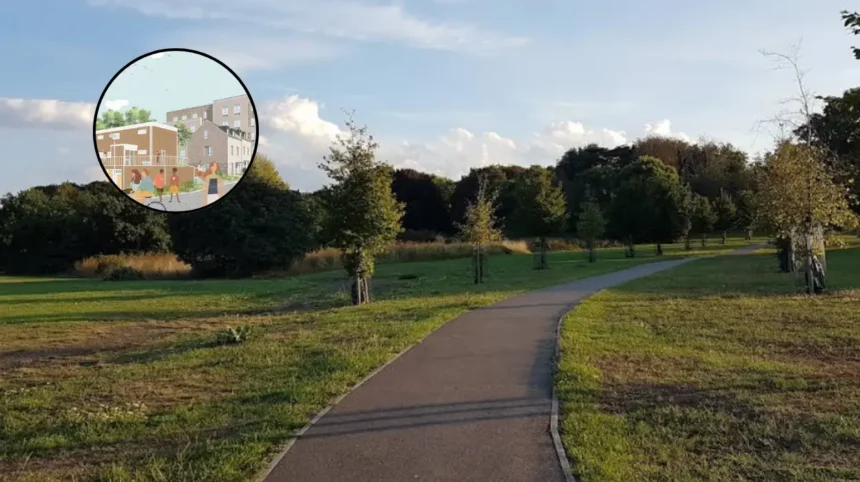
- Strategic Housing Goals: The cleared site will host a new housing development, directly supporting Barnet Council’s broader corporate target to deliver 1,000 affordable social rent homes between 2023 and 2026.
Barnet Council (North London News) June 13, 2026 – Two prominent residential tower blocks in Brunswick Park are officially scheduled for demolition after structural assessments confirmed they present a critical risk to public safety. Barnet Council is actively moving forward with a mandatory land assembly process to acquire all remaining property interests across the site. This strategy aims to clear the area entirely, eliminating a long-standing structural liability and paving the way for a modern, safe social housing development.
- Key Points
- What Did the Structural Reports Reveal About the Blocks?
- How is Barnet Council Legally Acquiring the Properties?
- What Will Happen to the Site Prior to Demolition?
- How Much Will the Brunswick Park Redevelopment Project Cost?
- Where is the Funding for Demolition and Rebuilding Coming From?
- Background of the Brunswick Park Structural Failures
- Prediction: How the Demolition Will Affect Local Residents and Housing Claimants
The local authority has focused its immediate efforts on securing the legal rights to the buildings, which were flagged years ago as structurally unsound. Naisha Polaine, the council’s Executive Director of Growth, formally signed off on the acquisition of a vital leasehold within Holmsdale House on 19th May. This transaction marks the latest procedural milestone in a complex, multi-million-pound safety and regeneration initiative funded by regional and central government streams.
According to official council records published following the decision, the acquisition of this specific leasehold serves as a foundational component of the broader redevelopment project. The council currently holds the overarching freehold interest in the Coppies Grove Estate but cannot execute full-scale demolition until every individual leasehold interest is legally absorbed back into local authority ownership.
What Did the Structural Reports Reveal About the Blocks?
As reported by Joe Ives, Local Democracy Reporter, the fundamental driving force behind the demolition is an underlying structural vulnerability that leaves Holmsdale House and Stanhope House at a “disproportionate risk of collapse.”
This severe engineering assessment was initially detailed in a comprehensive 2021 structural report carried out by the local authority. The findings indicated that the structural integrity of the buildings had degraded to a point where standard occupancy could no longer be guaranteed long-term without catastrophic failure risks.
Furthermore, subsequent evaluations confirmed that attempting to retroactively fix the structures was entirely unfeasible.
As reported by Joe Ives, Local Democracy Reporter, a 2025 report compiled by the council-run organisation The Barnet Group explained that uneconomical “major remedial works” would be needed to ensure the two tower blocks would “remain habitable” and safe for residents. Faced with astronomical costs for temporary repairs that would not resolve the root engineering flaws, the council determined that total extraction and reconstruction was the only viable path forward.
How is Barnet Council Legally Acquiring the Properties?
To clear the buildings legally, the local authority has instituted an approved acquisition strategy aimed at compiling all property rights under a unified banner. In the official documentation prepared ahead of the recent leasehold signing, Barnet Council stated that it
“is seeking to acquire all properties by agreement as soon as practically possible.”
This approach favors negotiated settlements with existing property owners over protracted legal battles, though it operates under the framework of established statutory protocols.
The council has explicitly noted that the recent lease acquisition of Holmsdale House was executed in strict accordance with its Compulsory Purchase Order (CPO) compensation rules. Because the specific leaseholder in this transaction does not live on the property, the local authority stated:
“The leaseholder is non-resident and the agreed terms reflect the approved offer for non-resident leaseholders.”
What Will Happen to the Site Prior to Demolition?
With the leasehold moving into public hands, the council has ruled out using the vacant units for short-term housing solutions, citing safety concerns. The local authority has explicitly stated that the building “is not suitable for guardians” to move into prior to the beginning of the redevelopment works.
Property guardianship, which often places individuals in vacant commercial or residential buildings to deter anti-social behavior, has been deemed entirely inappropriate due to the structural issues identified on the Coppies Grove Estate.
Instead of temporary occupation, the council’s immediate priority shifts strictly to site security and public safety. Following the formal completion of the acquisition process, Barnet Council plans to implement measures to ensure the property “remains safe and secure until demolition can take place,” preventing unauthorized entry or vandalism during the transition period.
How Much Will the Brunswick Park Redevelopment Project Cost?
The financial mechanics of the land assembly process are governed by strict spend caps to protect public funds. While individual asset valuations and final payouts to specific property owners are withheld due to commercial confidentiality, the council’s financial reporting provides explicit limits for the current phase.
Barnet Council has confirmed that “the total direct cost” of obtaining the single leasehold for Holmsdale House will reach a maximum of £343,272. This figure encompasses the market valuation of the leasehold interest alongside any statutory compensation fees required under the council’s non-resident relocation policies.
Where is the Funding for Demolition and Rebuilding Coming From?
The capital required to execute a project of this scale relies heavily on external state funding streams. Barnet Council is not drawing entirely from its localized revenue budgets; instead, it has successfully secured major grants from regional and national bodies.
The local authority currently holds an approved application for £7.5 million in grant funding from the Greater London Authority (GLA) to offset the primary redevelopment and construction costs.
Additionally, targeted funding has been unlocked to specifically handle the hazardous process of bringing the towers down. The council has been granted just over £640,000 from the One Public Estate Brownfield Land Release Fund.
This cross-government initiative is designed to strip away the financial barriers associated with preparing complex, underutilised, or unsafe brownfield sites for brand-new residential construction.
Background of the Brunswick Park Structural Failures
The critical situation at the Coppies Grove Estate reflects wider, systemic challenges faced by local authorities across the United Kingdom regarding mid-to-late 20th-century high-rise housing stock. Built during an era that heavily utilized Large Panel System (LPS) construction techniques, many towers across London have faced intense engineering scrutiny over the last decade. Structural surveys across various boroughs have frequently highlighted hidden defects, systemic concrete degradation, and design vulnerabilities that fail to meet modern structural resilience standards.
For Barnet Council, the policy trajectory regarding these specific blocks shifted decisively in November 2023. During this period, the local authority’s cabinet formally voted to approve the complete redevelopment scheme for the Brunswick Park site.
Recognizing that rapid, specialized executive action would be required to manage property portfolios and negotiate complex legal buyouts, the cabinet subsequently delegated all subsequent decisions regarding individual property acquisitions directly to Naisha Polaine, the senior council officer leading the growth and development directorate. This administrative shift removed bureaucratic delays, enabling the council to react swiftly as individual lease negotiations matured.
Prediction: How the Demolition Will Affect Local Residents and Housing Claimants
The progression of the Brunswick Park redevelopment scheme will directly alter the local housing market landscape and influence socio-economic dynamics for residents within the borough of Barnet. In the immediate term, neighboring communities on the Coppies Grove Estate will experience prolonged localized disruptions, including increased heavy machinery traffic, noise, and dust mitigation protocols necessary to safely dismantle high-rise structures with documented structural frailties.
However, the long-term impact will heavily alter the availability of public housing within the borough. In its latest strategic briefing, Barnet Council explicitly stated that the lease acquisition of the Brunswick Park tower block
“will support the redevelopment of Stanhope and Holmsdale House, Coppies Grove, which will support the target to deliver 1,000 affordable social rent homes as set out in the 2023-2026 Corporate Plan.”
For families and individuals currently situated on Barnet’s social housing waiting list, this development guarantees a substantial influx of high-density, modern residential units built to modern safety specifications.
By replacing unstable, economically unviable buildings with high-quality social rent homes, the development will ultimately alleviate localized housing pressures and set a safety-first precedent for how municipal authorities manage aging urban infrastructure moving forward.