Key points
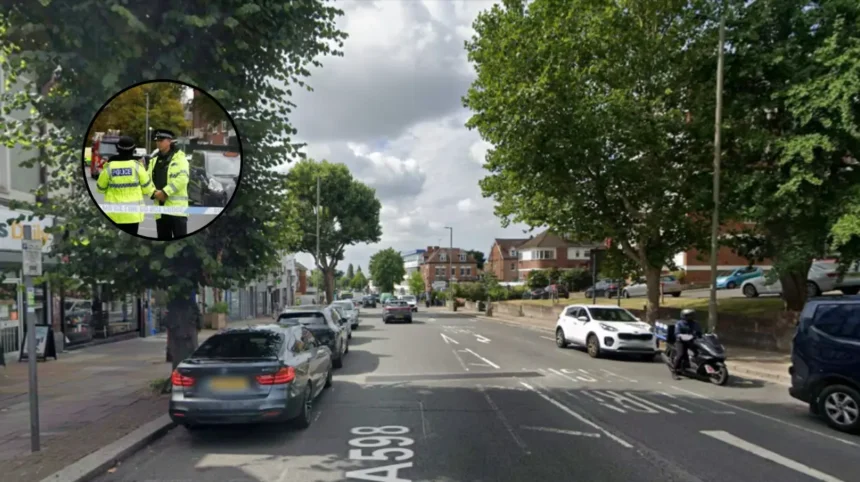
- Following a fresh attempted arson attack on a synagogue in Finchley, north London, police have ramped up patrols around Jewish communities and synagogues across the capital.
- The Metropolitan Police said Counter Terrorism Policing is investigating three linked arson‑related incidents in north west London, including the Golders Green community‑ambulance fire and an office attack on a Persian‑language media organisation.
- Two people were arrested after the Finchley synagogue incident and remain in police custody on suspicion of arson with intent to endanger life, while a total of eight arrests have been made in connection with the wider campaign of attacks.
- Prime Minister Keir Starmer has condemned the “abhorrent” and “horrific” antisemitic attacks, describing them as assaults on the whole of society and pledging full support for community leaders.
- Chief Rabbi Sir Ephraim Mirvis has described the arson attempt on the Finchley synagogue as “cowardly” and warned of a “sustained campaign of violence and intimidation” against the UK’s Jewish community.
- The Metropolitan Police stated there is no evidence of an increased overall threat to London, but has deployed additional officers and resources around synagogues and other Jewish community sites.
- An Iran‑linked group has claimed responsibility for the Golders Green ambulance arson, while police have not yet formally declared the broader series of fires as terrorism but are treating the attacks as antisemitic hate crimes under investigation by counter‑terrorism units.
Finchley synagogue attack (North London News) April 20, 2026 –
- Key points
- What prompted the new police patrols in north London?
- How are police responding to the Finchley synagogue attempt?
- How serious is the Golders Green ambulance arson?
- Has any group claimed responsibility for the attacks?
- How are Jewish leaders in the UK responding?
- Background of the development
- What this development means for the affected audience
What prompted the new police patrols in north London?
Police patrols around Jewish communities and synagogues in north London have been significantly increased following an attempted arson attack on a synagogue in Finchley early on Wednesday, 15 April, in a string of incidents that authorities say are being treated as antisemitic and linked to a wider pattern of arson‑related offences.
As reported by ITV News reporter [journalist name not publicly specified in the source snippet], Prime Minister Keir Starmer has condemned the “abhorrent” attacks on Jewish venues, including the Finchley synagogue attempt and the earlier arson on volunteer‑run ambulances in Golders Green, saying:
“An attack on our Jewish communities is an attack on us all.”
Deputy Commissioner Matt Jukes of the Metropolitan Police, in a statement released on 17 April 2026, stated that Counter Terrorism Policing is investigating three separate arson‑related incidents in north west London: the arson attack on Hatzola ambulances in Golders Green on 23 March, the attempted arson at a synagogue in Finchley in the early hours of 15 April, and an arson attack on the offices of a Persian‑language media organisation in the same area on the evening of 15 April.
Jukes added:
“These incidents have been treated as antisemitic hate crimes and, while the investigation has not yet formally been declared terrorism, they are being led by Counter Terrorism Policing and all lines of enquiry remain open.”
How are police responding to the Finchley synagogue attempt?
Following the Finchley incident, police say that two people – a 47‑year‑old woman and a 46‑year‑old man – were arrested on suspicion of arson with intent to endanger life and remain in police custody as the investigation continues.
In the same statement, Jukes noted that the broader pattern of attacks has prompted the force to step up visible patrols and reassurance activity around synagogues and other Jewish community sites.
“Our colleagues in Counter Terrorism Policing and local borough command teams are working closely with the Community Security Trust, other Jewish organisations and local community leaders to ensure congregants and neighbours feel safe,”
he said.
Reuters, in earlier policing‑style language, reported that the Metropolitan Police had previously boosted patrols near synagogues and boroughs with substantial Jewish populations “even though there is no evidence pointing to an increased risk for London more broadly,” a line of reassurance that police have echoed in recent days.
Community Security Trust (CST) officials, as quoted in BBC‑style coverage of similar incidents, have urged worshippers to follow security guidance, keep communal buildings secure, and avoid gathering outside facilities while police operations are ongoing.
How serious is the Golders Green ambulance arson?
The earlier attack in Golders Green, widely described by multiple outlets as a “devastating” antisemitic hate crime, targeted four ambulances belonging to the Jewish Community Ambulance Service, Hatzola, which provides volunteer‑led emergency cover in the area.
Detective Chief Superintendent Luke Williams of the Metropolitan Police, speaking in a police statement, said the arson was “being treated as an antisemitic hate crime” and that the incident had “had a profound impact on our Jewish communities.”
ITV News and Channel 4 coverage reported that security‑camera footage captured four people at the scene during the Golders Green attack, and that the investigation has since led to a total of eight arrests, with three people already charged.
India Today, in a global news round‑up, noted that the Golders Green arson took place in a neighbourhood home to around 50,000 Jews, and quoted Prime Minister Starmer saying he had been in contact with Jewish community leaders and calling antisemitism “a poison” that the government is determined to confront.
Has any group claimed responsibility for the attacks?
Fox News, in a report citing police and security sources, reported that an Iran‑linked group has claimed responsibility for the torching of the ambulances outside the Golders Green synagogue in north London.
However, the Metropolitan Police have not formally confirmed that attribution, instead saying that the incident is being investigated by Counter Terrorism Policing “with all lines of enquiry remaining open.”
The same police statement noted that the broader campaign of arson attacks being probed – including the Finchley synagogue attempt and the Persian‑language media office fire – is being treated as a connected series of antisemitic‑linked incidents, even though the precise motives and links to overseas groups are still under investigation.
How are Jewish leaders in the UK responding?
Chief Rabbi Sir Ephraim Mirvis, in a statement published by ITV News, described the attempted arson at the Finchley synagogue as “a cowardly arson attack” and warned that “a sustained campaign of violence and intimidation against the Jewish community of the UK is gathering momentum.”
Mirvis added that the attacks were not only aimed at particular buildings but at the wider sense of safety and belonging for British Jews, and he welcomed the stepped‑up police presence and collaboration between CST, local authorities and congregations.
Community leaders in north London, quoted in local news coverage, have stressed that while they are grateful for the increase in uniformed patrols and community‑support‑officer visibility, they remain deeply unsettled by the repeat targeting of religious and community facilities.
Background of the development
The current wave of police‑led reassurance patrols around synagogues in north London follows a longer‑running pattern of security reviews triggered by previous attacks on Jewish and other places of worship.
In October 2025, after a deadly attack in Manchester that killed several people, the Metropolitan Police and local forces elsewhere in the UK similarly increased patrols around synagogues and Jewish community sites, citing the need to “provide additional reassurance” even where there was no specific, new threat to London.
In that earlier episode, the Community Security Trust also urged those attending communal buildings to follow security instructions from CST volunteers and police, a line of guidance that has been repeated in the current clamp‑down.
The 2026 attacks in north London come amid a broader rise in recorded antisemitic incidents in the UK and overseas, with government and police officials repeatedly stressing that such attacks are treated as hate crimes with the potential for terrorism‑related investigation when appropriate.
What this development means for the affected audience
For Jewish communities in north London and in other boroughs with large Jewish populations, the increase in police patrols is likely to affect both everyday security routines and the broader sense of safety in public spaces.
The heightened presence of officers and community‑support‑officer units around synagogues may make worshippers feel more protected during prayer services and festivals, but leaders have also warned that such measures should be seen as a temporary response, not a permanent solution to underlying hate‑crime pressures.
In the longer term, the way police and community leaders handle these incidents – including the pace of investigations, transparency about any links to foreign actors, and the effectiveness of joint‑security planning with CST – could shape whether Jewish residents feel London’s institutions are adequately equipped to respond to repeated antisemitic attacks.