Key Points
- Two individuals were arrested in Hertfordshire on April 15, 2026, following a suspected arson attempt at Finchley Reform Synagogue in North London.
- Incident occurred shortly before 12.10 am on April 15 at the synagogue on Fallow Court Avenue, Finchley.
- Suspects, wearing dark clothing and balaclavas, placed two glass bottles near the building’s windows and threw a brick.
- One bottle, believed to contain petrol, was smashed by the brick; neither bottle ignited, resulting in no injuries or damage.
- A 47-year-old woman was arrested in the Watford area on Wednesday afternoon, and a 46-year-old man was arrested in the same area on Wednesday evening.
- Both remain in custody on suspicion of arson with intent to endanger life, as confirmed by the Metropolitan Police.
- Incident described as a suspected antisemitic hate crime by the Metropolitan Police.
- It occurred weeks after a separate arson attack on four Hatzola ambulances in the area, where three men—Hamza Iqbal (20), Rehan Khan (19), and a 17-year-old boy—have been charged with arson, being reckless as to whether life would be endangered.
Finchley (North London News) – April 16, 2026 – Two people have been arrested in connection with an attempted arson attack on Finchley Reform Synagogue, which the Metropolitan Police has confirmed as a suspected antisemitic hate crime.
- Key Points
- What Happened in the Finchley Synagogue Arson Attempt?
- Who Were the Suspects Arrested in the Hertfordshire Arson Case?
- Why Is This Incident Being Treated as a Suspected Antisemitic Hate Crime?
- How Does the Synagogue Attack Connect to Recent Arson Incidents in North London?
- What Is the Current Status of the Police Investigation?
- What Measures Are in Place Following the Attack?
- Background of the Development
- Prediction: Impact on the North London Jewish Community
What Happened in the Finchley Synagogue Arson Attempt?
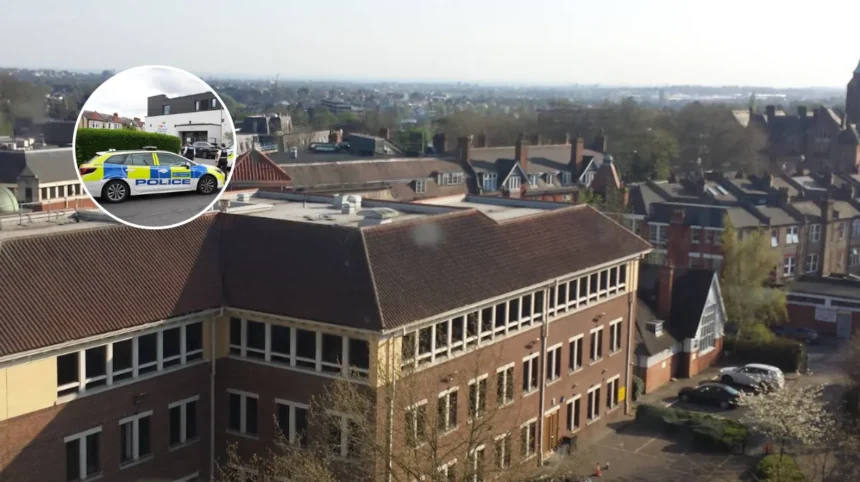
The incident unfolded shortly before 12.10 am on April 15, 2026, at the Finchley Reform Synagogue located on Fallow Court Avenue in Finchley, North London. According to the Metropolitan Police, as reported by Jake Davies of MyLondon, two suspects dressed in dark clothing and wearing balaclavas entered the synagogue grounds. They placed two glass bottles near the building’s windows and threw a brick at the structure.
One of the bottles, thought to contain petrol, was smashed by the brick. Neither of the flammable projectiles ignited, and the suspects fled the scene. No injuries were reported, and no damage was caused to the property, the Metropolitan Police stated in their official update.
The force confirmed the nature of the attack in a statement:
“Officers said two people, who were wearing dark clothing and balaclavas, were seen entering the grounds on Fallow Court Avenue shortly before 12.10 am. Two glass bottles were placed near the building’s windows, and a brick was thrown.”
Who Were the Suspects Arrested in the Hertfordshire Arson Case?
A 47-year-old woman was arrested in the Watford area of Hertfordshire on the afternoon of April 15, 2026. Later that evening, a 46-year-old man was arrested in the same area. Both individuals remain in custody as of April 16, 2026, under suspicion of arson with intent to endanger life, the Metropolitan Police confirmed.
Details on the suspects’ identities have not been released pending further investigation. The arrests were made swiftly following the incident, with police linking the pair to the synagogue attack through ongoing enquiries.
Why Is This Incident Being Treated as a Suspected Antisemitic Hate Crime?
The Metropolitan Police has classified the attempted arson as a suspected antisemitic hate crime. This determination stems from the targeting of a synagogue, a place of Jewish worship, in a manner consistent with previous hate-motivated incidents in the area.
As reported by MyLondon, the force’s confirmation highlights the context of the attack amid heightened concerns over antisemitic activities in North London. No motive has been officially stated beyond the suspected hate crime designation, and investigations continue to establish full circumstances.
How Does the Synagogue Attack Connect to Recent Arson Incidents in North London?
This latest incident comes just weeks after another arson attack in the region. On an early morning in recent weeks, four Hatzola ambulances—volunteer Jewish emergency service vehicles—were set alight, causing multiple gas canisters to explode.
Three men have been charged in connection with that attack: Hamza Iqbal, 20, Rehan Khan, 19, and a 17-year-old boy. They face charges of arson being reckless as to whether life would be endangered, as detailed in coverage by MyLondon.
Jake Davies of MyLondon reported:
“The alleged arson attempt comes weeks after four Hatzola ambulances were ‘set alight’ in the early hours, causing multiple gas canisters to explode. Three men—Hamza Iqbal, 20, Rehan Khan, 19, and a 17-year-old boy—have been charged with arson, being reckless as to whether life would be endangered.”
While no direct link has been established between the synagogue incident and the ambulance arsons, the proximity in time and location has drawn attention from local authorities and community groups monitoring hate crimes.
What Is the Current Status of the Police Investigation?
The Metropolitan Police continues to investigate the Finchley Reform Synagogue incident. Both arrested suspects remain in custody, and no charges have been filed as of April 16, 2026. Officers are appealing for witnesses or anyone with information to come forward.
The force has provided contact details for reporting, including their non-emergency line and Crimestoppers for anonymous tips. CCTV footage and other evidence from the scene are under review, though specifics have not been disclosed.
Finchley Reform Synagogue, a prominent community centre in North London, has not issued a public statement on the incident as of the latest reports. Local residents in the Fallow Court Avenue area reported no disturbances beyond the early morning event.
What Measures Are in Place Following the Attack?
Police have increased patrols in the area to reassure the community, particularly Jewish institutions, following the incident. The lack of ignition prevented potential escalation, but the attempt underscores ongoing security concerns for places of worship.
The Metropolitan Police’s hate crime unit is involved, aligning with protocols for suspected antisemitic incidents. Community leaders have been informed, though no broader alerts have been issued.
This event adds to a pattern of reported incidents targeting Jewish sites in the UK, with official statistics from the Community Security Trust noting a rise in antisemitic occurrences in recent years. However, specific figures for Finchley remain part of the current investigation.
Background of the Development
Finchley Reform Synagogue on Fallow Court Avenue serves as a key community hub for progressive Jewish worship in North London. Established decades ago, it hosts regular services, educational programmes, and events for families in the Finchley area. The site has previously managed security amid national trends in hate crime reporting.
Hatzola, referenced in the related ambulance arson, operates as a volunteer Jewish ambulance service providing rapid response across London. The April incident marks the latest in a series of attacks on Jewish-associated targets in Hertfordshire and North London, with police data indicating heightened vigilance since similar events in prior months. The Metropolitan Police’s involvement reflects standard procedure for arson and hate crime probes in the region.
Prediction: Impact on the North London Jewish Community
This development can affect the North London Jewish community by prompting increased security measures at synagogues and Jewish organisations, potentially leading to higher costs for surveillance and patrols. Attendance at evening or early morning services may see temporary dips due to safety concerns, while community trust in public spaces like Fallow Court Avenue could wane, encouraging more residents to utilise private transport or group travel. Local Jewish groups may ramp up awareness campaigns, fostering greater liaison with police, which could result in faster response times for future reports but also strain volunteer resources. Families in Finchley might prioritise home-based events over communal gatherings, subtly shifting participation patterns without altering core religious practices.