Key Points
- The historic Physic Well in High Barnet has maintained a completely constant water level throughout consecutive summer heatwaves and extended periods of zero rainfall.
- Ponds reliant on surface water across the High Barnet area have completely dried out due to the ongoing drought conditions.
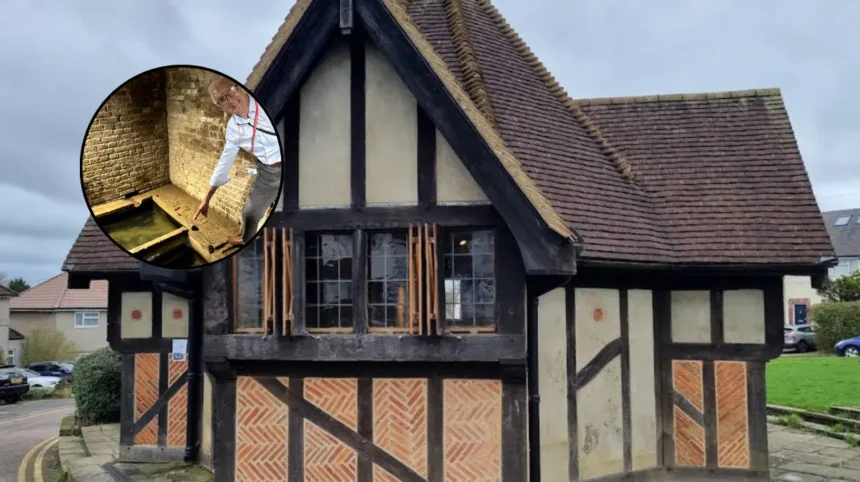
- Visitors attending the monthly open day observed two tanks filled with mineral water fed by a subterranean spring first recorded in late 16th-century documents.
- Volunteers from Barnet Museum, who have managed the site for nearly two decades, confirm that the well’s water levels have remained stable regardless of surface weather conditions.
- Hydrological characteristics indicate the well draws from deep underground aquifers rather than immediate surface runoff, insulating it from seasonal weather extremes.
Barnet (North London News) August 18, 2026 – Water continues to flow without interruption from the mineral spring at High Barnet’s historic Physic Well, maintaining stable levels despite severe summer weather conditions that have left neighboring surface waters dry. While natural ponds throughout the local area have dried up completely following successive heatwaves and months without significant precipitation, the subterranean source feeding the historic site has shown no decrease in volume.
Why Has the Water Level at Physic Well Remained Stable During the Summer Drought?
During the recent monthly open day at the site, visitors descending the wellhouse steps were shown two containment tanks filled with mineral-rich spring water. The source, which feeds directly into these underground reservoirs, was first documented in a Tudor guidebook during the late 16th century.
Representatives from Barnet Museum have monitored the structure since launching a dedicated restoration and re-opening campaign nearly 20 years ago. Volunteer Bob Langley noted that over two decades of regular observation, the fluid depth inside the tanks has rarely fluctuated, regardless of external climate shifts.
While heavy, prolonged rainfall occasionally causes the well tanks to overflow slightly, prolonged dry spells have had no observable impact on the water table inside the building. In contrast, surface-water features across High Barnet have succumbed to the high temperatures and lack of rainfall, leaving dry beds throughout the parish.
What Is the Hydrological Reason Behind the Well’s Continuous Flow?
The contrast between the dried local ponds and the constant supply at the Physic Well highlights the distinct hydrological mechanics separating surface water collections from deep spring sources. Ponds across the region rely almost entirely on immediate surface runoff, localized drainage, and shallow water tables. When elevated summer temperatures accelerate evaporation rates and seasonal rainfall ceases, these shallow bodies deplete rapidly.
The Physic Well draws its supply from a deeper underground aquifer system. Water collected in this deep subterranean layer originates from rainfall absorbed miles away, filtering slowly through layers of chalk, clay, and mineral deposits over extended periods. Because the aquifer is protected from direct atmospheric exposure, it is immune to immediate surface evaporation. The vast storage capacity of the underground geological formations ensures a steady, regulated discharge at the spring outlet, buffering the well against short-term climatic anomalies such as seasonal heatwaves and multi-month droughts.
Background of the Physic Well Development
The Physic Well in High Barnet holds a distinct position in the region’s historical and medical heritage. Discovered during the Tudor period, the spring gained widespread prominence in the 17th century when mineral waters were highly valued for their perceived medicinal properties. Early medical practitioners and visitors attributed curative qualities to the water due to its high mineral content, leading to the construction of a dedicated wellhouse to protect the source and accommodate visitors seeking treatment.
Throughout the 17th and 18th centuries, the well served as a popular destination for travelers from London and surrounding counties. However, as medical science evolved and the popularity of spa towns shifted elsewhere, the site gradually fell into disuse and structural neglect.
In the early 2000s, the Barnet Museum spearheaded a formal campaign to preserve the site. Volunteers worked to secure funding, stabilize the historic architecture, and restore public access to the wellhouse. For nearly two decades, the site has been maintained by community volunteers, offering monthly open days to educate the public on the local history, geology, and heritage of the spring.
Explore More Barnet News
Barnet Hill Academy Becomes Voluntary Aided School in West Hendon 2026
Major Hendon Way HMO Conversion Proposed in Barnet Planning News 2026
Predictions for How This Development Will Affect Local Residents and Visitors
The continued reliability of the Physic Well during severe weather events is expected to influence local heritage interest and educational engagement across several groups:
- Local Residents and Community Historians: The well’s resilience provides a physical link to the area’s historic natural infrastructure. Continued stable flow during extreme weather is likely to increase local interest in historical water management and boost attendance at future Barnet Museum open days.
- Environmental and Geological Researchers: The contrast between dried surface ponds and the constant spring level offers a clear case study for local hydrologists studying regional aquifer behavior under climate stress. Researchers may use data from the well to monitor the long-term health of deep chalk aquifers in North London.
- Conservationists and Site Volunteers: Demonstrating the physical durability of the spring validates the ongoing restoration work carried out by Barnet Museum volunteers. This functional stability strengthens the case for continued municipal support, funding, and heritage preservation efforts for the Physic Well structure.