Key Points
- New Traffic Controls: Brent Council has put forward proposals to install physical bollards and CCTV enforcement cameras across key residential streets in North London.
- Targeted Neighbourhoods: The measures form part of updates to the Stonebridge and Harlesden Healthy Neighbourhood scheme.
- Core Objectives: The primary goals are to eliminate through-traffic (“rat-running”), enhance road safety, improve air quality, and safeguard routes for school children.
- Promotion of Active Travel: The local authority intends for the reduction in vehicle congestion to encourage walking, wheeling, and cycling among residents.
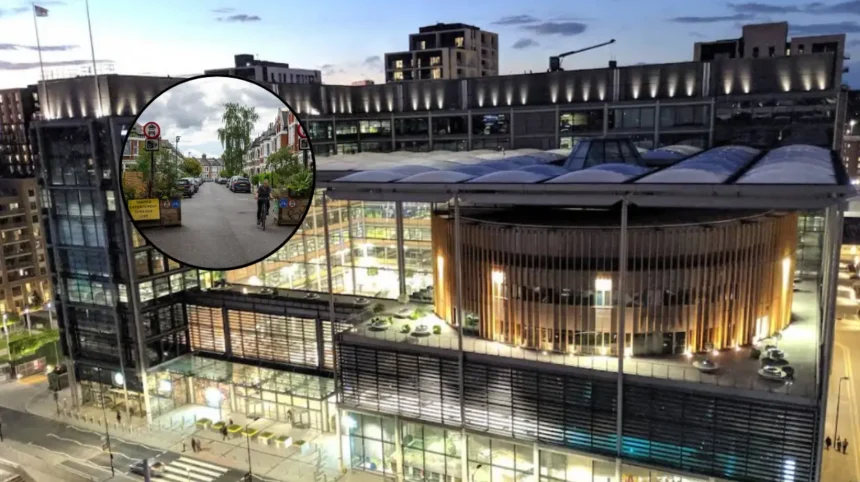
Brent (North London News) August 13, 2026 – Streets across two residential neighbourhoods in North London could soon feature physical bollards and dedicated CCTV enforcement cameras under new local authority proposals designed to prevent motorists from using quiet residential roads as traffic shortcuts. Brent Council has formally tabled plans to curb through-traffic and actively promote sustainable travel methods in the Stonebridge and Harlesden areas. According to official municipal statements, the proposed infrastructure interventions aim to transform local streets into safer, quieter, and more attractive environments for pedestrian movement and active travel, with a tailored emphasis on safeguarding primary school pupils along their daily routes.
How Will the New Traffic Measures Function in Stonebridge and Harlesden?
Under the newly published traffic management framework, Brent Council intends to restrict access on selected secondary roads that have historically experienced high volumes of non-local through-traffic. The proposed intervention relies on a combination of physical barriers, such as fixed or collapsible bollards, alongside automatic number plate recognition (ANPR) CCTV monitoring systems.
These installations are engineered to establish modal filters—traffic management points that block motor vehicles while permitting unrestricted access for pedestrians, cyclists, and mobility scooter users. By deploying CCTV monitoring alongside physical bollards, the local authority seeks to ensure high compliance levels while maintaining emergency service access where required.
Why Is Brent Council Implementing the Healthy Neighbourhood Scheme?
The initiative forms an integral component of the borough’s broader climate, health, and urban transport strategy. Brent Council maintains that residential streets ought to prioritise local community needs rather than acting as arterial relief roads for commuting motorists attempting to bypass main road congestion.
By curtailing motor vehicle volumes in Stonebridge and Harlesden, the council aims to achieve several key outcomes:
- Enhanced Road Safety: Lowering vehicle density directly reduces the statistical risk of collisions, creating safer conditions for vulnerable road users.
- School Route Protection: Creating quiet corridors enables young children and parents to walk or cycle to local educational facilities securely.
- Air Quality and Noise Reduction: Restricting idling and accelerating traffic cuts localized nitrogen dioxide ($NO_2$) and particulate emissions while lowering neighborhood decibel levels.
- Active Travel Encouragement: Calmer street design removes perceived safety barriers, encouraging shifts away from short car trips toward walking and cycling.
What Are the Background Conditions Surrounding This Development?
The implementation of Low Traffic Neighbourhoods (LTNs) and Healthy Neighbourhood schemes has generated significant policy discussion across Greater London over recent years. Introduced progressively by various London boroughs following statutory guidance from Transport for London (TfL) and the Department for Transport, these active travel frameworks seek to address urban traffic growth, localized pollution, and public health challenges.
In Brent, previous phases of street layout modifications have drawn mixed responses from local populations. Proponents, including environmental groups and active travel advocates, consistently highlight improvements in air quality, quiet residential streets, and reduced collision risks. Conversely, local business owners and motoring organisations frequently raise concerns regarding potential traffic displacement onto surrounding perimeter roads, increased journey times for private vehicles, and accessibility challenges for elderly or disabled residents requiring door-to-door car transport.
Brent Council’s current proposal for Stonebridge and Harlesden reflects an evolving design approach, utilising hybrid physical and digital enforcement mechanisms to balance compliance with operational flexibility for public services.
Explore More Brent Council News
Brent Council Approves Old Wembley Hospital Redevelopment for 108 Homes: Wembley, 2026
Brent Council Approves Major Bridge Park Regeneration Scheme Stonebridge 2026
What Impact Will This Scheme Have on Drivers, Residents, and Businesses?
The prospective rollout of bollards and camera enforcement across Stonebridge and Harlesden carries distinct implications for key demographic groups across the borough:
Impact on Local Drivers and Commuters
Motorists who routinely use residential backstreets to bypass arterial traffic bottlenecks in North London will experience direct journey disruptions. Drivers will be forced to remain on main arterial routes, potentially increasing journey durations during peak commuting hours. Local residents owning private cars may also face modified driving routes to access their properties, as direct access points from certain directions will be restricted.
Impact on Pedestrians, Cyclists, and Families
Residents who walk or cycle, particularly families with school-age children, stand to gain immediate safety and environmental benefits. Reduced vehicle volumes create quieter, less hostile street conditions, encouraging increased physical activity and independent mobility for young people and older residents.
Impact on Emergency Services and Logistics Delivery
Emergency services (police, fire, and ambulance) rely on clear access routes during critical responses. Schemes utilizing CCTV-enforced camera gates rather than fixed physical obstacles are designed to allow immediate transit for registered emergency vehicles, though physical bollard placement requires careful coordination to prevent operational delays. Local delivery drivers and service providers will need to adjust route planning to account for designated access restrictions.