Key Points
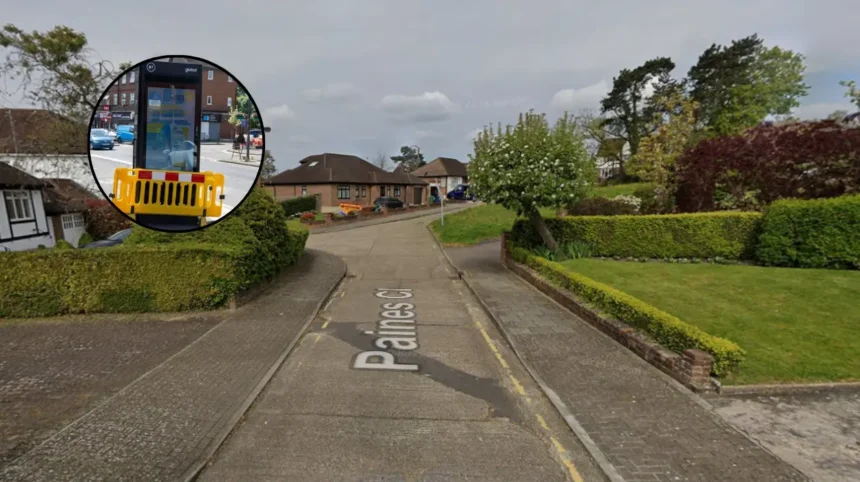
- Cyclists on Marsh Road in Pinner, north-west London, are being forced to swerve around a 1.2 metre-wide BT Street Hub advertising board built into a new cycle lane.
- The newly surfaced path is about two-and-a-half metres wide, but the obstruction sits in the middle of it.
- Some riders have reportedly been pushed onto the pavement to get around the board.
- BT said the Street Hub has been in place since 2022 and that removal plans are already underway.
- Campaigners have called for the problem to be resolved urgently.
North London (North London News) June 1, 2026 — Cyclists using Marsh Road in Pinner have been left navigating around a newly created cycle lane that was built around an existing BT Street Hub advertising board, raising fresh concerns about road design and obstruction on a route intended for safer cycling.
What happened on Marsh Road?
According to reporting by MyLondon, riders have been seen weaving around the 1.2 metre-wide display, which sits in the middle of the newly surfaced two-and-a-half metre-wide cycle path.
The layout has left cyclists with little room to pass through the lane cleanly, creating an unexpected obstacle on a route that was meant to improve cycling conditions. The article says some cyclists have instead moved onto the pavement to avoid the board.
The issue centres on a BT Street Hub, a digital advertising and information unit that had already been in place before the cycle lane surface was installed.
BT confirmed that the structure has been there since 2022 and said it is planning to remove it. Campaigners, meanwhile, have urged that the matter be “sorted out ASAP”.
Why is the cycle lane causing concern?
The main concern is that the lane was designed or resurfaced without removing the obstacle first, leaving a fixed structure in the middle of a designated cycling route.
That creates a physical pinch point where cyclists have to make a last-minute decision whether to slow down, go around it, or move into another space. For a facility intended to make cycling safer and more direct, the current layout appears to do the opposite.
The reporting describes the obstruction as “baffling” because it sits squarely in the cycle lane rather than beside it. From a practical standpoint, that means the lane does not function as a continuous route for cyclists using it in a straightforward way.
It also raises questions about coordination between infrastructure works and street furniture already occupying the space.
What has BT said?
BT has said the Street Hub has been in place since 2022 and that plans are already in progress to have it removed, according to the report.
That suggests the company recognises the conflict between the structure and the new cycling arrangement, even if the removal has not yet happened. The statement also indicates that the obstruction is not intended to remain permanently in the lane.
The report does not give a detailed timetable for removal, so it is not clear exactly when the board will be taken out. For now, the cycling route remains disrupted by the presence of the display. That leaves the lane in a state that appears temporary in practice, even if the surface has already been completed.
What are campaigners saying?
Campaigners have called for the issue to be dealt with quickly, saying the placement needs to be fixed urgently. Their concern is that leaving the board in the lane undermines the purpose of the cycle route and creates unnecessary danger or inconvenience for cyclists.
The wording reported in the article suggests frustration that the problem was allowed to occur in the first place.
The complaint also reflects a wider frustration often seen in local transport disputes, where cycling improvements can be weakened by poor implementation or by existing street furniture being left in place. In this case, the problem is not the idea of a cycle lane itself, but the fact that the lane has apparently been built around an immovable obstruction. That makes the route harder to use and harder to justify as a safe cycling provision.
How does this fit into local transport issues?
The situation comes against a backdrop of continuing cycling and walking scheme work in the Harrow and Pinner area. A separate council engagement page for the Harrow to Pinner Cycleway Improvement Scheme shows there has been wider discussion about improving walking and cycling links between Harrow town centre and Pinner.
While that does not directly explain the Marsh Road obstruction, it does show the area is part of a broader push for active travel improvements.
There is also wider public sensitivity around the placement of street hubs and digital kiosks in urban areas, particularly where they can affect pavements, sightlines, or transport routes. In this case, the concern is especially sharp because the structure appears to sit directly in a cycling facility rather than merely beside it. That makes the issue more visible and more disruptive to everyday use.
What does the reporting say happened?
The MyLondon report says cyclists have been spotted weaving around the BT Street Hub on Marsh Road in Pinner, north-west London.
It also says other cyclists have been forced onto the pavement to get around it. The same report identifies the board as a BT Street Hub and says the lane was newly surfaced around the structure.
The article further states that BT confirmed the hub has been there since 2022 and that removal plans are already in motion.
The report also records the view of campaigners, who want the matter sorted out quickly. Those are the central facts reported in the story, and they point to a temporary but awkward mismatch between street infrastructure and cycling infrastructure.
Explore More Local North London News
Shared Ownership Homes at Edgware Parade Barnet 2026
TfL Makes Route 310 Bus Permanent and Extends Hours: North London 2026
Background of the development
BT Street Hubs are multifunctional street units that can include advertising and digital information services. In this case, the hub on Marsh Road had already been standing in place before the cycle lane surfacing was laid. The result is a lane that now has a fixed obstruction in the middle of it, rather than a clear run for cyclists.
The issue has emerged alongside wider local work on walking and cycling improvements in the Harrow and Pinner area.
That context matters because it shows the obstruction is not an isolated visual oddity, but part of a transport environment where route planning, infrastructure design and street furniture all need to fit together. The current arrangement suggests that coordination between those elements was incomplete or delayed.
Prediction for cyclists
For local cyclists, the immediate effect is likely to be continued inconvenience until the Street Hub is removed. Riders using the lane will probably keep slowing down, diverting around the obstruction or, in some cases, drifting onto the pavement to avoid it. That makes the route less efficient and potentially less safe than intended.
For regular users of Marsh Road, the episode may also reduce confidence in the quality of cycling infrastructure in the area. If the lane is seen as poorly designed, cyclists may be less likely to rely on it as a consistent route. Once the hub is removed, the lane should become easier to use, but the broader lesson may be that street works and active travel schemes need tighter coordination from the start.