Key Points
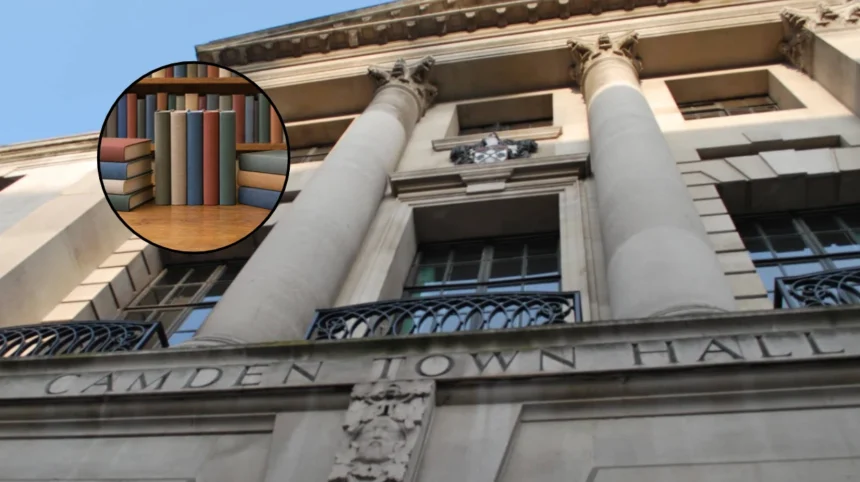
- Camden Council action: The north London local authority confirmed on Wednesday, 11 November 2026, that it is removing books by children’s author David Walliams—including his memoir, Camp David—from display in its public libraries.
- Council rationale: A Camden Council spokesperson stated the authority is committed to making Camden a safer place for women and girls, challenging harmful attitudes, and promoting healthy relationships, though it did not clarify whether copies remain available to borrow by request or how long the measure will last.
- Allegations and denial: Multiple women have accused Walliams of sexual misconduct, including claims that he groomed them as teenagers and one allegation that he sexually assaulted a complainant when she was 15. Walliams denies all allegations of sexual misconduct, wrongdoing, and abuse of power, stating he has not broken the law and is not a sexual predator, while expressing regret for behaving thoughtlessly in casual relationships.
- High Court ruling: Walliams unsuccessfully sought a High Court injunction to block publication of the allegations. Mr Justice Nicklin dismissed the claim, making clear that the court proceedings did not determine whether any of the allegations are true.
- Divergent school policies: Schools in Camden have been left to make independent decisions. Elsewhere in England, academy trusts Oasis Charitable Trust (led by founder Steve Chalke) and GLF Schools have chosen to remove his books from school libraries temporarily, prompting Association of School and College Leaders (ASCL) general secretary Pepe Di’Iasio to call for Department for Education guidance.
- Varied public library responses: Kent County Council and Surrey County Council confirmed they have no plans to ban or remove Walliams’s titles, a stance echoed by library charity Libraries Connected, which noted that professional principles favour keeping books available unless their content is unlawful.
- Prior publishing changes: Walliams’s former publisher, HarperCollins, previously decided in 2025 not to publish new titles by him and later ceased restocking his back catalogue—decisions separate from Camden’s response.
North London (North London News) November 13, 2026 – Camden Council has confirmed that books written by children’s author David Walliams are being removed from display across its public libraries following the publication of sexual misconduct allegations against him, which the author firmly denies.
As reported by LDN Editor of London Daily News and Richard Osley of the Camden New Journal, the north London local authority confirmed its decision on Wednesday, 11 November 2026. The council stated that, in light of the allegations, removing the titles from prominent display was considered the most appropriate course of action. Alongside his children’s fiction—which includes Gangsta Granny, Billionaire Boy, and Mr Stink—the decision also applies to Walliams’s memoir, Camp David.
Explaining the authority’s position, a Camden Council spokesperson stated that the council was committed to making Camden a safer place for women and girls, challenging harmful attitudes, and promoting healthy relationships. However, the council’s public statement specifically addressed the removal of the books from display and did not clarify whether copies would remain available to library users upon request, nor did it specify how long the arrangement would remain in place. Reporting by Euan Mahy of Island FM noted that the books in Camden were removed from display and placed into storage.
What are the allegations against David Walliams and how has he responded?
The library decisions follow the publication of a joint investigation by The Guardian and ITV News, which detailed accounts from several women accusing Walliams of sexual misconduct. According to reporting by The Guardian and London Daily News, the allegations include claims that Walliams groomed complainants when they were teenagers, with one woman alleging that he sexually assaulted her when she was 15 years old.
Walliams has categorically denied all allegations of sexual misconduct, wrongdoing, and abuse of power, maintaining that he has not broken the law. In a statement reported across national and local outlets, including London Daily News and ITV News, the author said that he regretted having behaved thoughtlessly towards some individuals with whom he had been involved in casual relationships. He maintained that he had never abused a power imbalance stemming from his public profile and stated that he was not a sexual predator.
Prior to the publication of the reports, Walliams sought a permanent High Court injunction to prevent The Guardian and ITN from publishing the allegations. As reported by ITV News and The Guardian, Mr Justice Nicklin dismissed Walliams’s application. In his ruling, the judge emphasised that the injunction proceedings did not determine whether the allegations, or any part of them, were true, and the refusal to grant the injunction does not constitute a legal finding that the claims are factual.
How are schools and academy trusts responding to the allegations?
Camden Council’s directive applies strictly to its municipal public libraries, meaning individual schools within the borough have been left to make their own independent decisions regarding whether to keep Walliams’s books accessible to pupils.
Across England, educational organisations have adopted varying approaches rather than following a single national policy. As reported by Olivia Taylor of The Eastern Herald and London Daily News, the Oasis Charitable Trust—which operates more than 50 academy schools across England—has advised its headteachers to temporarily withdraw Walliams’s books from school libraries. Explaining the trust’s rationale, its founder, Steve Chalke, stated that the advice was intended to protect children, noting that pupils may hear about the news coverage and encounter the author’s name or photograph on library shelves, which could bring back difficult memories for children who have experienced challenging situations.
GLF Schools, an academy trust operating schools in south and south-east England, has similarly decided to remove Walliams’s titles from its school libraries.
In response to the patchwork of local decisions, the Association of School and College Leaders (ASCL) has urged the Department for Education (DfE) to issue formal national guidance. As cited by London Daily News, ASCL general secretary Pepe Di’Iasio stated that school leaders were already having to make difficult decisions over whether the books should remain on shelves.
Why are other public library services taking a different approach?
Outside Camden, other public library authorities have declined to remove Walliams’s work from their collections, citing professional library principles regarding censorship and stock management.
As reported by London Daily News, Kent County Council confirmed it has no plans to remove Walliams’s books. The authority stated that its starting position is to make books available unless their content is unlawful, adding that it does not make stock decisions by imposing blanket bans on individual authors.
Surrey County Council similarly confirmed that Walliams’s books remain available to borrow across its network. The council noted, however, that demand for his titles had fallen significantly in recent years and explained that stock management decisions take account of borrowing usage alongside the need to maintain a relevant and balanced collection.
Libraries Connected, the charity that represents and supports public libraries across the United Kingdom, reinforced this stance. According to statements reported by London Daily News, the charity stated that under established professional principles, the starting point for public libraries is that books should remain available unless their content is illegal, while noting that library services routinely refresh their collections based on reader demand.
Background
Before the public emergence of the current allegations in November 2026, David Walliams—one of Britain’s highest-selling children’s authors, with more than 60 million copies sold globally—had already experienced significant changes in his publishing arrangements. In 2025, his long-time publisher, HarperCollins, decided not to publish any new books by Walliams and subsequently announced that it would no longer restock his existing back catalogue. Those commercial publishing decisions occurred prior to, and separately from, Camden Council’s November 2026 move to remove his books from library displays following the High Court ruling and media reports.
Prediction
For school leaders, public librarians, and parents, the divergence between Camden Council’s display removal, the temporary withdrawals by academy trusts such as Oasis Charitable Trust and GLF Schools, and the retention policies of councils in Kent and Surrey highlights an immediate operational challenge in managing children’s book collections. Without standardised national direction from the Department for Education—as requested by ASCL general secretary Pepe Di’Iasio—headteachers and local library managers face continued case-by-case decision-making, balancing child safeguarding and community sensitivities against established anti-censorship standards. If the Department for Education issues formal guidance following discussions with school unions, educational institutions across England could adopt more uniform protocols for handling library stock by authors facing serious public allegations.