Key Points
- Licensing Restrictions: Camden Council has imposed stringent new conditions on The Camden nightclub following reports of systemic management failures.
- Violent Incidents: Police highlighted two specific altercations on a single night—a mass brawl and an assault where a man punched a woman in the stomach—neither of which were reported to authorities by venue staff.
- Regulatory Breaches: Metropolitan Police officers identified a “culture of non-compliance,” including failure to maintain incident logs and inadequate security protocols.
- Public Safety Concerns: Local authorities cited persistent noise complaints from residents and an inability of management to control crowd safety as primary drivers for the intervention.
- Mandatory Requirements: The venue must now implement rigorous ID scanning, enhanced CCTV coverage, and improved staff training to retain its operating licence.
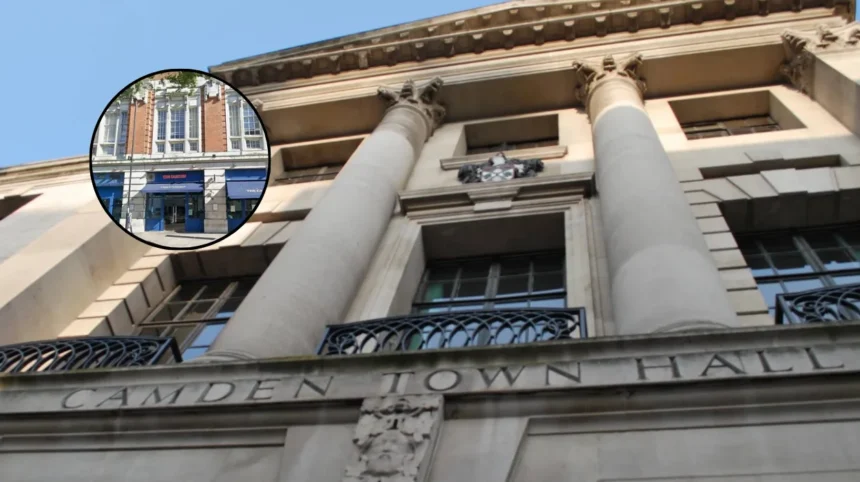
Camden (North London News) August 18, 2026 – Camden Council has implemented a series of rigorous licensing conditions on The Camden, a prominent events space and nightclub, following an investigation into multiple violent disturbances and significant breaches of public safety protocols. The local authority’s decision follows formal representations from the Metropolitan Police, who accused the venue’s management of fostering a “culture of non-compliance” that directly jeopardised the safety of patrons and the local community.
Why did Camden Council intervene at The Camden nightclub?
The intervention was triggered by a series of critical lapses in security and reporting during a single night of operations. According to police reports submitted to the licensing committee, staff at the venue failed to alert the Metropolitan Police after two separate violent altercations took place on the premises.
In one instance, a mass brawl erupted within the venue, involving multiple individuals. On the same evening, a separate incident occurred in which a man reportedly punched a woman in the stomach. Despite the severity of these events, authorities noted that the management did not contact emergency services, nor did they record the incidents in the venue’s mandatory logbook—a direct breach of their licensing agreement.
Police officers tasked with reviewing the venue’s operations argued that the failure to report such crimes prevented timely investigations and allowed potential offenders to leave the scene undetected. Beyond the violence, the council’s review highlighted ongoing issues regarding noise pollution, with multiple local residents filing complaints about disruptive activity extending late into the night.
What are the new licensing conditions for The Camden?
To avoid a full revocation of its premises licence, the venue has been compelled to adopt a comprehensive overhaul of its operational standards. The Licensing Sub-Committee mandated the following requirements:
- Electronic ID Scanning: The installation and mandatory use of an electronic identification scanning system for all patrons entering the venue after 8:00 PM.
- Enhanced Surveillance: An upgrade to the existing CCTV system to ensure full coverage of all public areas, including blind spots identified during the police audit. Footage must be retained for a minimum of 31 days.
- Security Staffing Ratios: A mandatory increase in the number of Security Industry Authority (SIA) licensed door supervisors, with specific requirements for female security staff to be on-site during peak hours.
- Incident Reporting Protocols: The implementation of a digital incident logbook, which must be made available for inspection by the police or local authority officers upon request at any time.
- Management Training: All senior staff and designated premises supervisors must undergo accredited licensing and conflict management training within the next 30 days.
How did the venue respond to the police allegations?
Representatives for The Camden acknowledged the concerns raised by the police and the council during the licensing hearing. The management expressed a commitment to rectifying the identified failings, citing difficulties in staffing during a period of high turnover within the hospitality sector. They maintained that the incidents were isolated and not representative of the venue’s standard operational procedures.
However, the council remained unconvinced that current management had sufficient control over the premises. The decision to impose conditions rather than revoke the licence entirely was described as a “final opportunity” for the operators to demonstrate that they can function as a responsible member of the Camden night-time economy.
Background of the development
The Camden has historically operated as a versatile space, hosting live music, club nights, and private events. In recent years, the borough of Camden has seen an intensification of regulatory oversight regarding night-time venues as part of a wider strategy to mitigate anti-social behaviour in high-density areas.
Licensing reviews in the UK are formal processes where a “responsible authority”—usually the police or environmental health department—requests a change to a venue’s licence terms due to failures to promote the four licensing objectives: the prevention of crime and disorder, public safety, the prevention of public nuisance, and the protection of children from harm. The Camden was found to have failed significantly against the first three objectives. This specific case follows a trend of “zero-tolerance” enforcement by the Metropolitan Police in North London, where venues are increasingly held accountable for the conduct of their patrons inside and immediately outside their doors.
Explore More Camden News
Dr Josevania Martins Suspended Over Partner Ozempic Prescriptions Hampstead 2026
Camden Completes Ten New Affordable Family Homes in Somers Town 2026
Prediction: How will this affect the venue and its patrons?
For the patrons of The Camden, the immediate impact will be a more structured and potentially slower entry process. The mandatory use of ID scanners will filter out underage drinkers and individuals barred from other local venues, which is expected to reduce the incidence of alcohol-fuelled aggression within the club. While some regulars may view these measures as intrusive, the enhanced security presence is likely to create a safer environment for those attending events.
For the venue’s operators, the financial burden of these upgrades—specifically the costs associated with additional SIA staff and digital infrastructure—will be significant. If the venue fails to adhere to these new conditions, the council holds the authority to move directly to a revocation hearing, which would result in the permanent closure of the business. Consequently, The Camden is now under a probationary period where every operational decision will be scrutinised. If the measures prove successful in reducing reports of disorder, the venue may stabilise its reputation; if not, it risks becoming the latest casualty in the borough’s increasingly stringent approach to nightlife management.