Key Points
- Dr Desmond Kidd, a consultant neurologist at Camden’s Royal Free Hospital, has been banned from practising medicine for 12 months by the Medical Practitioners Tribunal Service (MPTS).
- In March, the MPTS ruled that Dr Kidd’s fitness to practise was impaired and that he posed a “real risk to patients”.
- Dr Kidd faked a diagnosis for a patient known as ‘Patient B’, claiming she had a rare immune disorder despite knowing her test results disproved this.
- He sought medication for Patient B that she did not need, putting her at risk of infection, allergic reactions, and blood clots.
- Dr Kidd lied repeatedly to Patient B, her GP, and pharmacists about her condition.
- When challenged by Patient B’s GP, he claimed there was “clear” evidence from test results supporting his diagnosis, knowing this was untrue.
- The tribunal described Dr Kidd’s actions as “misguided” and found he continued to lie even after his diagnosis was questioned.
- Dr Kidd also made several bogus claims about his links to a top medical research group, as detailed in the original reporting.
North London (North london news) March 25, 2026 – A consultant neurologist at Camden’s Royal Free Hospital has been suspended from medical practice for 12 months after faking a patient’s diagnosis and lying repeatedly about her condition, endangering her health. The Medical Practitioners Tribunal Service (MPTS) ruled in March that Dr Desmond Kidd’s fitness to practise medicine was impaired, deeming him a “real risk to patients”. This decision followed findings that the “misguided” doctor sought unnecessary medication for a woman known only as Patient B, falsely claiming she suffered from a rare immune disorder despite test results proving otherwise.
- Key Points
- What led to Dr Desmond Kidd’s suspension?
- How did Dr Kidd lie to Patient B and her colleagues?
- What risks did Patient B face from the faked diagnosis?
- What other misconduct did Dr Kidd commit?
- When and how did the MPTS rule on the case?
- What is the Royal Free Hospital’s role in this scandal?
- Why was Dr Kidd described as ‘misguided’ by the tribunal?
- How has this case impacted patient trust in North London hospitals?
- What are the broader implications for UK medical regulation?
- Who is Dr Desmond Kidd, and what is his background?
- What steps follow Dr Kidd’s 12-month suspension?
- Has similar misconduct occurred at the Royal Free before?
What led to Dr Desmond Kidd’s suspension?
The case against Dr Desmond Kidd, a neurologist based at the Royal Free Hospital in Camden, North London, centred on his handling of Patient B’s treatment. As detailed in the primary coverage by MyLondon, Dr Kidd sought medication for the patient despite knowing she did not require it. He informed pharmacists that Patient B had a rare immune disorder, a claim contradicted by her test results, which he fully understood disproved any such condition.
This deception exposed Patient B to serious risks, including infection, allergic reactions, and blood clots, according to the MPTS panel’s findings. The tribunal highlighted how Dr Kidd’s actions breached fundamental medical standards, prioritising false narratives over patient safety.
When Patient B’s GP raised concerns about the treatment plan, Dr Kidd doubled down on his lies. He asserted there was “clear” evidence from her test results supporting his diagnosis, a statement he knew to be untrue. This persistence in dishonesty, even under scrutiny, formed a core part of the impairment ruling.
How did Dr Kidd lie to Patient B and her colleagues?
Dr Kidd’s pattern of deceit extended beyond pharmacists to Patient B herself and her wider care team. As reported extensively by MyLondon in their North London news section, the neurologist repeatedly lied to the patient about her condition, fabricating details to justify inappropriate prescriptions.
The MPTS tribunal noted that these lies continued unabated after initial challenges. For instance, following the GP’s flag on the treatment plan, Dr Kidd maintained his bogus diagnosis without correction. This behaviour not only misled colleagues but also prolonged Patient B’s exposure to unnecessary risks.
No additional statements from Patient B or her GP have been publicly detailed in the sources, but the panel’s determination underscores the gravity: Dr Kidd’s “misguided” approach created a direct threat to patient welfare.
What risks did Patient B face from the faked diagnosis?
The potential harms to Patient B were starkly outlined by the MPTS. By pursuing medication for a non-existent rare immune disorder, Dr Kidd subjected her to dangers such as infections from immunosuppressive drugs, severe allergic reactions, and potentially life-threatening blood clots.
MyLondon‘s reporting emphasises that Dr Kidd was aware of the negative test results yet proceeded, knowingly endangering the patient. The tribunal’s ruling explicitly linked these risks to his impaired fitness, stating he posed a “real risk to patients” through such conduct.
This incident at the Royal Free Hospital, one of London’s prominent NHS trusts, raises broader questions about oversight in neurology departments handling complex diagnoses.
What other misconduct did Dr Kidd commit?
Beyond the faked diagnosis, Dr Kidd made several bogus claims about his professional affiliations. The original MyLondon article reveals he falsely boasted links to a top medical research group, inflating his credentials in ways that undermined trust in his expertise.
These additional misrepresentations were factored into the MPTS’s comprehensive assessment, painting a picture of a doctor prone to dishonesty across multiple facets of his practice. The panel’s March decision integrated these elements, leading to the 12-month ban.
When and how did the MPTS rule on the case?
The Medical Practitioners Tribunal Service delivered its verdict in March, determining that Dr Desmond Kidd’s fitness to practise was impaired. As covered by MyLondon, the ruling imposed a 12-month suspension from the profession, effective immediately.
The tribunal’s language was pointed: Dr Kidd, described as “misguided”, had lied repeatedly to Patient B, her GP, and pharmacists. This followed a detailed hearing where evidence of his knowledge of the falsified test interpretations was presented.
The MPTS, responsible for regulating UK doctors, stressed the ongoing risk he presented, justifying the full-year ban rather than a lesser sanction.
What is the Royal Free Hospital’s role in this scandal?
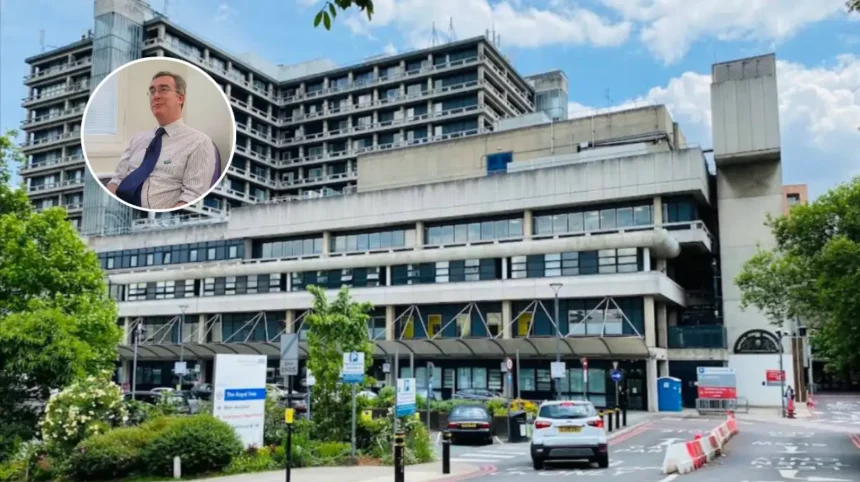
The Royal Free Hospital in Camden, where Dr Kidd served as a consultant neurologist, became the focal point of this North London controversy. MyLondon‘s coverage links the incident directly to the hospital’s premises, noting its status as a major NHS facility with a renowned maternity unit and other services.
Hospital spokespeople have not issued public comments in the sourced materials, but the case has spotlighted internal referral processes, given the GP’s intervention. The trust’s involvement underscores the need for robust checks on specialist referrals.
Why was Dr Kidd described as ‘misguided’ by the tribunal?
The MPTS panel characterised Dr Desmond Kidd as a “misguided” consultant, a term reflecting their view of his flawed judgement rather than outright malice. According to MyLondon, this assessment stemmed from his persistent lies despite clear evidence against his claims.
This framing highlights a doctor who veered from evidence-based practice into fabrication, eroding public confidence in neurology care at institutions like the Royal Free.
How has this case impacted patient trust in North London hospitals?
This suspension arrives amid heightened scrutiny of healthcare professionals in North London. Camden residents, served by the Royal Free, may now question the safeguards against diagnostic errors. MyLondon‘s reporting positions the story within ongoing coverage of local health issues, including past cases like an Islington GP suspended over Islamophobic WhatsApps.
The MPTS’s emphasis on “real risk to patients” amplifies concerns, prompting calls for enhanced whistleblower protections for GPs challenging specialists.
What are the broader implications for UK medical regulation?
The Dr Kidd case exemplifies the MPTS’s role in upholding standards across the UK. With a 12-month ban, it sends a clear message on the consequences of lying about patient diagnoses. Sources like MyLondon note parallels to other tribunals, reinforcing that fitness to practise hearings prioritise public safety.
Neurologists, dealing with intricate conditions like rare immune disorders, face particular pressure to maintain accuracy. This ruling could influence training protocols nationwide.
Who is Dr Desmond Kidd, and what is his background?
Dr Desmond Kidd practises as a consultant neurologist at Camden’s Royal Free Hospital. Limited biographical details emerge from the sources, but MyLondon identifies him squarely within North London’s medical community. His bogus claims about ties to a top research group suggest prior efforts to bolster his profile.
Post-suspension, his professional standing remains tarnished, with the ban barring practice for a full year.
What steps follow Dr Kidd’s 12-month suspension?
After the ban lifts, Dr Kidd must demonstrate remediation to regain full practice rights. The MPTS could impose conditions, such as supervised work or ethics retraining. MyLondon does not detail appeals, but standard procedure allows doctors to request reviews.
Patients like Patient B may pursue separate complaints via NHS processes, though outcomes remain unreported.
Has similar misconduct occurred at the Royal Free before?
While this is the prominent case, MyLondon‘s archives reference other Royal Free issues, such as maternity service pressures. No direct precedents for faked diagnoses appear, but the hospital’s high profile invites comparisons.
The trust’s response, if any, would likely focus on internal audits to prevent recurrence.