Key Points
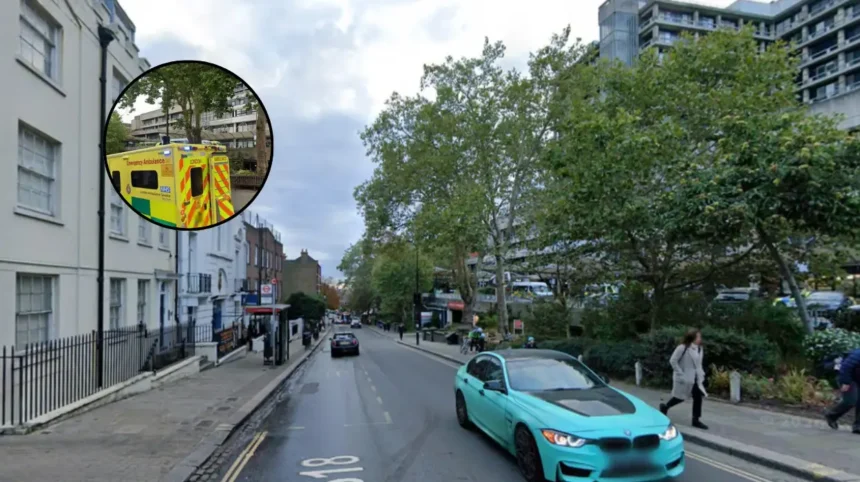
- A cyclist was taken to hospital after a collision with another vehicle on Pond Street, Hampstead, at around 5:30 am on Sunday, 12 July 2026.
- The crash occurred in the early morning, before most commuters were on the road, and briefly disrupted traffic on Pond Street between Hampstead Hill Gardens and South End Road.
- Police described the cyclist’s injuries as “neither life‑threatening nor life‑changing”.
- Metropolitan Police confirmed officers were called at 05:31 hrs and that the cyclist was transported to hospital for treatment.
- Local traffic updates noted a “minimal vehicle collision” on Pond Street from around 06:30, which was later marked as cleared.
- The incident has prompted renewed attention on early‑morning road safety, cyclist–vehicle interactions, and the condition of Pond Street as a key route near Hampstead Heath and the Royal Free Hospital site.
Hampstead (North London News) July 13, 2026 – A cyclist was taken to hospital after colliding with another vehicle on Pond Street, Hampstead, in the early hours of Sunday, 12 July 2026. The Metropolitan Police confirmed that officers were called at 05:31 hrs to reports of a road traffic collision involving a cyclist and a vehicle on Pond Street.
- Key Points
- Why is this early‑morning collision on Pond Street raising concerns among Hampstead residents and cyclists?
- What do police and local reports say about the severity of the cyclist’s injuries?
- How could this incident influence road safety practices and cyclist protection in north London?
- What are the likely implications for local cycling and driving behaviour in Hampstead?
- Background: Context and development around the Pond Street collision
- Prediction: How this development could affect cyclists, drivers and local residents in north London
- How could drivers and residents respond to this incident?
According to Met Police, the collision happened between a cyclist and another vehicle on Pond Street, Hampstead, at around 5:30 am. The cyclist was taken to hospital for treatment, and their injuries were assessed as neither life‑threatening nor life‑changing. A Met Police spokesperson stated: “At 05:31hrs on Sunday, 12 July, officers were called to reports of a road traffic collision involving a cyclist and a vehicle on Pond Street, Hampstead.
The cyclist was taken to hospital for treatment. His injuries were assessed as neither life‑threatening nor life‑changing.”.
Local traffic monitoring services reported that Pond Street (both directions) between Hampstead Hill Gardens and South End Road was closed due to a “minimal vehicle collision” from around 06:30 on 12 July 2026, with the incident later marked as cleared.
While the exact type of vehicle involved has not been disclosed in available reports, the timing and location suggest the crash occurred on a stretch of road commonly used by residents, hospital staff, and early commuters heading towards central London and the wider Camden area.
Why is this early‑morning collision on Pond Street raising concerns among Hampstead residents and cyclists?
As reported by the editor of Ham High (Ham High), the collision happened between a cyclist and another vehicle in Pond Street, Hampstead, at around 5:30 am on 12 July.
Although the incident was described as “minimal” by traffic monitors, it briefly closed both directions of Pond Street between Hampstead Hill Gardens and South End Road, disrupting access for early morning traffic near Hampstead Heath and the Royal Free Hospital.
Residents and local road users have previously highlighted Pond Street as a busy route that connects residential areas with key facilities, including schools, parks, and hospitals.
The early morning timing of the crash – just after 5:30 am – means fewer pedestrians and vehicles were present, but also that visibility and road users’ alertness can be compromised in the pre‑dawn hours.
Traffic updates from UK Traffic Updates noted that the road closure began around 06:30 and was later cleared, indicating that emergency services, including police and possibly ambulance crews, were on scene for a limited period.
No further details about additional injuries, vehicle damage, or witness statements have been released in public reports at this stage.
What do police and local reports say about the severity of the cyclist’s injuries?
As reported by a journalist covering the incident for Yahoo News UK, the cyclist was taken to hospital after the crash on Pond Street, Hampstead, and their injuries were deemed neither life‑threatening nor life‑changing.
This wording mirrors the official statement from a Met Police spokesperson, which has been cited by multiple outlets including Ham High and Yahoo News UK.
The Metropolitan Police did not disclose the cyclist’s age, gender, or exact identity, and the name of the other vehicle involved has not been confirmed in available reports.
The focus of the official statements has remained on the nature of the injuries and the response time of emergency services, rather than on attributing blame or providing detailed collision reconstruction at this stage.
For local residents and cycling groups, the key point is that although the incident did not result in catastrophic harm, any collision involving a cyclist and a motor vehicle on a street like Pond Street underscores the vulnerability of cyclists in mixed traffic environments.
Early morning crashes can be particularly dangerous due to reduced visibility, drivers potentially fatigued or less alert, and fewer witnesses to record what happened.
How could this incident influence road safety practices and cyclist protection in north London?
As noted by reporting from London Now, the crash occurred on Pond Street near Hampstead Heath and the Royal Free Hospital, an area that sees a mix of residents, hospital staff, and early commuters.
The early morning timing – around 5:30 am – means that lighting conditions were still poor and that some road users may have been less alert than during daylight hours.
Cyclists often use routes like Pond Street to avoid heavier traffic during the day, but this can expose them to risks when visibility is low and when motor vehicles are travelling at speeds that may feel safe in quiet conditions but are dangerous in the event of a collision.
Incidents such as this one are frequently cited by cycling advocacy groups when arguing for improved road markings, better lighting, and clearer separation between cyclists and vehicles on key urban routes.
While the official police statement has not indicated whether speed, overtaking, or other factors contributed to the crash, the fact that a collision occurred at this time and location reinforces the need for continued vigilance from all road users, especially during pre‑dawn hours.
What are the likely implications for local cycling and driving behaviour in Hampstead?
For local cyclists, this incident may encourage more cautious routing, the use of additional lights and reflective gear, and a greater awareness of vehicle movements even on streets that appear quiet at 5:30 am.
For drivers, the crash highlights the importance of scanning for cyclists, particularly at junctions and on narrow stretches of road where vehicles and cycles must share space.
Local authorities and community groups may also review the incident as part of broader road safety assessments, especially if similar early‑morning collisions have occurred in the area in the past.
While there is no indication from current reports that Pond Street will undergo immediate structural changes, such incidents often feed into longer‑term discussions about road design, signage, and enforcement in north London boroughs including Camden.
Background: Context and development around the Pond Street collision
This incident builds on a pattern of road traffic collisions in north London involving cyclists and vehicles, particularly on streets that serve as key connectors between residential areas, hospitals, and parks.
Pond Street, running between Hampstead Hill Gardens and South End Road, is one such route, frequently used by cyclists heading towards central London or local facilities such as the Royal Free Hospital.
The Metropolitan Police response – with officers called within minutes of the incident being reported and a clear public statement on the nature of the injuries – reflects standard procedures for road traffic collisions where a vulnerable road user is involved. In similar cases, police often later issue appeals for witnesses or dashcam footage if there are indications that further investigation is required, though no such appeal has been publicised for this specific crash at this time.
Local traffic monitoring platforms have increasingly reported minor collisions on residential and semi‑urban streets in north London, with some incidents leading to temporary closures and delays.
The Pond Street collision is one of several such events recorded in July 2026, contributing to ongoing discussions about how best to manage mixed traffic on streets that are not designed exclusively for cars or exclusively for cyclists.
Prediction: How this development could affect cyclists, drivers and local residents in north London
Following this collision, cyclists in north London may become more cautious when using early‑morning routes such as Pond Street, potentially altering their planned paths to avoid streets with known risks or limited lighting.
Some may choose to travel slightly later in the morning when visibility is better, or invest in higher‑intensity lights and more visible clothing to reduce the risk of being missed by drivers.
Cycling groups and local community organisations may also use this incident to highlight the need for better road infrastructure, such as clearer cycle lanes, improved road markings, and enhanced lighting on stretches of road near Hampstead Heath and the Royal Free Hospital.
While there is no immediate confirmation that such changes will be implemented, the incident will likely be cited in future safety campaigns and may influence local road safety planning in Camden and surrounding boroughs.
How could drivers and residents respond to this incident?
For drivers, the crash underscores the importance of paying close attention even on quiet streets at dawn, where cyclists may be less visible and where assumptions about “no traffic” can lead to risky behaviour.
Residents and local businesses may also become more aware of the need for safer parking practices, reduced speeding, and greater caution when turning or pulling out near junctions on Pond Street and similar routes.
In the longer term, such incidents can contribute to a gradual shift in how local authorities and communities approach road safety, with more emphasis on protecting vulnerable road users and encouraging mutual awareness between cyclists and drivers.
While the police have not indicated that this specific collision will lead to immediate enforcement actions or road redesigns, it will likely be part of the broader evidence base used when assessing risks and planning improvements on north London streets.