Key Points
- Station Closure: Hampstead Underground Station was closed on October 13 following a medical emergency on the platform.
- Time of Incident: Emergency services were alerted around 1:43 pm, prompting a swift response and the immediate shutdown of the station to allow medical personnel to attend to the individual.
- Rapid Response: The London Ambulance Service dispatched fast response cars, an incident response officer, an advanced paramedic, a tactical response unit paramedic, and a trauma team from London’s Air Ambulance.
- Immediate Care: The first paramedic arrived at the scene in less than one minute to treat the patient.
- Hospital Transfer: The individual was treated on-site before being transported to a local hospital as a priority.
- Service Resumed: Transport for London confirmed the station reopened later the same afternoon, restoring full Northern line services.
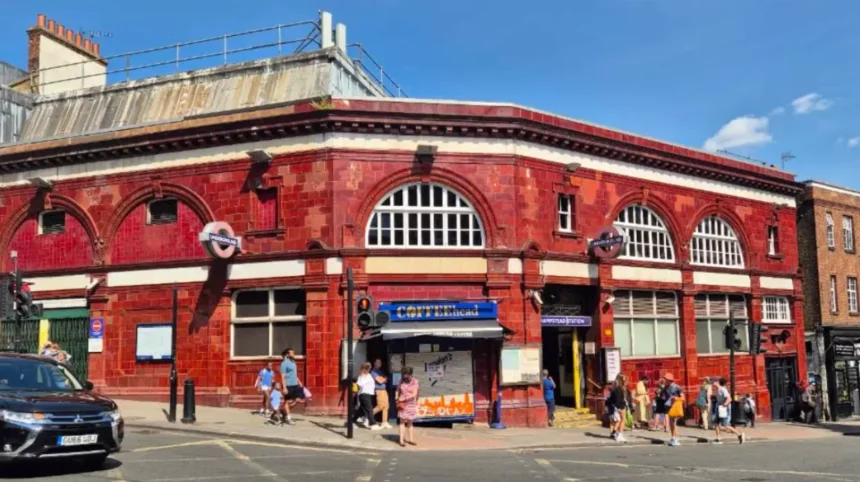
Hampstead (North London News) October 14, 2026 – Hampstead Underground Station was temporarily closed yesterday afternoon after a passenger fell ill on the platform, triggering a large-scale emergency service response across the area.
As reported by Samuel Turner, Breaking News Reporter for London Now and the Hampstead & Highgate Express, the medical emergency occurred at approximately 1:43 pm on October 13, leading Transport for London (TfL) to halt entry and shut down the station while medical responders assessed the patient.
What Triggered the Emergency Response at Hampstead Underground Station?
Emergency service vehicles quickly established a presence on Heath Street outside the entrance to Hampstead Station shortly after the distress call was made. Footage circulated on social media showed multiple ambulance units and police vehicles stationed nearby with emergency lights active while medical teams entered the station.
As reported by Samuel Turner of London Now, a London Ambulance Service (LAS) spokesperson detailed the extensive resources mobilized to the scene, stating:
“We sent an ambulance crew, paramedics in fast response cars, an incident response officer, an advanced paramedic and a paramedic from our tactical response unit.”
The spokesperson added:
“We also dispatched a trauma team in a car from London’s Air Ambulance. The first paramedic arrived in less than one minute. We treated a patient at the scene and took them to a local hospital as a priority.”
How Did the Closure Impact Northern Line Commuters?
The sudden shutdown caused short-term travel disruptions for passengers traveling on the Northern line. The station serves as a key stop on the Edgware branch, connecting passengers southbound toward central London destinations such as Camden Town and Charing Cross, and northbound toward Golders Green and Edgware.
Transport for London updated its official travel status notices online shortly after the closure was enacted to inform passengers of operational changes. Trains bypassed Hampstead Station while emergency crews operated on the platform level. Following the safe transfer of the patient to an ambulance and necessary clearance from station staff, TfL confirmed that the station was reopened to the public later the same afternoon, returning line operations to normal.
What Is the Background of This Particular Development?
Hampstead Underground Station holds a unique distinction within the London Underground network. Opening in June 1907 as part of the Charing Cross, Euston & Hampstead Railway, it is deep-level tube station situated 58.5 metres (192 feet) below ground level, making it the deepest station on the entire TfL network. Because of its extreme depth, the station relies on a bank of high-capacity lifts and a emergency spiral staircase comprising over 320 steps.
Medical emergencies in deep-level Underground stations present specific operational challenges for first responders. Due to the depth and layout of subterranean platforms, emergency incidents often require coordinated efforts between station personnel, paramedic teams, and specialized response units to navigate equipment down to platform level and extract patients safely. Yesterday’s sub-one-minute initial response by the London Ambulance Service highlights established rapid-response protocols designed to mitigate the inherent geographical challenges posed by deep Underground infrastructure.
How Can This Development Affect Northern Line Passengers and Local Residents?
This development directly affects Northern line commuters, Hampstead residents, and local business operators in several key ways:
1. Commuter Reliability and Disruption Preparedness
For daily passengers traveling through the Edgware branch of the Northern line, unexpected station closures highlight the sensitivity of subterranean transport networks to medical emergencies. While trains continued to run on the line without stopping at Hampstead during the intervention, commuters who rely on the station for access to central London faced brief delays and rerouting to nearby stations such as Belsize Park or Golders Green.
2. Confidence in Emergency Medical Support
The speed of the multi-tiered response—where the initial paramedic reached the platform in less than 60 seconds—provides reassurance to the thousands of commuters who use the London Underground daily. Passengers using deep-level stations can maintain confidence that severe medical situations are handled with high efficiency by dispatching advanced trauma and tactical teams when critical incidents arise.
3. Traffic and Pedestrian Dynamics in Hampstead High Street
The deployment of emergency vehicles near the station entrance briefly impacted local vehicular traffic and pedestrian flow around Heath Street and Hampstead High Street. Local residents and nearby business owners may experience short-term localized traffic congestion during similar high-priority responses when emergency vehicles occupy main thoroughfares.