Key Points
- Ski jumping event held on Hampstead Heath in North London over the weekend of 24-25 March 1950, organised as a joint venture between the Ski Club of Great Britain and the Oslo Ski Association.
- An 18-metre (59-foot) high scaffold jump constructed near the Vale of Health, using 45 tons of snow imported from Norway in wooden crates insulated with dry ice, transported by barge and trucks.
- Around 100,000 spectators attended, causing massive traffic jams and overwhelming Hampstead Tube station; crowds included paying visitors and gatecrashers.
- Norwegian ski jumpers, including 23-year-old Arne (or Arne) Hoel who won the London Challenge Cup with a 28-metre (91 feet 10 inches) jump; other competitors like Egil Iverson, Hans Bjornstad (world champion), Svein Hakonsen, and Reidar Andersen (longest jump 28.3 metres or 93 feet).
- Event opened by Norwegian schoolboy mascot Jan (or John) Stoa (or Jan Stoa), aged 13, who jumped 23 metres.
- British participants included students from Oxford and Cambridge Universities.
- Landings in bales of hay with attendants using rakes to dig out jumpers; speeds reached 30-40 mph on a narrow snow channel over straw base.
- Warm March weather caused melting snow, visible steam in photos, but event succeeded financially.
- Return event in 1951 with a 24-metre high jump and extra 15 tons of snow; plagued by heavy rain (wettest start to year in 80 years), yet Arne Hoel defended title with 35.5-metre jump.
- British customs imposed 10% duty on imported snow, criticised as “bureaucratic idiocy” by Dundee Courier.
- No further events at Heath, but ski jumping continued elsewhere in Britain: Edinburgh 1951 demo, Manchester 1960, Wembley Stadium 1961 (46m tower, 50 tons artificial snow).
- Footage and photos archived by British Pathé, London Picture Archive, Wikimedia Commons, and The Times.
Hampstead HeathThe (North London News) February 16 2026 – In an extraordinary display of international sporting co-operation, Hampstead Heath in North London hosted its first ski jumping competition on 24-25 March 1950, drawing Cup-tie sized crowds of up to 100,000 spectators to witness Norwegian athletes soar off a towering scaffold jump.
- Key Points
- What Made the 1950 Hampstead Heath Ski Jump Possible?
- Who Were the Key Competitors and What Did They Achieve?
- How Did the Landings Work in This Unusual Setup?
- Why Did Crowds Flock to This North London Spectacle?
- What Challenges Did Organisers Face During the Event?
- Did the Ski Jumping Return to Hampstead Heath?
- What Happened to Ski Jumping in Britain After Hampstead Heath?
- How Have Photos and Footage Preserved This Story?
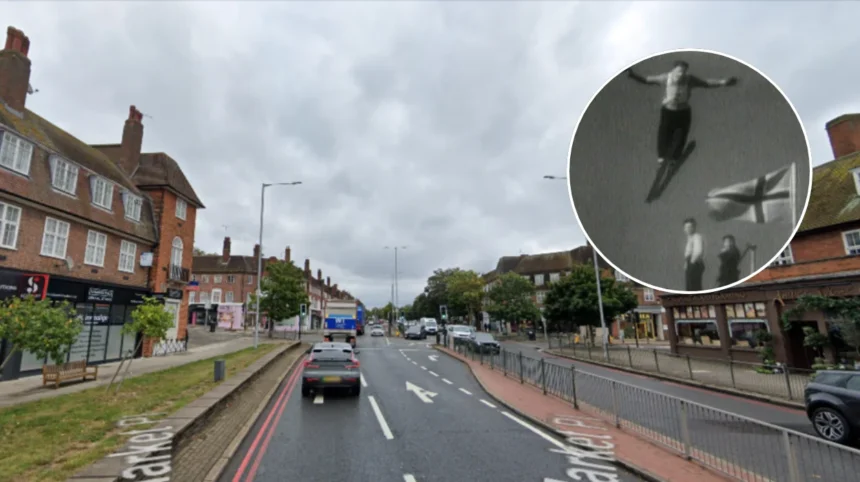
The event, captured in striking archival pictures highlighted by The Times, transformed the leafy park into a winter arena despite London’s rare snowfall, with 45 tons of snow shipped from Norway to create the slope.
Arne Hoel, a 23-year-old businessman from Oslo, claimed victory in the London Challenge Cup with a winning leap of 28 metres.
What Made the 1950 Hampstead Heath Ski Jump Possible?
The ski jump was meticulously constructed near the Vale of Health using standard scaffolding rising 18 metres high, with a 30-metre bamboo track leading to a red-tipped take-off point 4 metres above ground.
As detailed in Londonist archives, the base layer consisted of straw, topped with imported Norwegian snow packed into a narrow central channel to enable speeds of 30-40 mph.
The snow arrived in wooden crates insulated with dry ice, transported via refrigerated barges and lorries by the Norwegian athletes themselves, as noted in British Pathé footage descriptions.
Despite unseasonably warm weather for March, with spectators in shorts and tennis shirts, the event proceeded triumphantly, breaking even financially amid visible steam from melting snow.
Who Were the Key Competitors and What Did They Achieve?
Twenty-five Norwegian jumpers dominated the field, including world champion Hans Bjornstad who was seen oiling his skis in preparatory shots.
Arne Hoel emerged as champion with his 28-metre jump, landing headfirst into hay bales where attendants rushed with rakes to extract competitors, as recounted in a Yorkshire Post account cited by Londonist:
“…attendants had to run forward quickly with rakes to save the jumpers from suffocation. Often feebly waving skis rising from the hay gave the first clue to a competitor’s whereabouts”.
Reidar Andersen recorded the longest jump at 28.3 metres (93 feet), according to Wikimedia Commons records.
Other named jumpers included Egil Iverson, who leapt impressively as panned in British Pathé film, and Svein Hakonsen.
The event opened with 13-year-old Norwegian schoolboy mascot Jan Stoa (also referred to as John Stoa), who thrilled crowds with a 23-metre flight.
British involvement came via Oxford and Cambridge University students in a follow-up tournament, as coordinated by the Norwegian team per London Picture Archive footage.
How Did the Landings Work in This Unusual Setup?
Jumpers hurtled down the
“frightening erection of steel scaffolding that looked like a fairground giant dipper”,
per an Aberdeen Journal commentator quoted in Londonist, before soaring into a crash barrier of snow and hay.
British Pathé captured the drama:
“MV Pan skier (Egil Iverson) landing and running into hay. MV Pan Arne Hoel (Winner.) SV Hoel entering hay.”
Why Did Crowds Flock to This North London Spectacle?
Approximately 100,000 people descended on the Heath, with 18,000 on Friday 24 March and 52,000 across two competitions on Saturday 25 March, leading to standstill traffic and 20-minute delays at Hampstead Tube station lifts.
BBC reports highlight how locals overwhelmed the park, echoing Cup-tie atmospheres in a football-mad city.
Gatecrashers mingled with paying visitors, basking in the novelty as steam rose from the piste.
What Challenges Did Organisers Face During the Event?
Warm temperatures melted the snow rapidly, yet the Ski Club of Great Britain and Oslo Ski Association persisted, as evidenced in The Times archive photos.
A human chain passed snow up the slope, with dry ice broken and raked down, per British Pathé descriptions:
“CU Removing carbon ice from bucket and breaking same on slope. CU man raking ice pan down to rake.”
Boy mascot Jan Stoa tried the slope amid crowds, adding to the festive chaos.
Did the Ski Jumping Return to Hampstead Heath?
The jump returned in 1951, taller at 24 metres with 15 extra tons of snow from Oslo, coordinated again by the Norwegian team.
However, it faced the wettest start to the year in 80 years, with torrential rain turning snow to slush and cars stuck in mud, as Yorkshire Post noted:
“…before the proceedings had been completed, there descended such wild torrents of rain that people without shelter could hardly have been wetter if standing under the Victoria Falls.”
Arne Hoel defended his title with a 35.5-metre jump (116 feet 6 inches), respectable but far from world records.
This marked the last Heath event, soured further by a 10% customs duty on the snow, slammed by the Dundee Courier as
“merit[ing] a high place in the records of bureaucratic idiocy”.
What Happened to Ski Jumping in Britain After Hampstead Heath?
Ski jumping persisted elsewhere: Norwegians hosted a demonstration in Edinburgh in April 1951, hitting similar customs issues.
In 1960, University of Manchester students organised an event; Reddish Vale near Manchester saw a smaller jump.
The largest British event occurred at Wembley Stadium on 31 May-1 June 1961, with a 46-metre tower, 50 tons of artificial snow, 40 top European jumpers, and funds raised for the Ski Club of Great Britain, organised by Sir Charles of Eastbourne.
Plans for a Wrexham centre later fell through.
How Have Photos and Footage Preserved This Story?
The Times article “When ski jumping came to Hampstead Heath — in pictures” leaps into its archive, showcasing the spectacle. (Note: Specific author not listed in available sources.)
British Pathé’s “Snowtime In The Springtime (1950)” film shows jumps, crowds, snow unpacking, and flags.
London Picture Archive holds 1950-1951 colour footage of take-offs, hay landings, and a BBC cameraman.
Wikimedia Commons features valued images of the 18-metre tower and 28.3-metre jumps.
Londonist and BBC articles revive the tale with embeds and context.
Snowheads forum and Instagram reels discuss the Sunday Times picture of mid-flight jumps amid thousands.
Getty Images stocks 90+ London ski jumping photos.
This 1950 Hampstead Heath extravaganza remains a testament to post-war ingenuity, blending Norwegian flair with British resilience, frozen in time through these vivid records.