Key Points
- Local authority leaders and ward councillors in Hackney, Enfield, and Haringey have launched a coordinated campaign opposing Transport for London (TfL) bus proposals.
- The controversial consultation includes re-routing bus 149, fully withdrawing route 67 between Wood Green and Dalston Junction, and scrapping route 254 between Aldgate and Holloway.
- Public representatives warn that altering route 149—one of the capital’s busiest bus services carrying roughly 12 million passengers annually—will severely disrupt key journeys across a London Underground “dead zone”.
- Transport for London maintains the restructure will eliminate underused surplus capacity along the A10 and A1010 corridors while matching supply to actual travel demand.
- The eight-week public consultation on the five affected routes (67, 106, 149, 253, and 254) remains open for community feedback until Sunday, 20 September 2026.
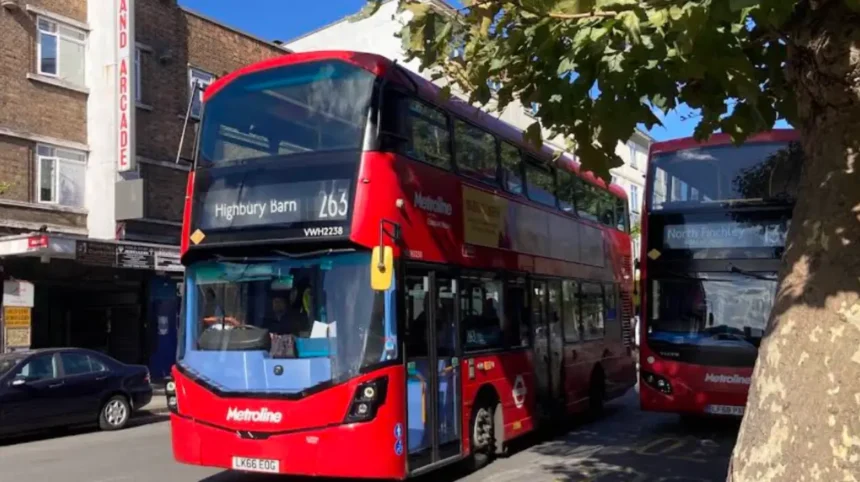
Hackney (North London News) August 11, 2026 – As reported by Josef Steen, Local Democracy Reporter for MyLondon, politicians from across North London are lobbying against Transport for London (TfL) plans to alter several major bus routes traversing a recognised Tube network dead zone, August 8, 2026. Labour councillors in Hackney have formally joined opposition calls previously issued by council leaders in Enfield and Haringey. The cross-borough coalition is challenging official proposals to re-route the 149 service, axe route 67 between Wood Green and Dalston Junction, and scrap route 254 between Aldgate and Holloway. Under the published consultation details, the 149 route—which currently connects London Bridge to Edmonton Green—would lose its northern terminus at Edmonton Green and be redirected from Stamford Hill towards Wood Green along the path of the current 67 service.
- Key Points
- What Are the Details of Transport for London’s Bus Restructure Proposals?
- Why Are Local Politicians and Passengers Fighting the Proposed Changes?
- How Does Transport for London Justify Altering These Routes?
- Background of the North London Bus Service Development
- Prediction: How This Development Can Affect North London Passengers and Local Communities
What Are the Details of Transport for London’s Bus Restructure Proposals?
According to official consultation documentation published by Transport for London, the overarching restructure encompasses five distinct routes: 67, 106, 149, 253, and 254. As detailed in transport summaries by the London Daily News, the plan completely withdraws route 67 and absorbs its footprint between Wood Green and Dalston Junction into a newly configured 149 route. Simultaneously, the 254 service would undergo significant shortening by scrapping the central and northern leg running from Aldgate to Holloway.
As outlined in TfL’s public scheme parameters, weekday peak service frequencies on route 149 would be reduced from a bus every seven minutes to a bus every eight minutes. Transport officials confirm that while the night service would continue operating between Edmonton Green and London Bridge, it would be formally re-numbered as route N149.
Why Are Local Politicians and Passengers Fighting the Proposed Changes?
As reported by Josef Steen of MyLondon, campaign organizers and elected representatives contend that altering the 149 service—which serves as a critical transport spine carrying approximately 12 million passengers each year—will trigger widespread overcrowding and isolate vulnerable residents. Local leaders argue that because large swathes of Enfield, Haringey, and Hackney lack direct access to London Underground or Overground stations, residents rely entirely on high-frequency bus corridors to commute to employment hubs in Shoreditch and the City of London.
An e-petition launched by community activists shortly after the consultation went live highlighted that cutting the direct 149 link between Edmonton Green and London Bridge forces passengers to make unnecessary changes onto alternative routes such as the 243, 259, or 279. Municipal leaders stress that these forced interchanges will increase travel times and impose physical hurdles on elderly and disabled commuters.
How Does Transport for London Justify Altering These Routes?
According to published statements from Transport for London representatives, the proposed changes are structured to “match capacity with passenger demand and to provide a clear and reliable service” across North and East London. Transport planners identified significant “surplus capacity” along the A10 and A1010 corridors between Edmonton Green in Enfield and Stamford Hill on the Hackney-Haringey border.
TfL documentation states that multiple parallel bus services currently run along the same road stretches, leading to inefficiencies. Officials explain that restructuring the 149 to absorb the 67 route creates valuable new direct links—such as connecting West Green Road and St Ann’s Road directly to Shoreditch, Liverpool Street, and London Bridge—without requiring passengers along those sections to change buses.
Background of the North London Bus Service Development
Public surface transport along the A10 trunk road and surrounding northern corridors has historically served as the primary transit option for communities situated between the Victoria Line to the west and the Weaver Line Overground to the east. Over the past decade, Transport for London has periodically reviewed bus network utilization to address changing commuting patterns, shifting working habits following the pandemic, and strict budgetary constraints imposed by central government funding agreements.
Previous network adjustments along the A10 and A1010 corridors—including service modifications to routes 259, 279, and 349—were implemented to prune duplicate mileage. However, the current consultation represents one of the most substantial structural realignments in recent years, directly impacting three London boroughs simultaneously. The eight-week public consultation window, which opened in early August 2026, is scheduled to close on Sunday, 20 September 2026, after which TfL will review public feedback before issuing a final decision.
Explore More Local North London News
White Hart Lane CCTV Appeal Following Sexual Assault, Tottenham 2026
Why Haringey Council Backs Direct Support for Windrush Families Haringey 2026
Prediction: How This Development Can Affect North London Passengers and Local Communities
If Transport for London proceeds with the proposed bus modifications following the consultation close, the impact will be felt immediately across distinct groups within the local population:
- Commuters and Workers: Passengers travelling daily from Edmonton Green and Tottenham towards Central London will face longer journey times due to lost direct connections on route 149. Commuters forced to transfer between buses at designated interchange stops like Stamford Hill may experience longer wait times during peak hours, exacerbated by the reduced peak frequency on route 149 from seven to eight minutes.
- Low-Income and Mobility-Impaired Passengers: Residents living in the Underground “dead zone” who rely on bus transit for mobility will bear the physical and operational burdens of changing vehicles. While the Mayor of London’s Hopper fare mitigates the extra financial cost of changing buses within an hour, navigating busy transfer stops like Stamford Hill presents accessibility barriers for elderly passengers, wheelchair users, and parents with pushchairs.
- Local Businesses and High Streets: Retail corridors along Wood Green, West Green Road, and St Ann’s Road may see altered footfall patterns. While new direct links onto route 149 could bring shoppers into Shoreditch and Dalston, reduced capacity and altered stops in Dalston Junction could inconvenience shoppers accustomed to established route alignments.