Key Points
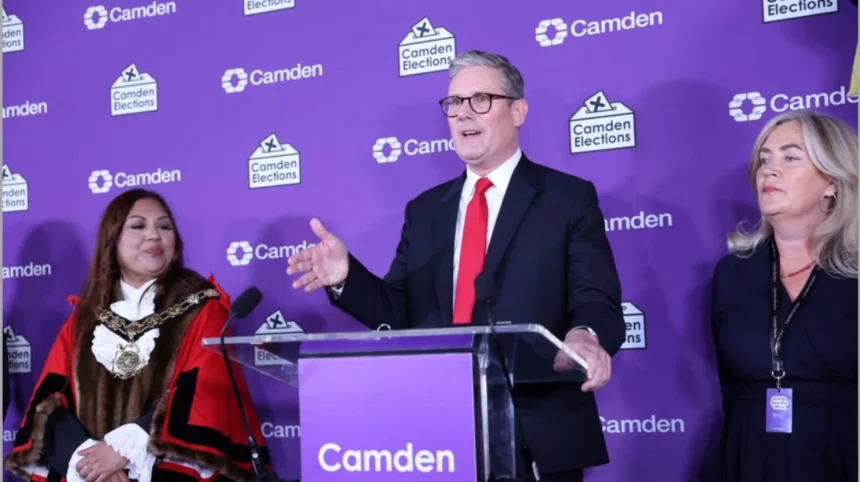
- Labour Victory: Camden Council leader Sagal Abdi-Wali secured the Holborn and St Pancras parliamentary seat for Labour with 12,292 votes (45%).
- Green Challenge: Green Party leader Zack Polanski finished in second place with 8,928 votes (33%).
- Majority and Swing: Labour achieved a majority of 3,364, despite a 13% swing from Labour to the Green Party.
- Opposition Placements: The Conservative candidate came third, followed by Reform UK and the Liberal Democrats in fourth and fifth places respectively.
- Pressure on Greens: The poll took place following internal turmoil within the Green Party over a motion declaring Zionism as racism.
- Polanski Defends Run: Green leader Zack Polanski rejected suggestions that contesting the seat was a mistake and confirmed he will remain party leader.
- Historic Stronghold: Holborn and St Pancras has elected Labour MPs continuously since 1983, having been previously represented by Frank Dobson and former Prime Minister Sir Keir Starmer.
Holborn and St Pancras (North London News) October 9, 2026 — Camden Council leader Sagal Abdi-Wali has retained the Holborn and St Pancras constituency for the Labour Party following a fiercely contested parliamentary by-election called after former UK prime minister Keir Starmer stepped down. Abdi-Wali held the seat by securing 12,292 votes, representing 45% of the total vote share. She defeated her chief challenger, Green Party leader Zack Polanski, who finished in second place with 8,928 votes or 33%. Labour secured the seat with a majority of 3,364 votes, amidst a notable 13% vote swing from Labour to the Greens. The Conservative Party candidate finished in third place, followed by Reform UK in fourth and the Liberal Democrats in fifth.
Will Zack Polanski Resign as Leader of the Green Party?
The parliamentary by-election unfolded at the conclusion of a tumultuous week for the Green Party, during which party leader Zack Polanski faced mounting public scrutiny. The heightened pressure followed a controversial internal motion backed by Green Party members which declared Zionism to be a form of racism.
Despite the controversy and the subsequent electoral defeat, Polanski made it clear that he intends to stay in his position at the helm of the party. As reported by Sky News, when directly asked immediately following the official declaration of results if he would continue as party leader, Polanski responded:
“Yes absolutely, that’s what leaders do.”
Polanski firmly defended his decision to contest the Labour stronghold, dismissing assertions that his high-profile candidacy had been an error of judgment. Addressing media reporters in the aftermath of the count, Polanski stated:
“I don’t think it was a mistake at all, I think it has been an opportunity to present Green Party values, to talk about rent controls, tackling the climate crisis, nationalising Thames Water, it’s been amazing to speak to people in Holborn and St Pancras, I’ve really enjoyed that.”
How Did the Political Rivals Fare in North London?
While Labour succeeded in retaining the constituency, the election figures revealed a notable shift in local voting dynamics. The Green Party had conceded the contest shortly prior to the official declaration by local returning officers. However, party representatives highlighted the substantial vote movement as a major political milestone. As reported by political correspondents covering the count, a Green Party spokesperson described the “huge swing” as an “incredible result,” pointing to the narrowed margin in a traditionally safe Labour seat.
The contest saw a clear consolidation of votes between the top two contenders, leaving the remaining national parties trailing significantly. The Conservative candidate landed in third place, failing to break the dominance of the two left-leaning candidates. Reform UK followed in fourth place, while the Liberal Democrats took fifth position, reflecting a heavily polarized ballot in the inner-London seat.
What Is the Background of the Holborn and St Pancras Constituency?
The constituency of Holborn and St Pancras has long served as one of the Labour Party’s most secure urban strongholds in the United Kingdom. Created during the parliamentary boundary redrafting prior to the 1983 general election, the seat has consistently returned Labour Members of Parliament for over four decades.
The seat was held for 32 years by political veteran Frank Dobson, who served as MP from 1983 until his retirement in 2015. Following Dobson’s departure, Keir Starmer was elected as the constituency’s representative in 2015. Starmer held the seat for 11 years, during which time he rose through party ranks to become Leader of the Labour Party and subsequently Prime Minister of the United Kingdom. Starmer’s eventual departure from Parliament triggered the October 2026 by-election, prompting Labour to select local Camden Council leader Sagal Abdi-Wali to defend the seat against an aggressive national campaign mounted by the Green Party.
Prediction: How Will This By-Election Result Affect Political Parties and Voters?
The outcome of the Holborn and St Pancras by-election carries distinct implications for several key political audiences across the United Kingdom:
- For the Labour Party Leadership and Local Voters: The retention of the seat provides immediate relief to the Labour administration, demonstrating that its core urban electoral base remains intact despite significant political transitions. However, the 13% swing toward the Green Party serves as a clear warning sign from inner-city constituents. Local residents in urban centers are increasingly signaling dissatisfaction with mainstream policy platforms, particularly on local housing costs, public utility management, and environmental policies.
- For the Green Party and Progressive Supporters: Zack Polanski’s ability to capture one-third of the vote in a historic Labour stronghold validates the Greens’ strategy of directly challenging Labour from the left. While Polanski did not secure the parliamentary seat, the result positions the Green Party as the primary left-wing challenger in urban constituencies. Progressive voters may see this performance as evidence that third parties can command substantial leverage, forcing Labour to pay greater attention to policy proposals regarding rent controls and public utility nationalisation.
- For Center-Right and Opposition Parties: The poor showing for Conservative, Reform UK, and Liberal Democrat candidates underscores the difficulty right-leaning and center-ground parties face in metropolitan London seats. The concentration of votes between Labour and the Greens suggests that future contests in similar urban electorates will increasingly be fought on the left-of-center political spectrum rather than through traditional left-right debates.