Key Points
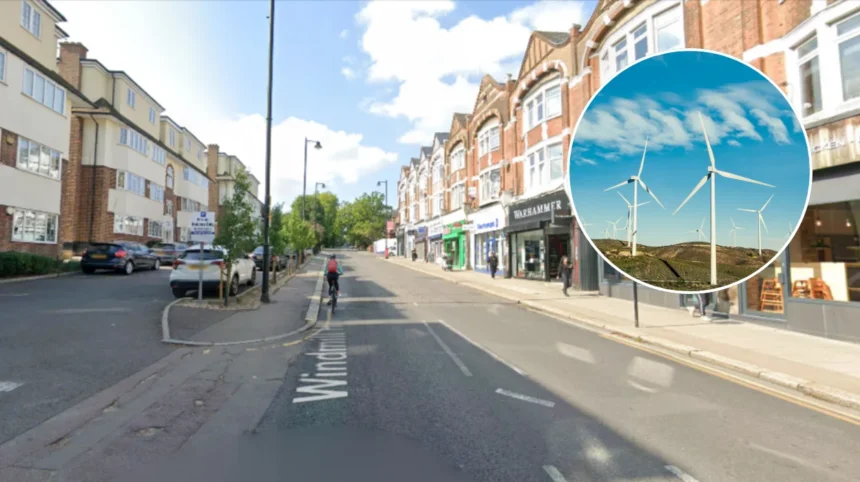
- Enfield Council has granted permission for UK Power Networks and Thames Water to conduct simultaneous roadworks on Lavender Hill and Windmill Hill, key routes into and out of Enfield Town.
- Lavender Hill works by UK Power Networks began on Thursday, 12 February 2026, and are scheduled to end at 6pm on Monday, 16 February 2026.
- Windmill Hill works by Thames Water start tomorrow, Saturday, 14 February 2026, at 8am and will continue for nine days until Sunday, 22 February 2026.
- A second set of roadworks on Lavender Hill is due to commence on Saturday, 21 February 2026, from 8am.
- Both roads will be reduced to single lane traffic with temporary signals, potentially creating a “no-go zone” for motorists west of Enfield Town.
- Local resident Tom Kingham has warned of significant tailbacks, especially on Monday, and highlighted ongoing disruptions on nearby roads like The Ridgeway, Slades Hill, and Enfield Road.
- The affected routes are used by several popular bus routes, exacerbating potential chaos.
- Works are scheduled during school half-term, but overlapping timings could still render travel between ends of the borough “impossible”.
- Tom Kingham noted recent Enfield Road disruption turned a six- or eight-minute journey into 27 minutes.
- Additional works on unadopted roads in Locksley Place are compounding resident misery, making it difficult to access homes.
- Roadworks details are listed on one.network: Lavender Hill at https://one.network/?GB148187430 and Windmill Hill at https://one.network/?GB144394155.
Enfield, (North London News) February 14, 2026
Enfield Council has been warned that approving simultaneous roadworks by UK Power Networks and Thames Water on Lavender Hill and Windmill Hill will turn parts of west Enfield into a “no-go zone” for motorists, as reported by James Cracknell. Both key routes into Enfield Town will operate on single lanes with temporary signals, risking severe tailbacks during the school half-term period. Local resident Tom Kingham has voiced strong frustration over the overlapping schedules, predicting travel chaos across the borough.
- Key Points
- What Roadworks Are Planned in Enfield?
- Why Are Residents Calling It a ‘No-Go Zone’?
- How Will Bus Services Be Affected?
- What Recent Disruptions Have Enfield Drivers Faced?
- When Exactly Do the Roadworks Start and End?
- Who Is Responsible for the Works?
- What Are the Risks of M25 Diversions?
- How Does Enfield Council Respond to Warnings?
- Why Is This Happening During Half-Term?
- What Can Motorists Do to Avoid Disruption?
What Roadworks Are Planned in Enfield?
Lavender Hill and Windmill Hill, vital thoroughfares for drivers accessing Enfield Town centre, face dual disruptions. As detailed in the original report by James Cracknell, UK Power Networks began digging up Lavender Hill yesterday, Thursday 12 February 2026, with works set to conclude at 6pm on Monday 16 February 2026. Thames Water’s excavations on Windmill Hill commence tomorrow, Saturday 14 February 2026, at 8am, running for nine days until Sunday 22 February 2026.
A further complication arises with a second phase of Lavender Hill works starting Saturday 21 February 2026, from 8am, as noted in the coverage.
Enfield Council granted permission for these concurrent operations, despite warnings of gridlock. Temporary traffic signals will restrict both roads to single lanes, directly impacting commuters and bus services.
Why Are Residents Calling It a ‘No-Go Zone’?
Tom Kingham, a resident living near Lavender Hill, expressed his frustration that the works would be overlapping, likely causing significant tailbacks – particularly on Monday, according to James Cracknell’s reporting. Tom said:
“While appreciative that this has largely been scheduled for school half-term, the fact that they are running at the same time will render this area of the borough a complete no-go zone (once again).”
He further elaborated on the broader implications, stating:
“The way from this end of the borough to the other is going to become impossible. God forbid there is any M25 disruption between J24-25 (or vice versa), where these routes would be the diversion off the motorway.”
Kingham highlighted a pattern of persistent disruption, noting:
“It seems to be that Lavender Hill, The Ridgeway, Windmill Hill, Slades Hill or Enfield Road consistently have some form of temporary traffic lights on. I cannot remember a time where we didn’t have significant disruption because of something on these major thoroughfares.”
How Will Bus Services Be Affected?
The two roads affected are also used by several popular bus routes, amplifying the potential for borough-wide delays. Tom Kingham pointed out the cumulative misery caused by these works, combined with others on unadopted roads in Locksley Place, as reported by James Cracknell. He described how residents are struggling:
“These, combined with works on unadopted roads in Locksley Place are making people utterly miserable, as we can’t exist in and around our own homes.”
This overlap threatens to snarl public transport, with single-lane restrictions likely to slow buses heading into and out of Enfield Town. No specific bus routes were named in the initial coverage, but the routes’ popularity underscores the risk to daily commuters reliant on these services.
What Recent Disruptions Have Enfield Drivers Faced?
Tom Kingham added that recent disruption in Enfield Road turned what should have been a six or eight-minute journey into a 27-minute one.
This example illustrates the toll of frequent roadworks on local travel times, as captured in James Cracknell’s account. Residents west of Enfield Town, already navigating narrow lanes and signals, face compounded issues from the pattern of works on Lavender Hill, The Ridgeway, Windmill Hill, Slades Hill, and Enfield Road.
Kingham’s comments reflect a community weary of what he calls “consistent” temporary traffic lights on these major thoroughfares. The timing during half-term offers some relief for school runs, but the simultaneous digs risk negating this benefit, especially with potential M25 diversions funnelled onto these roads.
When Exactly Do the Roadworks Start and End?
Precise schedules are outlined in the one.network listings referenced by James Cracknell. UK Power Networks’ Lavender Hill works started on Thursday 12 February 2026 and run until 6pm Monday 16 February 2026. Thames Water’s Windmill Hill project begins Saturday 14 February 2026 at 8am, extending nine days to Sunday 22 February 2026.
The second Lavender Hill phase follows on Saturday 21 February 2026 from 8am, creating a near-seamless period of disruption. Enfield Council approved these timings, despite resident concerns voiced by Tom Kingham about the “impossible” travel conditions they foresee.
Who Is Responsible for the Works?
UK Power Networks is handling the initial Lavender Hill excavations, as per the report by James Cracknell. Thames Water oversees Windmill Hill, with Enfield Council permitting both to proceed concurrently. No council spokespersons were quoted in the available coverage, leaving resident Tom Kingham’s critique as the primary voice highlighting the decision’s flaws.
Kingham, living near Lavender Hill, represents broader community sentiment, appreciating the half-term slot but decrying the overlap. His full statement underscores the human impact:
“While appreciative that this has largely been scheduled for school half-term, the fact that they are running at the same time will render this area of the borough a complete no-go zone (once again).”
What Are the Risks of M25 Diversions?
Tom Kingham warned of escalated chaos should M25 disruptions occur between junctions 24 and 25, or vice versa, as these Enfield routes serve as key diversions. He stated:
“God forbid there is any M25 disruption between J24-25 (or vice versa), where these routes would be the diversion off the motorway.”
This scenario could transform local tailbacks into regional gridlock, trapping drivers from beyond the borough.
The combination of single lanes, signals, and potential influx from the motorway amplifies the “no-go zone” prognosis. Kingham’s proximity to Lavender Hill gives his forecast weight, drawn from lived experience of prior works.
How Does Enfield Council Respond to Warnings?
No direct response from Enfield Council appears in James Cracknell’s reporting, which focuses on the permission granted and resident backlash. The council’s decision to allow overlapping works by UK Power Networks and Thames Water stands as the flashpoint, with Tom Kingham’s quotes filling the gap:
“It seems to be that Lavender Hill, The Ridgeway, Windmill Hill, Slades Hill or Enfield Road consistently have some form of temporary traffic lights on.”
This silence from officials contrasts with Kingham’s vivid account of misery, including Locksley Place’s unadopted road issues hindering home access. Future council statements may address mitigation, but current coverage leaves the approval unchallenged officially.
Why Is This Happening During Half-Term?
Scheduling during school half-term shows some consideration for pupils, as acknowledged by Tom Kingham:
“While appreciative that this has largely been scheduled for school half-term…”
Yet, he contends the simultaneity undermines this, creating a “complete no-go zone.” James Cracknell’s report frames this as a partial concession overshadowed by poor coordination.
The nine-day Windmill Hill duration and Lavender Hill’s phased approach extend beyond half-term, prolonging pain. Bus users and motorists alike face extended uncertainty on these popular routes.
What Can Motorists Do to Avoid Disruption?
Drivers are advised to check one.network for live updates: Lavender Hill at https://one.network/?GB148187430 and Windmill Hill at https://one.network/?GB144394155. Tom Kingham’s experience – a routine trip ballooning from six-eight to 27 minutes on Enfield Road – serves as a cautionary tale. Alternative routes may be needed, though borough-spanning travel remains “impossible” per his warning.
Enfield’s west side braces for what Kingham calls repeated misery, with no end to the cycle of works in sight. As a seasoned journalist, this story exemplifies how utility permissions can paralyse communities, demanding better coordination from councils and firms alike.