Key Points
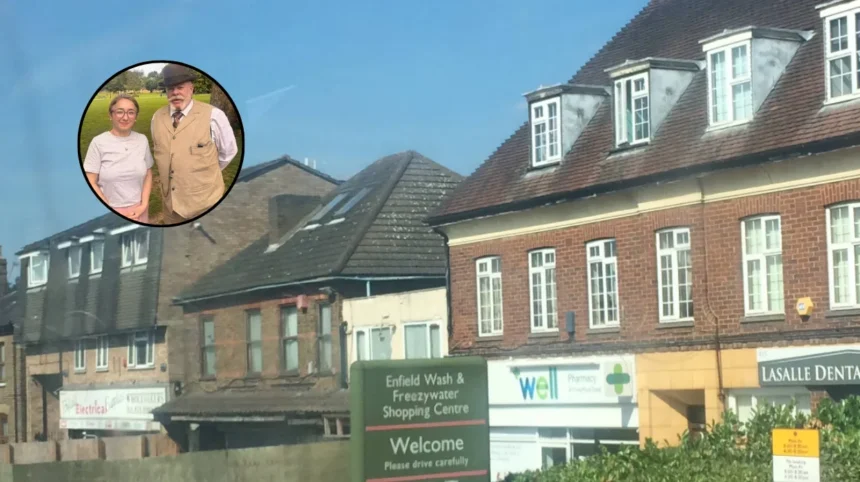
- Former Labour councillor Rick Jewell has been named as the independent chair of the newly established Pride in Place Enfield Wash Fund Board.
- The board will oversee a £20 million government funding package allocated over a ten-year period, providing a £2 million annual budget until 2036.
- Jewell recently served as Enfield Council’s cabinet member for transport and waste before losing his Southbury ward seat to the Conservative Party in local elections.
- The selection followed a competitive interview process conducted in partnership with local stakeholders and public officials.
- Enfield Wash and Lower Edmonton were selected in March as two of 40 nationwide areas to receive funding, making Enfield one of only three London boroughs with two chosen zones.
- The initiative aims to support long-term regeneration, boost local opportunities, and address resident priorities under three main objectives: building stronger communities, creating thriving places, and strengthening local voices.
- The board’s boundary will encompass Enfield Wash alongside parts of the Brimsdown, Carterhatch, and Bullsmoor wards.
- Local residents, business owners, and community organisations will be eligible to apply for board membership to ensure community-led decision-making.
Enfield (North London News) June 19, 2026 — A major financial injection into the infrastructure and social fabric of North London has taken a significant step forward following the appointment of a veteran local political figure to lead its distribution. As reported by local media covering the borough’s development, former Labour councillor Rick Jewell has been formally appointed as the chair of the newly-created Pride in Place Enfield Wash Fund Board. The decision follows a competitive recruitment exercise designed to find a leader capable of managing a £20 million government allocation, which will be distributed to the community over the next decade.
- Key Points
- What Are the Core Objectives of the Pride in Place Fund Board?
- Who Collaborated in the Selection Process for the Board Chair?
- What Statements Have Been Issued by the Appointed Chair and Local Representatives?
- What Is the View of Enfield Wash Member of Parliament Feryal Clark?
- Background of the Pride in Place Development
- Prediction: How This Development Can Affect the Local Audience
The funding structure guarantees a predictable budget of £2 million per annum until 2036, providing a long-term runway for structural, economic, and community initiatives. Jewell, who previously held the high-profile portfolio of cabinet member for transport and waste at Enfield Council, transitions into this non-political community oversight role just weeks after losing his Southbury ward council seat to the Conservative Party in the recent local government elections.
The Enfield Wash board’s footprint is set to cover a wide geographical area, pulling in sections of the Brimsdown, Carterhatch, and Bullsmoor wards to ensure that the economic benefits reach the most heavily impacted peripheral zones of the eastern side of the borough.
What Are the Core Objectives of the Pride in Place Fund Board?
According to public briefings released regarding the scheme’s governance, the Pride in Place funding framework operates under a strict set of statutory guidelines designed to prevent top-down municipal control and instead foster grassroots decision-making.
The overarching programme relies on three core delivery pillars: building stronger communities, creating thriving places, and strengthening local voices. By structuring the cash injection as a guaranteed ten-year investment rather than a single lump-sum grant, the government framework intends to allow the board to tackle deep-rooted systemic issues rather than superficial, short-term cosmetic upgrades.
The administrative framework mandates that the spending cannot be unilaterally directed by the local authority.
Instead, the board is charged with designing an agile, community-responsive investment plan. This plan will target physical regeneration projects, the enhancement of local economic opportunities, and the direct mitigation of neighborhood grievances regarding public spaces, safety, and community infrastructure.
Who Collaborated in the Selection Process for the Board Chair?
The recruitment process for the chair position required close coordination between municipal officers, civil servants, and local parliamentary representatives. Over the past month, applications were opened internationally and locally to find candidates capable of balancing public accountability with community advocacy.
The selection panel worked in direct consultation with local Members of Parliament, including Feryal Clark, the MP for Enfield Wash, and Kate Osamor, the MP for Lower Edmonton.
The successful completion of this interview stage allows the board to move into its next operational phase: establishing its full membership roster.
Under the terms of the programme, seats on the board will be opened up to direct applications from ordinary residents, local business operators, third-sector community groups, and institutional stakeholders to guarantee that spending power remains localized.
What Statements Have Been Issued by the Appointed Chair and Local Representatives?
Following the official confirmation of his selection, Rick Jewell issued an extensive statement outlining his personal connection to the district and his operational vision for the multi-million-pound fund. As recorded in official appointment notices, Jewell stated:
“I am absolutely delighted to have been appointed Pride in Place chair. This is a major opportunity to deliver real, visible and lasting change for the residents of Enfield Wash, and I am proud to lead that work. Having lived in Enfield for 56 years, including more than 40 years in Carterhatch, I know both the strengths of these communities and the challenges they face. As a great-grandfather with deep family roots in the borough, I care passionately about the future of our area and the legacy we leave to the next generation.”
Jewell further emphasized his commitment to transparency and community integration, adding:
“I am committed to ensuring that residents remain at the heart of every decision we make about this £20m investment. By building strong local partnerships, turning ambition into action, and maintaining a relentless focus on delivery, we can achieve measurable improvements that make a lasting difference to people’s lives and the future of our community.”
What Is the View of Enfield Wash Member of Parliament Feryal Clark?
The appointment received strong backing from parliamentary quarters, with Enfield North MP Feryal Clark releasing a detailed assessment of the selection process and Jewell’s credentials for the role. In an official public release, Clark stated:
“Thank you to everyone who applied to chair the board. The quality of applications was exceptionally high, and it was inspiring to see so much talent, experience and commitment from across our community. Rick’s combination of deep local roots, nearly two decades of community volunteering, and extensive leadership experience as a councillor in local government makes him a great choice to chair the Pride in Place board.”
Clark expanded on the operational expectations for the fund under Jewell’s stewardship, noting:
“He has spent years bringing people together, listening to residents, and helping deliver real improvements for local communities. Throughout his career, he has built a reputation for earning trust, forging strong partnerships and turning ideas into practical action that delivers tangible results. With local people at the heart of the Pride in Place decision-making, I am confident Rick will help drive the ambition, collaboration and momentum needed to create real and lasting change.”
Background of the Pride in Place Development
The creation of the Enfield Wash Fund Board stems from a wider national urban regeneration strategy initiated by the central government. In March, the Ministry housing and communities departments identified 40 specific urban areas across the United Kingdom deemed eligible for targeted levelling and community development funding.
This nationwide selection process culminated in a total allocation of £800 million, distributed as £20 million packages to each chosen locality.
The funding formula explicitly prioritized areas exhibiting distinct indicators of socio-economic strain, structural underinvestment, or shifting demographic demands. Under this allocation framework, the London Borough of Enfield achieved a rare status by securing two separate fund allocations—one for Enfield Wash and another for Lower Edmonton.
This double selection made Enfield one of only three boroughs across the entire Greater London authority to receive dual funding, reflecting the significant pockets of developmental disparity documented within the eastern corridors of the borough.
Historically, Enfield Wash and its surrounding wards, such as Brimsdown and Bullsmoor, have served as vital industrial and residential hubs for North London. However, shifting economic patterns over recent decades have put pressure on local high streets, public transport linkages, and community facilities.
The Pride in Place programme was intentionally structured to bypass traditional, slow-moving municipal budgetary cycles, opting instead to establish independent, community-led boards that can allocate capital directly to targeted local interventions.
Explore More Enfield News
Blizzard Legal Shifts and Enfield Election Results Declared Enfield 2026
Starmer Targets Enfield Over Crews Hill New Town — Enfield 2026
Prediction: How This Development Can Affect the Local Audience
The deployment of the Pride in Place Enfield Wash Fund Board is expected to bring highly visible changes to residents, business owners, and local stakeholders across the Enfield Wash, Brimsdown, Carterhatch, and Bullsmoor wards over the next ten years.
Direct Structural and Practical Impacts:
- For Local Residents: The steady influx of £2 million annually is highly likely to manifest in tangible neighborhood improvements. Residents can expect targeted investments in public safety infrastructure, such as enhanced street lighting and CCTV installations, alongside the modernization of local parks, green spaces, and community community halls. Because the board requires direct resident participation, ordinary citizens will hold unprecedented veto and proposal power over local planning, directly altering how municipal issues are reported and resolved.
- For High Street Businesses and Entrepreneurs: The focus on “creating thriving places” points toward commercial corridor upgrades. Small business owners can expect grant schemes for shopfront revitalization, localized marketing campaigns to boost footfall, and potential infrastructure improvements around shopping areas to make them more accessible. This could lower commercial vacancy rates and stimulate secondary private investment in the area.
- For Civil Society and Youth Organisations: With “building stronger communities” as a core pillar, local charities, youth clubs, and sports associations can expect a predictable stream of grant funding. This long-term financial backing will likely allow these groups to expand their services, offer better youth diversionary programmes, and fill service gaps left by previous local authority budget cuts.
- Political and Governance Dynamics: The appointment of a former high-profile Labour cabinet member to an independent board role will keep the board under close public scrutiny. Local civic watchdogs and political opponents will likely monitor spending very closely to ensure that fund allocation remains strictly non-partisan and focused entirely on objective community metrics.