Key Points
- Max, a 33-year-old from North London, is the first person with Down’s syndrome to join Channel 4’s Gogglebox.
- He joins the cast for series 28 alongside his mother, Sandy, 62, with the show airing at 9:00 pm.
- Brothers Steve, 44, and Mark, 46, from Newcastle have also joined the cast for the new series.
- Narrated by Craig Cash, the award-winning series has been on air since 2013.
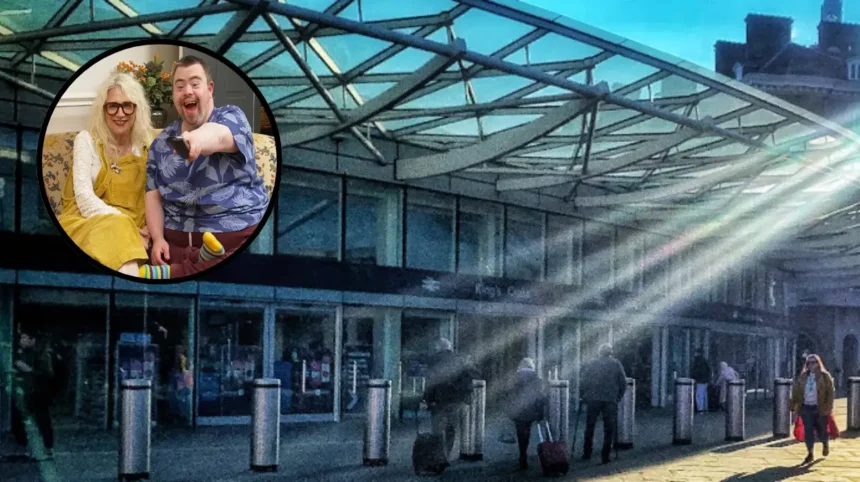
North London (North London News) September 4, 2026 –Gogglebox is set to make British broadcasting history tonight as 33-year-old Max becomes the long-running reality programme’s first cast member with Down’s syndrome. Joining the sofa alongside his 62-year-old mother, Sandy, the duo makes their debut in the launch episode of series 28, scheduled to air on Channel 4 at 9:00 pm. The hit show, which films households across the United Kingdom as they react to the week’s television highlights, introduces two new families to its permanent roster.
Who are the new cast members joining Gogglebox series 28?
The latest series welcomes two distinct households to the screen. The first is the North London mother-and-son pairing of Sandy and Max. Describing himself as a dedicated television fanatic, 33-year-old Max expressed his enthusiasm for sharing his views with millions of viewers across the nation.
As reported by Holly Brencher of Yahoo, Max stated: “I’m much funnier than my mum, so that’s good. I’m all about spreading the love and showing other learning-disabled people what we can achieve. And my mum is my greatest supporter.” He added: “I look forward to watching TV and letting people know what I think about it.”
Sandy highlighted the broader cultural significance of their inclusion on mainstream television. As reported by Holly Brencher of Yahoo, Sandy stated:
“To have people see the superstar, who is my son, and realise that a person with a learning disability can be smart, opinionated, and hilarious is very important for me. My greatest joy is being his mum.”
She further described the reaction from their inner circle as
“amazing and bonkers in equal measure,”
while Max noted,
“They are all very happy that the world will see what a superstar I am.”
The second addition features brothers Steve, 44, and Mark, 46, hailing from Newcastle. The football-loving pair bring regional humor to the series, offering a break from their usual routine of watching Newcastle United matches together.
According to coverage by Carla Feric of The Standard, Mark stated:
“It’s proper surreal. It’ll be such a laugh.”
Speaking on their family’s reaction, Mark added that when informing their mother about joining the production,
“the first thing she said was ‘please don’t swear.’ I told her I can’t make that promise.”
Steve noted that he had deliberately kept the news secret from his friends to surprise them when the broadcast airs.
Explore More North London News
Inquest Opens for Palestinian Family Drowning Tragedy Horsham 2026
Metropolitan Workshop Builds Nine Council Homes in Tottenham 2026
How has Channel 4’s Gogglebox evolved since its debut?
First broadcast in 2013, Gogglebox has established itself as a foundational element of contemporary British pop culture. Narrated by actor and writer Craig Cash, the observational documentary format captures authentic reactions from regular families, friends, and couples in their living rooms. Over its 13-year history, the show has earned numerous accolades, including National Television Awards, TV Choice Awards, and BAFTAs. The brand has also generated successful spin-off titles such as Gogglesprogs and Celebrity Gogglebox.
Background of Disability Representation on British Television
The inclusion of a cast member with Down’s syndrome on a primetime Friday evening slot marks a measurable shift in British public service broadcasting. Historically, media charity advocacy groups and watchdog organisations like Ofcom have monitored the visual and narrative representation of disabled individuals on mainstream networks.
While portrayals of neurodivergence and physical disabilities have increased across scripted dramas and reality television over the past decade, advocacy groups have consistently called for unscripted, naturalistic representation in prime-time slots. By featuring Max in a format built entirely on spontaneous conversation and personal opinions, Channel 4 continues its charter mandate to reflect diversity and provide a platform to underrepresented communities across the UK.
Prediction: How Will This Development Impact Television Audiences and Industry Standards?
The casting of Max on Gogglebox is likely to influence both audience engagement and future broadcast commissioning practices across the UK media landscape:
- Normalisation of Disability on Primetime Screens: Millions of regular viewers will see a person with Down’s syndrome outside the context of specialized documentaries or disability-focused news stories, fostering greater public familiarity and reducing social stigmas surrounding learning disabilities.
- Inspiration for Learning-Disabled Viewers: As Max highlighted in his own statement, seeing learning-disabled individuals featured prominently on mainstream television provides a positive precedent for young people with similar conditions and their families.
- Pressure on Competing Networks: Channel 4’s explicit step toward inclusive unscripted casting will likely encourage rival broadcasters, such as the BBC, ITV, and 5 Network, to re-evaluate their own casting directives for flagship reality and entertainment formats.