Barnet is one of London’s largest boroughs and has a strong public transport network connecting its town centres, residential districts, leisure destinations and northern London neighbourhoods. Visitors can use London Underground services, buses and National Rail connections to travel around Barnet without relying on a car.
- What public transport options are available in Barnet?
- Which Underground stations are useful for visitors in Barnet?
- How does the Northern line connect Barnet with central London?
- Which railway stations should visitors use in Barnet?
- How important are buses for getting around Barnet?
- Which Barnet bus routes are useful for visitors?
- Can visitors travel around Barnet at night?
- How should visitors pay for public transport in Barnet?
- Is Oyster better than contactless for visitors?
- How can visitors combine buses, Underground and rail?
- How accessible is Barnet public transport for visitors?
- What should visitors do when public transport services are disrupted?
- How can visitors use public transport to explore Barnet’s attractions?
- Is public transport better than driving around Barnet?
- What does the future of Barnet public transport look like?
- What is the easiest public transport strategy for a first-time Barnet visitor?
The borough stretches across a large area of north London, so the most efficient transport option depends on the district being visited. High Barnet, Finchley, Mill Hill, Hendon, Colindale and Burnt Oak each have different combinations of Underground, rail and bus connections.
Barnet Council describes the borough as having good radial public transport connections towards central London, while orbital journeys across the borough are more challenging. Its transport strategy also identifies congestion and local connectivity as important issues.
For visitors, this means the simplest approach is to identify the nearest Underground or railway station first, then use local buses for the final part of the journey.
What public transport options are available in Barnet?
Barnet has three principal public transport options for visitors: London Underground, National Rail and TfL buses. These services connect major destinations such as High Barnet, Finchley, Mill Hill, Hendon, Colindale and central London through different routes.
The London Underground provides the main rapid-transit network. The Northern line serves several parts of Barnet, including High Barnet, Totteridge & Whetstone, Woodside Park, West Finchley, Finchley Central, East Finchley, Mill Hill East, Hendon Central, Brent Cross, Colindale and Burnt Oak.
The Piccadilly line also reaches the northern edge of the borough through Cockfosters. This makes Cockfosters an important interchange point for visitors exploring the eastern side of Barnet.
National Rail provides additional connections. Great Northern serves stations including New Barnet and Oakleigh Park, while Thameslink serves stations including Hendon and Mill Hill Broadway. The London Rail & Tube network map identifies these rail connections alongside the Underground network.
TfL buses fill the gaps between stations and destinations. Bus routes provide connections between town centres, shopping areas, residential districts, hospitals, parks and Underground stations.
Barnet Council’s transport strategy recognises buses, Underground services and mainline rail as the principal public transport components serving the borough.
Which Underground stations are useful for visitors in Barnet?
The Northern line is the most important Underground route for Barnet visitors, with stations including High Barnet, Totteridge & Whetstone, Woodside Park, West Finchley, Finchley Central and Mill Hill East providing access to northern districts.
The Northern line has two relevant northern branches for Barnet travel.
The High Barnet branch serves:
High Barnet
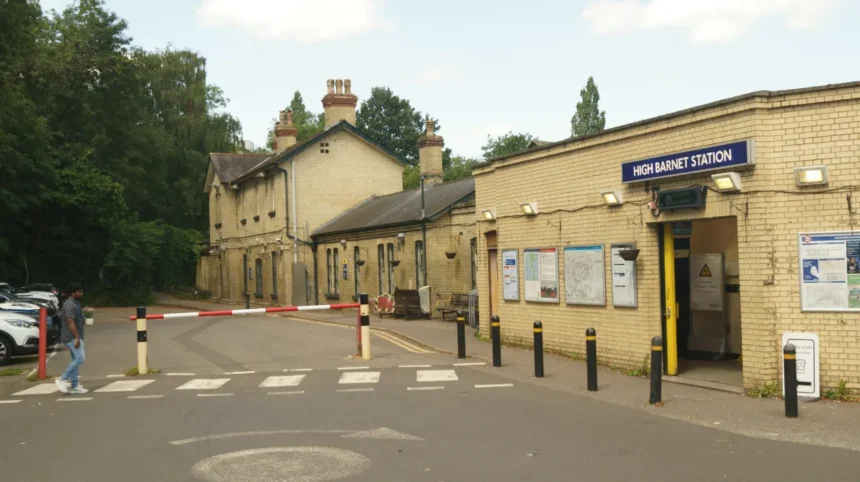
High Barnet is one of the most important transport hubs in the borough. High Barnet Underground station is in Zone 5 and has extensive bus connections.
TfL lists routes serving the station including the 34, 107, 234, 263, 307, 326, 384, 389, 606 and 634, alongside the N20 night bus.
This makes High Barnet particularly useful for visitors exploring Barnet town centre and nearby attractions.
Totteridge & Whetstone
Totteridge & Whetstone provides Northern line access to the central part of the borough. It is useful for visitors travelling towards Whetstone, Totteridge and surrounding residential areas.
Woodside Park
Woodside Park provides Northern line access to the North Finchley area. It is also useful for reaching local shops, restaurants and community facilities.
West Finchley
West Finchley serves the northern Finchley area. It provides a direct Underground connection towards High Barnet and central London.
Finchley Central
Finchley Central is an important interchange point for the local Finchley area. Northern line trains operate towards High Barnet and central London, with services also connecting to Mill Hill East.
Mill Hill East
Mill Hill East is the terminus of the Northern line’s Mill Hill East branch. It provides Underground access to Mill Hill and connections towards central London through Finchley Central.
The Northern line’s network structure makes it possible to reach central London without changing trains from several Barnet stations. TfL’s station information shows direct northbound services towards High Barnet and Mill Hill East from stations farther south.
How does the Northern line connect Barnet with central London?
The Northern line gives Barnet visitors a direct Underground route towards major central London stations, including Euston, Tottenham Court Road, Leicester Square and Charing Cross, depending on the branch and service pattern.
This makes the Underground particularly useful for day trips that combine Barnet with central London.
From High Barnet, passengers can travel south through Totteridge & Whetstone, Woodside Park, West Finchley, Finchley Central and East Finchley before reaching inner London.
Further south, the Northern line provides access to major destinations such as Camden Town, Euston, Tottenham Court Road, Leicester Square and Charing Cross.
The Northern line has two central London routes, generally described through the Bank branch and Charing Cross branch. The exact service pattern depends on the train and timetable.
Visitors should check the destination displayed on the train before boarding. A train heading towards central London can take different routes depending on its destination.
TfL provides live Underground information, including service status, departures and journey-planning information. Checking the network before departure is particularly important during engineering works or service disruptions.
Which railway stations should visitors use in Barnet?
National Rail provides another layer of connectivity through stations such as New Barnet, Oakleigh Park, Hendon and Mill Hill Broadway. These stations are useful for journeys across north London and towards destinations beyond the Underground network.
Rail travel is particularly useful when the destination lies along a mainline railway corridor.
New Barnet
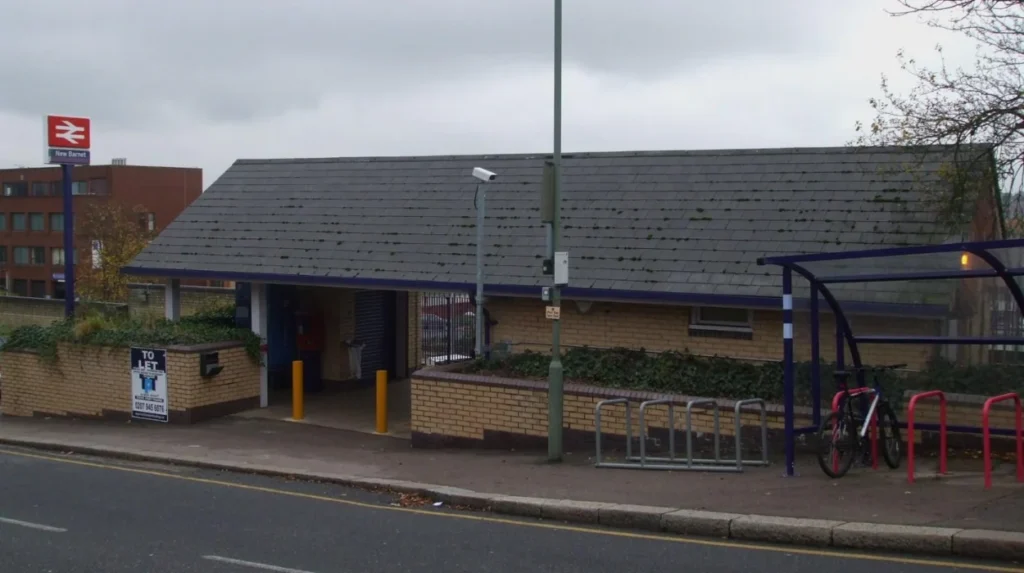
New Barnet station is served by Great Northern and is located on Station Approach in New Barnet. National Rail identifies it as station code NBA.
The station provides an alternative to High Barnet Underground for visitors travelling around the eastern part of Barnet.
National Rail also lists bus connections from the station, allowing passengers to combine rail and local bus services.
Oakleigh Park
Oakleigh Park is another Great Northern station serving the eastern side of the borough.
It is useful for visitors travelling along the railway corridor between north London and destinations further north. National Rail provides journey planning and ticket information for Oakleigh Park and New Barnet.
Hendon
Hendon is served by Thameslink and provides a useful rail connection for the western side of Barnet.
Hendon also has Hendon Central Underground station nearby, although the two stations are separate. Visitors should check their exact destination and walking route before choosing between them.
Mill Hill Broadway
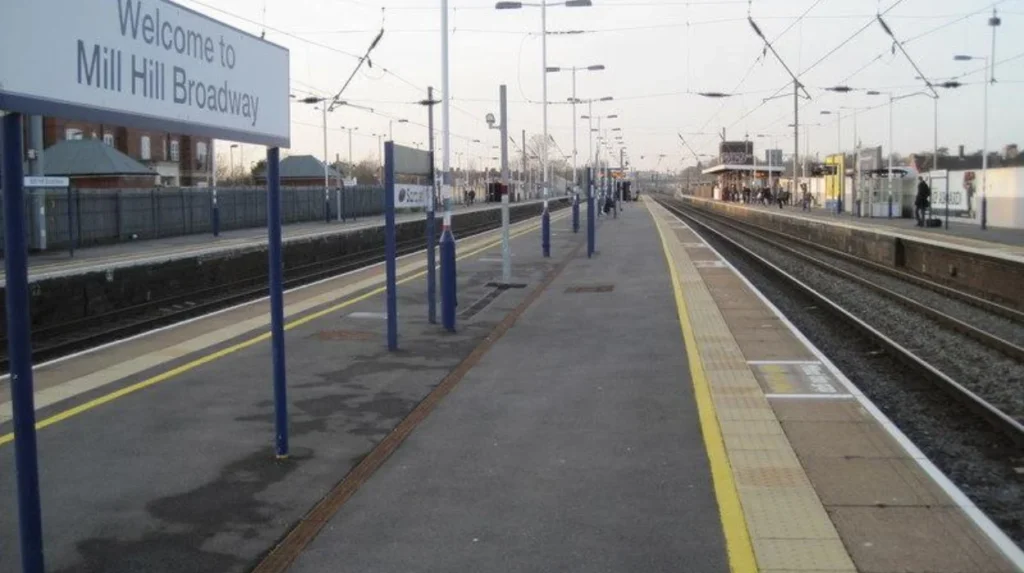
Mill Hill Broadway is another Thameslink station. It provides a mainline railway option for visitors staying in or exploring Mill Hill.
Mill Hill Broadway is particularly relevant when travelling towards destinations on the Thameslink corridor rather than following the Northern line.
The London Rail & Tube map shows Mill Hill Broadway as a Thameslink station alongside Mill Hill East on the Northern line, demonstrating that the two stations serve different rail systems.
How important are buses for getting around Barnet?
Buses are essential for local Barnet journeys because they connect areas that are not directly linked by Underground or National Rail. They provide practical connections between stations, town centres, shopping destinations, hospitals and residential neighbourhoods.
Barnet’s geography makes buses particularly important.
The borough is large and spread across several distinct communities. Underground lines generally run along specific corridors, while buses provide more flexible cross-borough connections.
High Barnet demonstrates the scale of the bus network. TfL lists numerous routes from the station, including services towards Walthamstow Central, Archway, Brent Cross, Brimsdown, Cockfosters, New Barnet and Barnet Hospital.
This makes buses useful when a visitor’s final destination is several kilometres from an Underground station.
Buses also provide connections between transport hubs. A visitor can travel by Underground to one station and continue by bus rather than making a long walk.
Barnet Council’s transport documents recognise that bus frequencies vary according to route and that congestion can affect journey times.
For visitors, this means journey planners are more reliable than estimating bus travel time from distance alone.
Which Barnet bus routes are useful for visitors?
Several bus routes serve major Barnet transport hubs, with High Barnet offering particularly extensive connections. Examples include routes 34, 107, 234, 263, 307, 326, 384, 389, 606 and 634, plus the N20 night service.
The 34 provides connections between Barnet and Walthamstow Central.
The 107 links Barnet with New Barnet and Edgware.
The 234 connects Barnet with Archway and other northern London destinations.
The 263 provides a route towards Holloway and Nags Head.
The 326 connects High Barnet with Brent Cross.
The 307 serves the Brimsdown direction.
The 384 connects High Barnet with Cockfosters.
The 389 provides local Barnet connections.
The 606 and 634 provide additional services.
The N20 is a night bus connecting the Barnet area with central and northern London during overnight periods. TfL’s current High Barnet information lists the N20 as one of the routes serving the station.
Routes and timetables change, so visitors should use current TfL information rather than relying on old printed timetables.
Can visitors travel around Barnet at night?
Yes. Night transport includes the N20 bus and late Underground services, but overnight options differ by location. Visitors should check the final train and bus times before travelling, particularly when visiting destinations away from major transport hubs.
The N20 is particularly useful because it provides overnight bus coverage around the High Barnet corridor.
TfL’s published information shows N20 overnight services operating through the week, including Friday and Saturday nights.
The Underground also operates late services, although the final train time varies by station, direction and day.
For example, TfL publishes individual last-departure information for stations such as Highgate and Kentish Town, both of which provide routes towards High Barnet.
Visitors should therefore check the final direct service rather than assuming that every Northern line station has identical last-train times.
How should visitors pay for public transport in Barnet?
Contactless payment and Oyster pay-as-you-go provide the simplest options for most visitors using London public transport. Contactless cards, phones and watches can be used across TfL services, while Oyster provides an alternative for travellers who prefer a dedicated transport card.
TfL states that pay-as-you-go payment is available using contactless or Oyster across buses, Tube, trams, DLR, London Overground, most Elizabeth line services and most National Rail services within London Zones 1–9.
On buses and trams, passengers only need to touch in.
On the Underground and most rail journeys using pay-as-you-go, passengers must touch in and touch out.
Visitors using contactless should use the same card or device throughout the journey. For example, touching in with a phone and touching out with a physical bank card can result in incorrect charging.
TfL also provides daily and weekly fare capping under its pay-as-you-go system.
This makes contactless particularly convenient for visitors making several journeys in London.
Is Oyster better than contactless for visitors?
Contactless is generally the simplest choice for visitors who have a compatible payment card or device. Oyster is useful for travellers without suitable contactless payment and provides a dedicated way to manage London public transport journeys.
TfL specifically recommends pay-as-you-go as an easy option for visitors.
A standard Oyster card can be purchased in London and loaded with pay-as-you-go credit or a Travelcard. TfL states that Oyster cards are available from Tube, London Overground and Elizabeth line stations, Oyster ticket stops and Visitor Centres.
Visitors using international bank cards should check whether their bank applies overseas transaction fees.
TfL confirms that many contactless cards issued outside the UK work on the network, but additional charges from the card issuer can apply.
How can visitors combine buses, Underground and rail?
The most efficient Barnet journeys often combine transport modes. Visitors can use the Underground for longer radial journeys, National Rail for specific mainline corridors and buses for local connections between stations, attractions, shopping areas and neighbourhoods.
A visitor staying near High Barnet can use the Northern line for central London and a local bus for destinations such as Barnet Hospital or neighbouring communities.
A visitor staying near Mill Hill can choose between the Northern line at Mill Hill East and Thameslink at Mill Hill Broadway, depending on the destination.
A visitor near New Barnet can use Great Northern rail services or connect with local buses.
A visitor exploring Colindale can use Colindale Underground station and then walk or use local bus services for nearby destinations. Barnet Council identifies Colindale Underground as approximately a five-to-eight-minute walk from its Bristol Avenue office and lists several local bus routes serving the area.
This multimodal structure is important because no single transport mode covers every part of Barnet equally well.
How accessible is Barnet public transport for visitors?
Accessibility varies between stations and transport modes. Visitors requiring step-free access should check individual station information before travelling because facilities differ between Underground and National Rail stations, including platform access and lifts.
National Rail’s information for New Barnet, for example, identifies the station as step-free category C, meaning there is no step-free access to the platforms. It also states that the station has no lifts, although passenger assistance is available.
This demonstrates why visitors should never assume that every London station offers identical accessibility.
TfL also publishes station-specific accessibility information for Underground stations.
Visitors travelling with mobility equipment should check the relevant station before starting the journey and use TfL’s accessibility guidance when planning routes.
What should visitors do when public transport services are disrupted?
Visitors should check live TfL and National Rail information immediately before travelling because engineering works, signalling problems, congestion and other incidents can change routes or journey times. Alternative buses and rail services are available on many disrupted corridors.
Transport networks operate dynamically. A route that normally takes one direct train can require a bus or alternative railway service during engineering works.
TfL publishes live Tube and rail status information and provides journey replanning tools.
Visitors should also check National Rail when travelling by mainline train because National Rail services operate separately from the Underground.
The best practice is straightforward: check the journey before leaving, check the departure board at the station and follow official disruption instructions.
How can visitors use public transport to explore Barnet’s attractions?
Visitors can use transport hubs as starting points for exploring Barnet’s town centres, parks, shopping destinations, heritage areas and leisure facilities. High Barnet, Finchley, Mill Hill, Hendon and Colindale each provide different combinations of rail, Underground and bus access.
High Barnet is suitable for exploring the historic town centre and surrounding local attractions.
Finchley provides access to several Northern line stations and bus corridors.
Mill Hill offers both Underground and Thameslink options.
Hendon provides access to both rail and Underground corridors, making it useful for visitors exploring western Barnet.
Colindale has Northern line access and multiple bus routes.
Cockfosters provides access to the Piccadilly line and bus connections towards surrounding northern London districts.
Visitors interested in heritage should also consider the relationship between Barnet’s modern transport network and its historic development. As you explore the modern transport corridors, you are crossing places shaped by centuries of movement and settlement. Read about the full to understand its origins.
Is public transport better than driving around Barnet?
Public transport is particularly practical for visitors travelling towards central London, major town centres and areas close to Underground or railway stations. Driving becomes less predictable on congested roads, while buses and trains provide established connections across key transport corridors.
Barnet Council identifies congestion and overcrowding as significant transport challenges and states that local public transport connectivity remains an issue in some parts of the borough.
For visitors, public transport removes the need to find parking at every destination.
The Underground is particularly effective for journeys along the Northern line corridor.
National Rail is useful for journeys following the Thameslink and Great Northern corridors.
Buses provide the greatest flexibility for local journeys, although congestion can affect their speed.
Walking also remains important for the final section of many journeys. A station can often be the most efficient starting point, followed by a short walk to the destination.
Explore More Area Guide
Is Barnet Suitable for a Short London Break? Barnet 2026
How to Plan a Low-Cost Trip to Barnet, North London 2026
What does the future of Barnet public transport look like?
Barnet’s future transport strategy focuses on better orbital connections, improved interchanges, step-free access, bus improvements and sustainable travel. These priorities are designed to strengthen journeys within the borough rather than only improving connections towards central London.
Barnet Council’s long-term transport strategy identifies improved orbital connectivity as a priority.
The council also identifies investment in east-west transport and improvements to key interchanges. Mill Hill East and Mill Hill Broadway are specifically identified for step-free access and improved transport interchange.
Planning documents also refer to longer-term proposals involving the West London Orbital, an intended London Overground connection designed to improve orbital travel, alongside improvements around Hendon, Cricklewood and Brent Cross West.
These plans are important because Barnet’s existing network is stronger for radial journeys towards central London than for cross-borough travel.
Future investment therefore focuses increasingly on connections between different parts of Barnet.
What is the easiest public transport strategy for a first-time Barnet visitor?
For a first visit, identify the nearest Underground or railway station, use TfL buses for local connections, pay with contactless or Oyster, and check live service information before travelling. This approach covers most visitor journeys across Barnet efficiently.
The simplest strategy is to think in three stages.
First, use the Underground or National Rail for the main part of the journey.
Second, change to a local bus when the destination sits away from the railway corridor.
Third, finish the journey on foot where the destination is within practical walking distance.
High Barnet is particularly strong as a combined transport hub because its Underground station has numerous bus connections. Mill Hill provides an important combination of Underground and Thameslink options. New Barnet combines National Rail with local bus connections. Hendon and Colindale provide further western Barnet access.
Visitors should use official TfL and National Rail journey information because service patterns, engineering works and timetables change.
Barnet’s public transport network therefore works best as an integrated system rather than as separate bus, Underground and rail networks. The Underground handles major north-south journeys, National Rail provides fast mainline connections and buses provide the local coverage needed to reach destinations beyond the stations.
For tourists, this makes Barnet accessible without a car while still requiring some route planning for cross-borough journeys. For residents, domestic business travellers and visitors with limited time, understanding the relationship between these three transport modes is the key to making efficient journeys across North London.
What is the best way to get around Barnet?
The best way to get around Barnet is to combine London Underground, National Rail and TfL buses. The Northern line provides fast connections, while buses connect neighbourhoods and destinations away from railway stations.