Key Points
- Internal Party Rift: The Green Party leader of Haringey Council, Mark Blake, has publicly distanced himself from a controversial “Zionism is racism” motion passed at the Green Party’s annual conference in Brighton.
- Blake’s Position: While stating support for core principles regarding opposition to state creation based on religious superiority, Cllr Blake described the motion as “unhelpful” for focusing on ideological definition debates rather than constructive peace proposals.
- Motion Details: The policy passed by members of the Green Party of England and Wales defined Zionism as racism, declared the Green Party an anti-Zionist party, and called for a “single democratic Palestinian state in all of historic Palestine”.
- Political Opposition Reaction: Opposition Haringey Labour councillors labeled the motion “deeply concerning,” while Liberal Democrat members described it as a “hostile move across the Jewish community”. Both group calls urged the Green administration to clarify its stance.
- Group Defence and Distinction: The Haringey Green group maintained that “anti-Zionism is not antisemitism” and affirmed that local policy, community safety, and efforts to combat discrimination would remain unaffected by the national vote.
- National Repercussions: Calls for the resignation of national Green Party leader Zack Polanski follow both the motion’s passage and his defeat in the Holborn and St Pancras by-election. Polanski stated he would carry on as leader despite calling the motion “imperfect”.
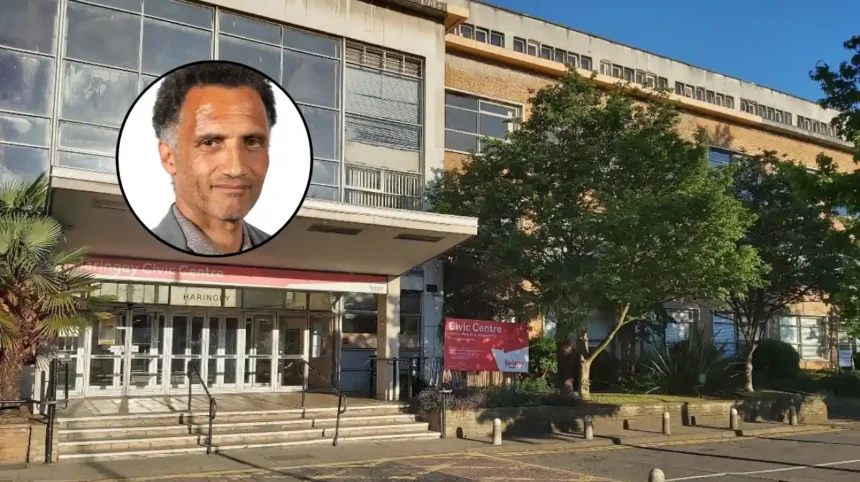
Haringey (North London News) October 10, 2026 – As reported by Joe Ives, Local Democracy Reporter for Haringey Community Press, the Green Party leader of Haringey Council, Mark Blake, has confirmed he did not support a national party motion passed at the Green Party’s annual conference in Brighton, describing the anti-Zionism policy as “unhelpful”. The vote by members of the Green Party of England and Wales backed a controversial “Zionism is racism” motion on Sunday, October 4, formally establishing the Greens as an anti-Zionist party. The motion formally defined Zionism as racism and called for a “single democratic Palestinian state in all of historic Palestine,” moving away from the two-state solution advocated by both the UK government and the United Nations.
- Key Points
- How Have Local Political Opposition Groups Reacted to the Green Administration?
- How Has the Local Green Group Defended Its Position and Operational Continuity?
- What Pressure Is National Leader Zack Polanski Facing Following the Vote?
- Background of the Particular Development
- Prediction: How This Development Can Affect Local Government and Community Relations
In an official statement shared with the Local Democracy Reporting Service (LDRS), Cllr Mark Blake explained his position on the motion. As reported by Joe Ives of Haringey Community Press, Cllr Blake stated:
“I support the core principles of the policy: no state should be established on the idea that one religion is superior to another. The political ideology behind the displacement and genocide of the Palestinian people is clearly racist.”
However, the council leader added:
“I don’t feel comfortable with British political parties or politicians deciding on behalf of Israelis and Palestinians what the solutions should be.”
As reported by Joe Ives of Haringey Community Press, Cllr Blake further noted that he felt it was “unhelpful to focus on an ideological debate on definitions”, rather than create “ideas to establish a just peace for all.”
How Have Local Political Opposition Groups Reacted to the Green Administration?
The passage of the motion at the national conference triggered prompt backlash from local opposition parties in Haringey. In a statement issued on Friday, October 9, local Labour group representatives expressed serious concerns regarding the national policy shift. As reported by Joe Ives of Haringey Community Press, Haringey Labour councillors called the Green Party’s motion “deeply concerning.”
The Labour opposition group, while expressing support for a two-state solution for Israelis and Palestinians, stated that they defined Zionism as “Israel’s right to self-determination.” They formally called on Haringey Council’s Green minority administration to clarify its position and “reaffirm” its commitment to condemning antisemitism “and all forms of hatred.”
This followed earlier interventions from Liberal Democrat members of the local authority on Thursday, October 8. As reported by Joe Ives of Haringey Community Press, Liberal Democrat councillors criticized the national Green Party’s motion, describing it as “a hostile move across the Jewish community.”
How Has the Local Green Group Defended Its Position and Operational Continuity?
Responding to criticism from rival political parties, the local Green group in Haringey sought to separate national conference motions from local government functions. Speaking to the LDRS on Friday, October 9, the council’s Green group refrained from issuing an outright condemnation or support of the controversial motion, noting that its councillors “do not agree on everything” and emphasizing that the policy “does not change how we work in Haringey.”
Nevertheless, the local group maintained its criticism of current geopolitical actions. As reported by Joe Ives of Haringey Community Press, the Haringey Green group argued that Zionism “as a political ideology” has been used “to dispossess Palestinians of their homes, displace them from their land, and justify a genocide.”
Addressing concerns regarding antisemitism, the group stated: “Anti-Zionism is not antisemitism. Criticism of a political ideology should never be conflated with hostility towards Jewish people.” As reported by Joe Ives of Haringey Community Press, the Green administration added that it would “continue to prioritise community safety, challenge antisemitism, Islamophobia, racism and all other forms of discrimination.”
What Pressure Is National Leader Zack Polanski Facing Following the Vote?
The policy debate occurs amidst wider political developments within the national leadership of the Green Party. Calls have been made for Zack Polanski, the Green Party’s national leader, to resign following both the conference vote on October 4 and his failure to secure victory in the Holborn and St Pancras by-election.
Speaking on Friday, October 9, Zack Polanski confirmed his intention to remain in post. As reported by Joe Ives of Haringey Community Press, Polanski stated that last Sunday’s motion was “imperfect” and noted that it was not a motion he would have voted for himself. However, Polanski also argued that “the displacement and genocide of the Palestinian people is clearly underpinned by a racist ideology.”
Background of the Particular Development
The controversy surrounding the Green Party conference vote occurs against a backdrop of ongoing international conflict and heightened diplomatic scrutinies. Israel continues to support the occupation of the West Bank, which is regarded as illegal under international law. Simultaneously, Israel’s military actions during the ongoing war in Gaza—where over 70,000 Palestinians have been killed—have been characterized by an independent United Nations commission as constituting genocide.
In the UK political sphere, major political parties have historically maintained support for a formal two-state solution, recognizing both an Israeli state and a Palestinian state operating side-by-side. The adoption of an explicitly anti-Zionist platform calling for a single state marks a notable departure by the Green Party of England and Wales from the mainstream foreign policy consensus held by the UK government and international bodies such as the UN. Locally, in diverse London boroughs like Haringey, national foreign policy stances frequently intersect with municipal governance, prompting debate among elected officials regarding community cohesion, definitions of discrimination, and local representation.
Prediction: How This Development Can Affect Local Government and Community Relations
This development is likely to have notable impacts on local council governance, internal party discipline, and community dynamics within Haringey and similar local authorities:
- Increased Scrutiny on Local Green Administrations: As minority or coalition Green administrations operate across UK councils, opposition parties (Labour and Liberal Democrats) are likely to continue pressing local Green councillors to explicitly declare whether they endorse national conference policies. This creates persistent political pressure on figures like Cllr Mark Blake to navigate the line between party loyalty and municipal governance.
- Strains on Community Cohesion Efforts: Local faith organizations, synagogues, and community groups may demand formal reassurances regarding council engagement and funding priorities. While local leaders have affirmed commitments to combat all forms of hate, public debates over definitions of Zionism and antisemitism risk creating friction between local political leaders and representative community groups.
- Debate over Internal Party Governance: The admission by both national leader Zack Polanski and local leader Mark Blake that the conference motion was “imperfect” or “unhelpful” suggests ongoing internal debate within the Green Party of England and Wales. This could prompt future policy revisions or internal procedural challenges at upcoming party conferences as members balance grassroots activism with electoral practicality.