Key Points
- Ecological Significance: Haringey’s ancient woodlands—including Coldfall Wood, Highgate Wood, Queen’s Wood, and Crouch End Open Space—date back continuously to at least 1600 AD, with pollen analysis suggesting roots extending up to 6,000 years to post-glaciation reforestation.
- Historical Land Management: Trees such as oak and hornbeam reflect historical “coppice and standard” forestry techniques; oaks provided timber for ships and pub beams, while hard hornbeam was utilized for windmill cogs, agricultural poles, and piano hammers.
- Signs of Ancient Origin: Historical age markers include 250-plus-year-old oaks, 350-plus-year-old coppiced pollards, and medieval hornbeam bank plantings.
- Impact of 2026 Climate Conditions: The long, hot, and dry summer of 2026 triggered early autumn browning in shallow-rooted species like beech, birch, and cherry.
- Fruit Yield Variances: The extreme heat resulted in a severe scarcity of acorns across local oak populations, whereas southern-adapted beech trees produced an abundant mast yield.
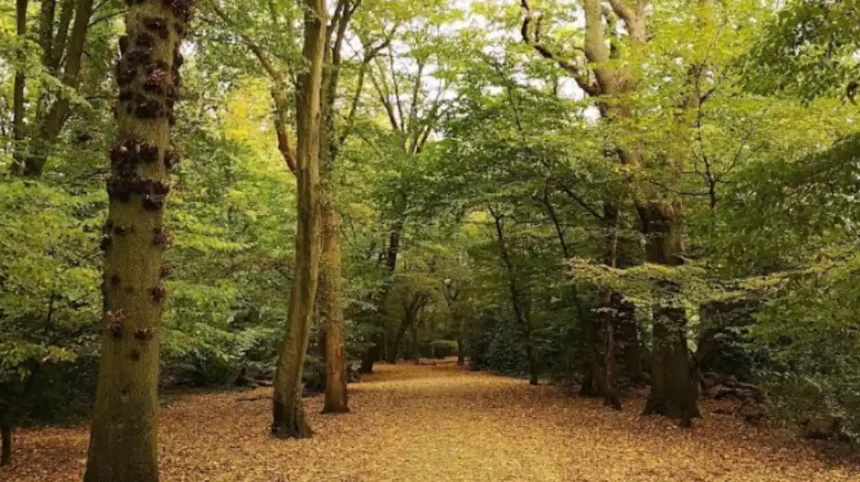
Haringey (North London News) September 18, 2026 — As reported by Professor Jeff Duckett, the record-breaking summer weather of 2026 has introduced a mixture of natural enjoyment, ecological discovery, and environmental concern across the ancient woodlands of Haringey. Ranking high among North London’s greenest boroughs, Haringey provides critical sanctuary through cold spots like Coldfall Wood, Highgate Wood, Queen’s Wood, and Crouch End Open Space. However, prolonged heat and drought conditions throughout the summer months have visibly altered local flora, driving premature seasonal changes and shifting crop patterns among key tree species.
- Key Points
- Why Are Haringey’s Woodlands Classified as Ancient Landscapes?
- How Can Visitors Determine the Historical Age of Local Trees?
- What Do Tree Shapes Reveal About Past Forestry Practices?
- What Specific Visual Effects Has the 2026 Drought Produced?
- Background of the Development
- Prediction: How This Development May Affect Local Residents and Environmental Stakeholders
Writing on the environmental status of the borough, Professor Jeff Duckett stated that “if you have had enough of parched grass in our parks, take a stroll and explore Haringey’s woodlands,” adding that “whenever you enter the tranquil atmosphere of Coldfall Wood, Highgate Wood, Queen’s Wood or Crouch End Open Space, there will be interesting things to experience and questions to ask regardless of the time of year.”
Why Are Haringey’s Woodlands Classified as Ancient Landscapes?
According to observations shared by Professor Jeff Duckett, the defining feature of these green spaces is their status as ancient woodlands, defined formally as sites that have maintained continuous tree cover since at least 1600 AD.
As detailed by Professor Jeff Duckett, “pollen analysis tells us that our local woodlands have not only remained much the same since the Middle Ages, but also probably stretch back some 6,000 years to when England was reforested after the last glaciation.” Professor Duckett noted that
“these woodland remnants are beyond question the most important features of London’s landscape and, as such, merit top priority for conservation.”
How Can Visitors Determine the Historical Age of Local Trees?
Evaluating the history of the woodland relies on examining physical structural markers across both canopy and understorey species.
As reported by Professor Jeff Duckett, “the best way to start delving into their history is by working out the age of the trees.” Duckett pointed out that “many of the biggest oaks are over 250 years old with a few ancient, coppiced pollards exceeding 350 years.”
Professor Jeff Duckett noted that older lineage remains visible beneath the main canopy, stating:
“The understorey of hornbeam has been coppiced for centuries. Tracing large circular groups of coppiced trees back to the location of an original tree in the centre indicates that these could well go back to before the Norman Conquest.”
Furthermore, Duckett highlighted physical evidence in Coldfall Wood, stating that “a row of ancient gnarled hornbeams in Coldfall Wood grows on a bank dating back at least to medieval times.”
What Do Tree Shapes Reveal About Past Forestry Practices?
Tree architecture offers direct evidence regarding historical density and traditional land management techniques practiced across North London over several centuries.
As explained by Professor Jeff Duckett,
“tree shape also provides important clues about woodland history. Those with straight unbranched trunks, referred to as standards, grew from saplings in closed woodland whereas widely-spreading lower branches are indicative of establishment in open conditions.”
Addressing historic timber management, Professor Jeff Duckett outlined that “management of Haringey’s woodlands as ‘standards and coppice’ was a century-old practice.” Duckett explained that
“the oak standards were harvested for ship timbers and then used second-hand as beams in pubs whereas the uses of the very hard wood from the hornbeams ranged from poles in agriculture and cogs for windmills, to piano hammers.”
What Specific Visual Effects Has the 2026 Drought Produced?
The extreme weather conditions recorded throughout 2026 have directly affected foliage coloration and seasonal life cycles across shallow-rooted species.
As reported by Professor Jeff Duckett,
“the most pertinent question to ask in 2026 is how the long, hot and dry summer might have affected the woodlands?”
Detailing the visible shifts, Professor Jeff Duckett observed that
“browning of leaves in mid-August, particularly those of the beeches, birches and cherries, with their shallow rooting systems exacerbating water stress, heralds the early onset of autumn, and similarly late summer, rather than autumnal fruit maturation.”
Why Are Oak and Beech Fruit Yields Diverging in 2026?
The contrast in crop performance between native oaks and beech trees during 2026 reflects differing geographical adaptations to heat stress.
As stated by Professor Jeff Duckett, “this year there are very few acorns, whereas the beeches are laden with fruits.”
Explaining the climate mechanisms driving this variation, Professor Jeff Duckett remarked that
“this can be explained in terms of the extreme weather. English and sessile oaks, both common in Haringey’s woodlands, are northern trees, whereas beech has a southern European distribution from Sicily to its northern natural limit in the Chilterns.”
Background of the Development
The environmental changes documented across Haringey’s ancient woodlands fit into a broader pattern of climate shifts affecting urban forestry across Greater London. Over recent decades, North London’s green canopy—comprising remnant sites of the ancient Forest of Middlesex—has faced cumulative pressures from rising average seasonal temperatures, extended summer dry spells, and heavy urban usage.
Ancient woodlands such as Highgate Wood and Queen’s Wood rely on delicate soil structures and historical water tables that have remained relatively stable since medieval times. However, the recurring weather extremes seen in the mid-2020s have increased drought stress on native species, forcing local conservation bodies, borough councils, and volunteer forestry groups to alter traditional management routines to safeguard centuries-old habitats.
Explore More Haringey News
Haringey Council Doubles Audit Cap to £500k Haringey 2026
Green Leadership Faces Tough Financial Choices in Haringey 2026
Prediction: How This Development May Affect Local Residents and Environmental Stakeholders
The ongoing climate pressures and altered seasonal cycles within Haringey’s ancient woodlands are expected to impact local communities, visitors, and conservation authorities in several distinct ways:
- Increased Public Safety and Management Measures: Prolonged drought stress can lead to branch drop and canopy dieback, particularly in mature oaks and shallow-rooted birches. Local council arborists and woodland managers will likely need to increase canopy inspections and implement trail closures during high-wind or extreme-heat periods to protect visitors.
- Shifts in Wildlife Activity and Foraging: The low yield of acorns paired with heavy beech mast crops will temporarily alter local foraging patterns for urban wildlife, including birds, squirrels, and small mammals, potentially driving animals closer to surrounding residential gardens in search of alternative food sources.
- Long-Term Conservation Policy Adjustments: Environmental managers may need to rethink long-term planting strategies within borough reserves. As northern-adapted species like native oaks experience growing stress from recurrent hot summers, habitat management strategies may increasingly shift toward supporting heat-resilient canopy species to maintain London’s urban green infrastructure.