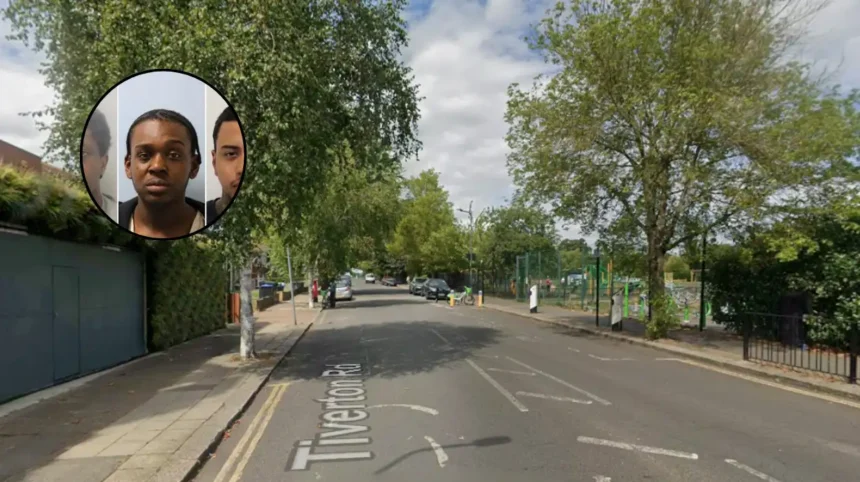
Key Points
- Convictions Secured: Three men—Gregory Del-Rosario, 22, and two others—have been found guilty of the murder of Gregory Catillo Volquez.
- The Attack: Volquez was ambushed in Haringey and stabbed 22 times in what was described as a vicious, pre-planned gang attack.
- Flight from Justice: Following the murder, two of the perpetrators fled to Spain to evade capture before being extradited back to the United Kingdom.
- Police Investigation: Met Police used extensive CCTV, phone data, and forensic evidence to track the suspects across international borders.
Haringey (North London News) May 21, 2026 — Three men have been convicted for the brutal murder of 36-year-old Gregory Catillo Volquez in Haringey. The verdict follows a complex investigation into a January 2025 attack where the victim was stabbed 22 times. The prosecution successfully argued that the trio acted in concert, with two of the men attempting to escape the jurisdiction by fleeing to Spain shortly after the killing.
- Key Points
- How was the Haringey murder investigation conducted by the Metropolitan Police?
- What evidence led to the conviction of Gregory Del-Rosario and his accomplices?
- Why did two of the murderers flee to Spain following the attack?
- What was the motive behind the 22-stab wound attack in Tiverton Road?
- Background of the particular development
- Prediction: How this development can affect the local community and law enforcement strategy
How was the Haringey murder investigation conducted by the Metropolitan Police?
As reported by Crime Correspondent John Dunne of the Evening Standard, the Metropolitan Police launched an intensive manhunt following the discovery of Mr Volquez’s body in Tiverton Road, N15.
Detectives from the Specialist Crime Command utilised a “painstaking” analysis of CCTV footage to reconstruct the movements of the attackers.
According to a statement released by Detective Chief Inspector Neil Rawlinson, who led the investigation,
“This was a calculated and violent attack carried out in the early hours of the morning when the victim was most vulnerable.”
DCI Rawlinson further noted that the investigation was “made significantly more complex” by the fact that two of the suspects left the country within 48 hours of the crime.
As detailed by BBC News London, the trial heard how Gregory Del-Rosario and his accomplices had targeted Volquez as part of an ongoing dispute. The court was told that the trio “ambushed” the victim at approximately 04:50 GMT on January 13, 2025.
Evidence presented by the prosecution showed that the attackers moved with “clinical precision,” leaving Mr Volquez with no opportunity to defend himself or escape.
What evidence led to the conviction of Gregory Del-Rosario and his accomplices?
Reporting for the Tottenham Independent, journalist Simon Allin noted that the forensic breakthrough came from a combination of blood-stained clothing discarded near the scene and mobile phone cell-site data. Prosecutors argued that the phone data placed all three men at the exact location of the murder at the time of the stabbing.
During the trial at the Old Bailey, the prosecution highlighted that the 22 stab wounds indicated a “frenzied” and “determined” effort to kill.
Medical examiners testified that the sheer number of wounds meant that even with immediate medical intervention, the injuries were likely “unsurvivable.”
Why did two of the murderers flee to Spain following the attack?
According to The Guardian’s legal affairs team, the court heard that the suspects believed they could evade the Metropolitan Police by crossing into the European Union.
However, the use of International Arrest Warrants and close cooperation between the Met’s Extradition Unit and the Spanish Guardia Civil led to their arrest in a coastal resort town.
Prosecutor Oliver Glasgow KC stated during the opening of the trial that
“the flight to Spain was not a holiday, but a desperate act of men who knew the weight of the evidence against them.”
Glasgow KC emphasised that the coordination required for such an escape suggested a level of planning that extended beyond the murder itself.
As reported by The Independent, the extradition process took several months, during which time detectives continued to build the case through digital forensics.
The third man, who remained in the UK, was arrested following a raid on a property in North London three weeks after the incident.
What was the motive behind the 22-stab wound attack in Tiverton Road?
While the police have been careful not to provide details that might glorify gang activity, The Daily Mail’s crime desk reported that the killing was linked to “territorial tensions” in the Haringey area. The court heard that Volquez was known to the defendants, and the level of violence used was intended as a “message” within their social circles.
The victim’s family, in a statement read to the court and recorded by ITV News London, described Gregory Catillo Volquez as a “loving son and brother” whose life was cut short by “senseless and cowardly violence.” They expressed relief at the verdict, noting that the attempts by the defendants to flee had caused “unnecessary additional trauma” to the grieving family.
Background of the particular development
The conviction of these three men comes at a time of heightened scrutiny regarding knife crime and gang-related violence in North London. Haringey has historically seen fluctuations in violent crime rates, leading to the implementation of “Operation Viper” and other Met Police initiatives designed to intercept armed criminals.
The use of Spain as a “bolt-hole” for London-based criminals is a recurring theme in UK organized crime history. Traditionally, the “Costa del Sol” has been associated with fugitives, though modern extradition treaties and shared intelligence databases between the UK and Spain have made this route increasingly difficult to navigate for suspects.
This case serves as a benchmark for post-Brexit police cooperation, demonstrating that the legal mechanisms for returning fugitives to the UK remain robust despite changes in political structures.
Furthermore, the “inverted pyramid” of evidence—starting from the physical crime scene and expanding into international digital footprints—highlights the Metropolitan Police’s increasing reliance on “e-forensics” to secure convictions in cases where witnesses may be too intimidated to testify.
Prediction: How this development can affect the local community and law enforcement strategy
This successful conviction and the subsequent extradition are likely to have a twofold effect on the local North London community and the wider public.
For the Local Community: The removal of three violent individuals from the streets of Haringey provides a temporary reprieve from the specific gang friction that led to Volquez’s death. However, it may also create a “power vacuum” within local illicit hierarchies, which often leads to a short-term increase in “posturing” by rival groups. For residents of Tiverton Road and the surrounding N15 area, the high-profile nature of the conviction may increase confidence in reporting suspicious activity, knowing that the police possess the resources to track offenders even across international borders.
For Law Enforcement and Potential Offenders: This case sets a strong deterrent precedent. The message from the Metropolitan Police is clear: fleeing the country is no longer a viable escape strategy. The seamless extradition from Spain suggests that law enforcement agencies are prioritising high-violence cases for international cooperation. We can expect the Met to continue using this “follow-them-anywhere” rhetoric in their public relations to discourage young people involved in gang activity from believing they are “untouchable” by local authorities.
In the long term, this development will likely lead to even tighter integration between the Met’s Specialist Crime Command and international policing bodies, as the “digital trail” left by fugitives proves to be the most effective tool in securing justice for victims of violent crime.