Key Points
- Decade-Long Vacancy: A four-storey council building located at 173 Highbury Quadrant has remained empty since 2016 after residents were relocated for a proposed eco-renovation.
- Property Sale Approved: Islington Town Hall has formally approved the sale of the building alongside 13 other sites after declaring the project financially unviable.
- Local Backlash: Local residents and opposition councillors have branded the long-standing situation a “scandalous” waste of resources amidst a severe borough-wide housing crisis.
- Official Explanation: Council finance leaders cited severe structural defects requiring underpinning, ongoing legal complications, and rising construction costs for abandoning the development.
- Fund Reallocation: Proceeds from the upcoming sale are slated to fund the repurchase of former Right-to-Buy flats across the borough to house families on the waiting list.
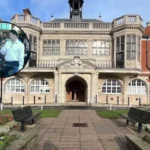
Islington (North London News) October 30, 2026 – A four-storey council housing property in Islington that was cleared of its residents eight years ago has been listed for sale by the local authority after standing vacant for nearly a decade.
- Key Points
- Why Has 173 Highbury Quadrant Stood Empty Since 2016?
- What Do Local Residents and Politicians Say About the Council’s Decision?
- How Does Islington Council Justify the Abandonment and Sale of the Property?
- Background of the Highbury Quadrant Housing Development
- Prediction: How Will This Development Affect Local Residents and Social Housing Provision?
Residents from four council flats were initially moved out of 173 Highbury Quadrant in 2016 under a scheme designed to convert the building into modern, energy-efficient council accommodation. However, continuous delays, administrative stalls, and escalating costs have left the structure derelict, surrounded by scaffolding, and covered in graffiti. Islington Council has now confirmed that the site will be sold off alongside 13 other municipal locations across the borough.
Why Has 173 Highbury Quadrant Stood Empty Since 2016?
The property at 173 Highbury Quadrant was originally emptied to make way for an ambitious deep-retrofit scheme intended to deliver high-standard, sustainable council housing. Local residents, however, described the project as “overly ambitious” from its inception.
Over the past eight years, construction work was repeatedly postponed. During this period of inaction, the physical state of the building deteriorated significantly. What was once an occupied residential block became an abandoned construction site, resulting in crumbling masonry, persistent graffiti, and long-term scaffolding that obscured the facade.
Neighbours in the surrounding area submitted formal enquiries and petitions to Islington Town Hall over several years, seeking clarity regarding the delays. Despite regular correspondence, local residents reported that they were unable to secure a transparent timeline or explanation as to why physical works had ground to a halt.
What Do Local Residents and Politicians Say About the Council’s Decision?
The local community and ward representatives have expressed sharp criticism regarding the management of the site and the ultimate decision to sell the municipal asset.
As reported by baseline coverage from the Islington Tribune, neighbouring resident Kelly Webb-Lamb stated that it was “scandalous” that the council had permitted the structure to remain unoccupied for so long. Ms Webb-Lamb noted:
“It’s literally been sitting empty for 10 years, just falling apart. That’s the thing that really makes me cross, is that they’ve just left it. It wasn’t a wreck, but it is now. It feels like a total tragedy to me in a borough that has a proper housing crisis – you’ve got this huge property sitting there empty when there’s so many people that need homes.”
Ms Webb-Lamb added that whilst securing usage for the site via a private sale was preferable to allowing it to remain an “empty wreck”, the decade leading up to the sale represented a complete “fiasco”.
Community members received political support from Highbury Ward Green Party councillor Benali Hamdache. Speaking on behalf of the Green Party group, Cllr Hamdache condemned the Labour-led administration’s decision to dispose of the municipal land. As reported by the Islington Tribune, Cllr Hamdache stated:
“I’ve been involved in Islington politics for over a decade, and as long as I can remember the development of this site has been on the cards. The council, and everyone involved, haven’t delivered, and we’re now at the very sad position where the site is being sold off.”
How Does Islington Council Justify the Abandonment and Sale of the Property?
Islington Council has defended its decision by pointing to insurmountable structural complications and financial pressures that emerged during the planning phases.
Addressing the reasons behind the project’s failure, Councillor Paul Convery, Finance Chief at Islington Council, explained the financial and logistical challenges that impacted the development. As reported by the Islington Tribune, Cllr Convery stated:
“There was originally a plan to redevelop this house for a mix of council flats subsidised by a home for private sale. However, this is now financially unviable due to structural problems which required urgent under-pinning. The redevelopment also got stalled by legal problems and has also been hit by the rapid rise in construction costs.”
Cllr Convery further highlighted the council’s broader track record regarding housing delivery across the borough, stating:
“We have, in recent years, built over 600 modern new council homes by converting unused garages and undercroft spaces on estates, and refurbishing existing buildings where it is cost effective to do so. After establishing there were no other viable uses for the property, the best outcome is to sell it and use the proceeds to support the purchase of ex-Right-To-Buy flats elsewhere in the borough, accommodating people in desperate need on our housing waiting list.”
Background of the Highbury Quadrant Housing Development
The disposition of 173 Highbury Quadrant takes place within the context of wider public sector financial strains and social housing shortages across Inner London boroughs.
During the mid-2010s, several London local authorities initiated estate regeneration and retrofit projects aimed at improving thermal efficiency and meeting municipal net-zero carbon targets. The site at Highbury Quadrant was selected as part of this initiative, intended to demonstrate how Victorian and mid-century brick housing stock could be upgraded to contemporary environmental standards.
However, retrofitting older residential structures in London has frequently run into budget overruns due to unforeseen structural defects, such as unstable foundations requiring underpinning. These structural issues, paired with global supply chain disruptions and construction cost inflation following 2020, significantly elevated the cost per square metre for municipal refits across the United Kingdom.
Compounded by complex property boundary legalities and shifting national planning frameworks, numerous local council projects across London have stalled, leading local authorities to rationalise their property portfolios by liquidating non-viable assets to fund market repurchases.
Prediction: How Will This Development Affect Local Residents and Social Housing Provision?
The decision to sell 173 Highbury Quadrant carries specific implications for different segments of the local community and the wider borough:
Impact on Area Residents and the Immediate Neighbourhood
For residents living adjacent to Highbury Quadrant, the sale is expected to bring an end to a decade of environmental decay, security concerns, and blighted streetscapes associated with the derelict building. Once sold to private developers or housing associations, the site will likely undergo private restoration, removing long-standing scaffolding and addressing structural risks. However, neighbours may face temporary disturbance from renewed construction activity during the redevelopment phase.
Impact on Families on the Housing Waiting List
The immediate effect for individuals on Islington’s housing register is the definitive loss of potential social housing units at the Highbury Quadrant location. Conversely, the council’s strategy to reallocate capital receipts toward purchasing former Right-to-Buy properties may allow for faster acquisition of move-in-ready homes elsewhere in the borough, bypassing the multi-year timelines required for complex structural refits.
Impact on Municipal Housing Strategy and Policy
This outcome reflects a broader policy pivot for local authorities operating under tight fiscal constraints. Councils are increasingly moving away from high-risk, technically complex retrofits of dilapidated single-site buildings in favour of acquiring existing residential units on the open market to meet urgent housing demands.