Key Points
- Barnet Council approved the “Antisemitism is racism” motion during a full council meeting on Tuesday, 20 October.
- The motion explicitly condemned the Green Party of England and Wales for adopting a policy titled “Zionism is racism” at its annual conference in Brighton on Sunday, 4 October.
- Barnet Labour criticised an east London council for distancing itself from Israel during the local political deliberations.
- Opponents and critics raised allegations that the motion contained “highly inaccurate” claims regarding the opposition party’s stance.
- Councillors debated the line between legitimate criticism of foreign state actions and antisemitism, reflecting broader national political tensions over the Middle East.
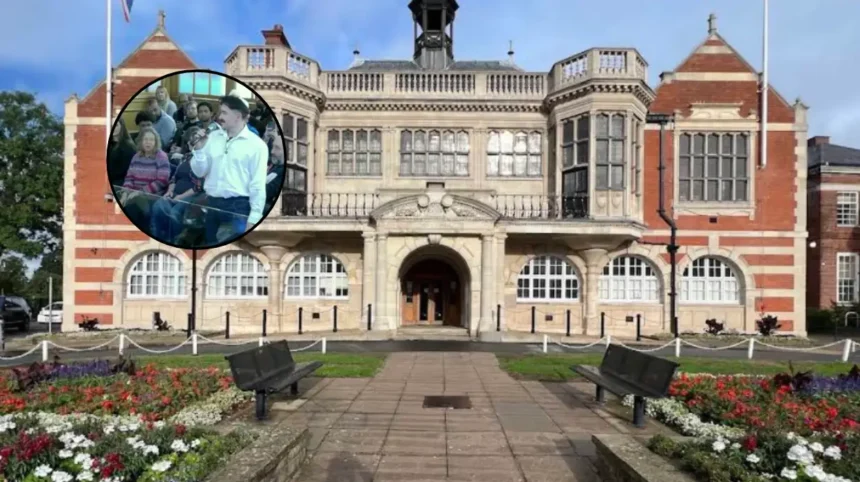
Barnet (North London News) October 30, 2026 – Barnet Council has officially passed a motion condemning The Green Party’s “Zionism is racism” policy following a intense full council meeting, despite facing sustained criticism and allegations of “highly inaccurate” claims from opposing figures.
- Key Points
- What led Barnet Council to pass the “Antisemitism is racism” motion?
- Why were allegations of “highly inaccurate” claims raised during the council debate?
- How did Barnet Labour respond to other east London councils regarding Israel?
- Background of the particular development
- Prediction: How this development can affect the local community and municipal governance
The motion, titled “Antisemitism is racism”, was introduced to the chamber as a direct response to the Green Party of England and Wales passing its own resolution at its annual autumn conference in Brighton. The Green Party motion, which labelled Zionism as a form of racism, drew sharp rebukes from local leaders in Barnet—a borough home to one of the largest Jewish populations in the United Kingdom.
During the debate, Barnet Labour took the opportunity to criticise an east London council for distancing itself from Israel, highlighting growing political fractures across local authorities in the capital regarding international affairs and community relations. Members of the council argued that local political bodies must take a clear, unequivocal stand against rhetoric that could destabilise community cohesion or perpetuate anti-Jewish prejudice within the borough.
However, the proceedings were marked by significant controversy as critics argued that the claims framed within the council’s motion contained fundamental inaccuracies regarding the exact wording and political scope of the Green Party’s conference resolution. Opponents warned that conflating specific political critiques of state ideology with racial or religious hatred risks diluting the fight against genuine antisemitism and restricting open political discourse.
Despite the pushback and parliamentary points of order raised during the session, the majority of voting members ultimately approved the motion, formally embedding the condemnation into the official record of Barnet Council.
What led Barnet Council to pass the “Antisemitism is racism” motion?
The formal adoption of the motion was triggered by events at the Green Party of England and Wales annual conference in Brighton, where party members voted in favour of a policy proposal asserting that “Zionism is racism”. The adoption of this stance by a major political party sparked widespread commentary across local government bodies, particularly within London boroughs with significant faith communities.
Barnet Council leaders brought the motion to the floor to send a definitive message regarding the protection of Jewish residents. Advocates for the motion argued that characterizing Zionism—a movement intrinsically linked to Jewish self-determination and identity for many in the community—as inherently racist creates an environment hostile to Jewish citizens. The motion asserted that local authorities have a moral obligation to ensure that anti-Zionist rhetoric does not cross into antisemitic prejudice.
Why were allegations of “highly inaccurate” claims raised during the council debate?
Throughout the council chamber discussions, several members questioned the precise framing of the text presented to the chamber. Opponents alleged that the motion misrepresented the underlying rationale and official position of the Green Party, accusing the authors of using political hyperbole rather than accurate factual assessments.
Critics pointed out that political motions passed at local council levels must adhere strictly to objective representations of third-party policies. The contention centered on whether the council motion conflated criticism of the political administration of the State of Israel with hostility toward Jewish people as an ethnic or religious group. despite these objections, proponents maintained that the broader impact of the Green Party’s resolution warranted an immediate and robust institutional rebuke.
How did Barnet Labour respond to other east London councils regarding Israel?
During the session, Barnet Labour publicly criticised an east London council for its recent political actions aimed at distancing itself from Israel. The criticism underscored a growing divergence in how local authorities across Greater London manage international conflicts and their impact on local governance.
Barnet Labour representatives argued that municipal councils in areas with distinct demographic compositions must remain cautious not to isolate specific communities through symbolic political gestures regarding foreign policy. They asserted that local policy should prioritize social cohesion, anti-discrimination efforts, and local public services rather than institutional divestment or official statements that could heighten local tensions.
Background of the particular development
The political debate within Barnet Council occurs against the backdrop of long-standing national discussions regarding the definition of antisemitism and the boundaries of free expression concerning foreign policy. The borough of Barnet contains the highest density of Jewish residents in England and Wales, making matters related to anti-Jewish discrimination and the State of Israel particularly sensitive within local municipal politics.
The Green Party of England and Wales adopted its “Zionism is racism” motion at its annual conference in Brighton following internal debates surrounding the ongoing conflict in the Middle East and international human rights law. The decision drew sharp reactions from across the political spectrum, with several civil society groups and politicians arguing that the language used generalized complex geopolitical realities in a manner that could be perceived as discriminatory.
Local councils across the United Kingdom do not possess constitutional authority over foreign policy. However, local authorities frequently utilize political motions to signal values, respond to national developments, and assure local communities of their commitment to equality and anti-discrimination standards under the Equality Act 2010. The debate in Barnet mirrors similar motions brought before municipal bodies across the country in recent years.
Prediction: How this development can affect the local community and municipal governance
The passage of the “Antisemitism is racism” motion by Barnet Council is expected to have notable effects on both community relations and future political proceedings within the borough:
- Community Reassurance and Cohesion: For a significant portion of Barnet’s Jewish residents, the council’s formal condemnation of the Green Party’s policy will likely serve as an important institutional reassurance that their identity and security are defended by local elected officials.
- Increased Local Political Polarization: The public criticism of neighboring east London councils and the allegations of inaccurate claims may deepen political divisions within Barnet Council itself, potentially complicating future cross-party collaboration on local civic issues.
- Impact on Minor Parties: The Green Party and its local representatives in North London may face heightened public scrutiny and political pressure to clarify their policy stance to reassure local constituents who view the Brighton conference resolution with concern.
- Precedent for Council Deliberations: The inclusion of international and ideological motions in# Barnet Council Passes Motion Condemning Green Party Zionism Policy Amid Controversy