Key Points
- National Legislation Enacted: Possession or publication of pornographic images depicting strangulation, suffocation, incest, or adults role-playing as children under 16 will become illegal across England and Wales from 6 November 2026 under provisions within the Crime and Policing Act 2026.
- Local Impact Highlighted: Islington Council’s community safety lead has welcomed the prohibition, asserting that pornography featuring strangulation is generating severe, real-life harm across London communities.
- High Demand for Specialized Support: A dedicated local healthcare service established in Islington specifically to treat victims of non-fatal strangulation has already received 288 referrals, underscoring the scale of physical abuse occurring in the borough.
- Legal Penalties: Individuals found guilty of possessing prohibited pornographic content face up to two years’ imprisonment, whilst those convicted of publishing or sharing such material face up to five years in custody.
- Regulatory Enforcement: The newly banned categories will be classified as priority offences under the Online Safety Act 2023, placing strict legal obligations on internet service providers and adult platforms to proactively filter, detect, and remove non-compliant content.
Islington (North London News) October 21, 2026 — A North London local authority has formally welcomed new national legislation banning pornography that depicts strangulation, connecting the widespread online availability of such material directly to physical injuries and domestic abuse recorded within the borough.
- Key Points
- What Are the Specific Provisions of the New Pornography Ban?
- Why Has Islington Council Raised Concerns Over Non-Fatal Strangulation?
- How Will the Legislative Measures Be Enforced Online and Offline?
- What Is the Background to the Crime and Policing Act 2026 Development?
- How Could This Statutory Ban Affect Internet Users, Tech Platforms, and Public Services?
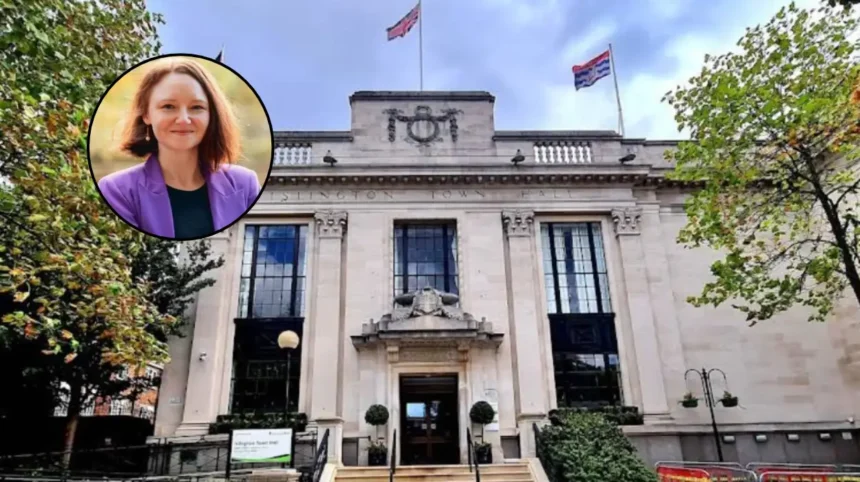
As reported by Local Democracy Reporter Josef Steen of MyLondon, Councillor Heather Staff, Executive Member for Community Safety and Neighbourhoods at Islington Council, described the upcoming statutory prohibition as a “bold, albeit necessary” intervention to tackle rising instances of real-world violence. The local government intervention comes as statistics revealed that a specialized local health service created specifically for victims of non-fatal strangulation in Islington has recorded 288 patient referrals.
What Are the Specific Provisions of the New Pornography Ban?
The statutory ban forms part of the Crime and Policing Act 2026, which received Royal Assent earlier this year and will see its digital content restrictions come into active force on 6 November 2026. Under the provisions of the Act, it will be a distinct criminal offence across England and Wales to possess or publish pornographic images—encompassing both still photography and moving video—that explicitly and realistically depict:
- Strangulation or Suffocation: Sexual activity involving the restriction of a person’s airway or breath.
- Incestuous Sexual Activity: Depictions of explicit acts between individuals who appear to be, or are portrayed as, close blood relatives, as well as specified step-family or foster-family relationships involving individuals portrayed as under 18.
- Underage Role-Play: Pornographic material depicting adults role-playing, pretending to be, or appearing as children under the age of 16.
As documented in official guidance published by the Home Office, the criminal code applies to realistic artificial intelligence (AI) generated media as well as authentic recorded footage. Under the statutory framework, simple possession of the banned material carries a maximum custodial sentence of two years, whereas publication—defined as making the image available to another person, including within private messaging applications such as WhatsApp or Telegram—carries a maximum sentence of five years’ imprisonment.
Why Has Islington Council Raised Concerns Over Non-Fatal Strangulation?
Addressing the local impact of online adult content trends on public health and community safety, Councillor Heather Staff stated that exposure to extreme pornography has increasingly normalized dangerous physical acts during sexual encounters, particularly amongst younger demographics.
The council’s endorsement follows findings from Baroness Bertin’s Independent Pornography Review, commissioned by the government, which concluded that the depiction of strangulation in mainstream adult content shapes sexual behaviour in real-life relationships and normalizes conduct that constitutes severe assault.
Health practitioners operating within Islington’s designated non-fatal strangulation service have documented 288 referrals to date. Medical experts emphasize that non-fatal strangulation is a critical risk indicator in domestic abuse scenarios, frequently leading to neurological damage, loss of consciousness, strokes, and fatal escalation if left unaddressed.
How Will the Legislative Measures Be Enforced Online and Offline?
To ensure enforcement beyond individual criminal prosecutions, the Home Office confirmed that the new offences will be designated as priority illegal content under the Online Safety Act 2023. This designation forces commercial adult websites, search engines, and social media platforms to implement proactive filtration systems to prevent UK-based users from accessing, viewing, or uploading depictions of strangulation, incest, or underage role-play.
The communications regulator, Ofcom, has been granted administrative oversight and enforcement powers. Platforms that fail to demonstrate robust compliance face financial penalties reaching up to £18 million or 10 per cent of their global annual turnover, whichever figure is higher.
Legal experts from criminal defence firm Reeds Solicitors noted that for private individuals, possession constitutes a continuing offence. Consequently, members of the public holding non-consensual or non-compliant digital media on their personal devices must delete the material prior to the 6 November enforcement deadline to avoid criminal liability.
What Is the Background to the Crime and Policing Act 2026 Development?
The implementation of the Crime and Policing Act 2026 represents the culmination of a multi-year campaign led by domestic abuse charities, women’s safety advocacy groups, and parliamentary committees seeking to reform the UK’s legal framework surrounding extreme digital media.
Prior to this legislative action, non-fatal strangulation was made a specific, standalone criminal offence under Section 70 of the Domestic Abuse Act 2021, punishable by up to five years in prison. However, law enforcement agencies and legal campaigners highlighted a legal loophole: while the physical act of strangling an individual without consent was illegal offline, media depicting realistic non-fatal strangulation remained widely available across free, unverified commercial pornography platforms hosted abroad.
The Independent Pornography Review subsequently examined how the accessibility of extreme pornography influenced interpersonal behaviour, finding strong correlations between regular consumption of choking media and an increase in non-consensual sexual violence reported to police forces. The government subsequently incorporated total bans on strangulation, incest role-play, and adult-child role-play into the Crime and Policing Act 2026 to align digital content regulations with established statutory criminal laws.
How Could This Statutory Ban Affect Internet Users, Tech Platforms, and Public Services?
The nationwide ban is projected to have operational consequences across several key sectors:
Internet Users and the General Public
Members of the public will face strict criminal accountability for possessing or forwarding explicit material containing choked or asphyxiated subjects. Legal analysts indicate that prosecutions will most frequently arise during forensic device examinations conducted for unrelated police investigations. The law explicitly removes the defense of accidental receipt, provided the individual had a reasonable opportunity to delete the unsolicited media.
Digital Platforms and Content Providers
Commercial adult platforms operating within or serving the United Kingdom will be required to overhaul their automated moderation software, content taxonomy, and age-verification protocols. Due to the high financial penalties enforceable by Ofcom, major hosting platforms are anticipated to restrict upload functionality and remove substantial archives of media to mitigate regulatory exposure.
Healthcare Providers and Local Authorities
For local government bodies like Islington Council and NHS regional health trusts, the statutory prohibition is anticipated to support early-intervention strategies against domestic violence. By reducing the cultural normalization of choking during sexual activity, public health administrators anticipate a long-term reduction in traumatic physical injuries requiring emergency medical care and specialized referral pipelines.