Key points
- Masaj, a new massage and wellbeing studio founded by Alice Vaughan and Scarlet Amies, is opening at Islington Square in London on 18 June 2026.
- The studio is presenting massage as an essential part of modern wellbeing, rather than an occasional luxury.
- The Islington Square venue will offer eight treatment rooms, including a fully accessible room and two couples’ rooms on the ground floor.
- Georgia Perry‑Hilsdon, vice president at Cain (which represents Islington Square), said the arrival of Masaj adds a new wellness layer to the local destination.
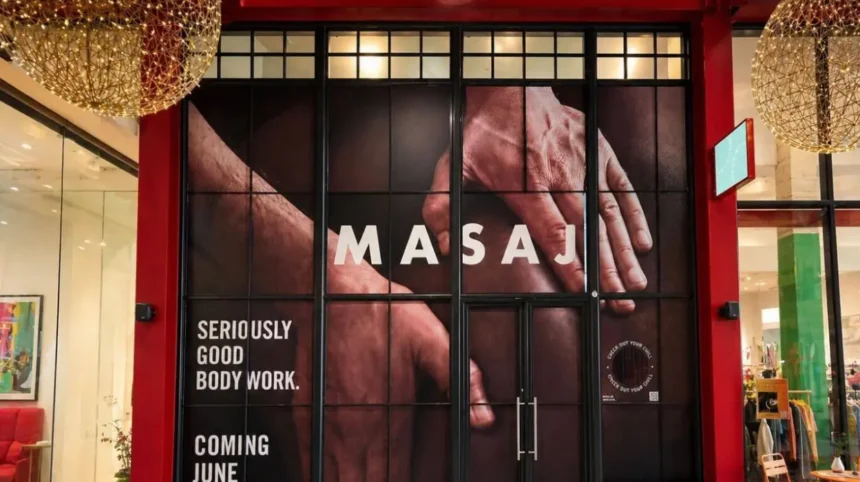
Islington (North London News) May 25, 2026 – lifestyle wellness brand Masaj will open its new massage studio at Islington Square on 18 June 2026, positioning the venue as a destination for accessible, personalised bodywork and relaxation in the heart of north London. The studio is being launched by co‑founders Alice Vaughan and Scarlet Amies, who say they aim to embed massage into everyday routines rather than treating it as a rare treat.
The new site follows Masaj’s existing presence across London, where the brand has cultivated a reputation for “thoughtful, modern wellness spaces,” according to Georgia Perry‑Hilsdon, vice president at Cain, the company representing Islington Square. Perry‑Hilsdon said: “We’re really excited to be welcoming MASAJ to Islington Square … Their arrival adds another layer to the mix here, giving visitors a place to slow down, recharge and prioritise wellbeing in the middle of busy city life.”
What is Masaj’s new studio offering in Islington?
At Islington Square, Masaj is introducing eight treatment rooms, each designed to support a calm, low‑sensory environment for clients. Among these, one room is fully accessible, signalling an effort to accommodate a wider range of customers, while two couples’ rooms on the ground floor are aimed at clients seeking shared or paired sessions.
The layout and décor are intended to contrast with the pace of urban life, with the brand emphasising a slower, more intentional rhythm from the moment guests enter. As reported by coverage of the studio’s launch, Vaughan and Amies said: “With this new studio, we wanted to create somewhere that moves at a different pace to the city. A place to step away, reset, and reconnect with your body.” They added that the aim is for every guest to feel “seen, supported, and completely at ease” as soon as they arrive.
How is Masaj positioning massage in daily life?
Masaj’s founders are framing the studio as part of a broader shift in how city‑dwellers think about self‑care, arguing that regular massage should be as routine as other forms of exercise or health maintenance. Before opening the Islington Square branch, the brand had already built a presence in London by marketing massage as a “modern wellness” service rather than a purely indulgent extra.
Advertising and press material for the studio describe the treatments as “personalised,” suggesting that therapists will tailor techniques and pressures to individual needs rather than using a standardised approach. This focus on customisation ties into wider trends in the wellness sector, where consumers are increasingly seeking experiences that feel specific to their own bodies and lifestyles.
What does Masaj’s arrival mean for Islington Square’s retail and leisure mix?
The inclusion of Masaj aligns with ongoing efforts to diversify the types of services available at Islington Square, which has previously been promoted as a mixed‑use destination combining retail, dining and communal spaces. By adding a dedicated wellness studio, the site is effectively broadening its appeal beyond shopping and food‑oriented visitors to those looking for relaxation or recovery‑focused experiences.
Commenting on the studio’s fit within the wider scheme, Georgia Perry‑Hilsdon noted that Masaj’s approach resonates with the character Islington Square is trying to project. She said the studio “adds another layer to the mix here, giving visitors a place to slow down, recharge and prioritise wellbeing in the middle of busy city life.” From a placemaking perspective, the opening signals that wellness is being treated as a core amenity alongside bars, restaurants and shops.
Explore More Islington News
Why Sure Start Matters for Islington’s Children, 2026
Premier League Trophy at Fox on the Green Islington 2026
Background of the development
The Masaj studio at Islington Square is one element in a longer‑running trend of branded wellness studios expanding into urban neighbourhoods across London. In recent years, massage, stretching and recovery‑focused concepts have increasingly appeared in mixed‑use developments, parks‑adjacent sites and former retail spaces, reflecting growing demand for accessible, non‑medical self‑care options.
Islington Square itself has been marketed as a destination that blends work, leisure and residential components, with an emphasis on communal spaces and lifestyle amenities. The decision to bring in Masaj builds on that positioning by offering a paid‑service wellbeing venue that can be visited outside of clinical or gym‑based settings. For the brand, the move represents further central‑London expansion for a concept that has previously opened branches in other London neighbourhoods, suggesting a strategy of clustering in high‑footfall areas rather than single‑site experimentation.
Prediction: How this development could affect the local and wider audience
For local residents and workers in Islington and neighbouring boroughs, the arrival of Masaj offers a new option for regular, structured self‑care within a short journey from workplaces or homes. Because the studio is integrated into a mixed‑use destination, it may be more convenient than standalone clinics located in less central or harder‑to‑reach areas, potentially making regular massage sessions more realistic for busy professionals and commuters.
From a wider London‑wide audience perspective, the opening reinforces a pattern in which wellness studios are being positioned as everyday amenities rather than occasional luxuries. If demand in Islington remains strong, other developers and landlords may seek similar partnerships, potentially increasing the number of purpose‑designed massage and bodywork spaces in other parts of the capital. At the same time, the presence of a branded, clearly marketed studio could influence how people conceptualise massage and recovery, normalising it as a routine part of health and stress‑management routines rather than a one‑off treat.