Key Points
- Contractor United Living wins the right to pursue a £7.4m claim against architect Hawkins\Brown over alleged defects at the Wenlock Building in Islington, North London.
- Mr Justice Eyre dismissed Hawkins\Brown’s application to throw out the lawsuit following an earlier £1.6m settlement reached in March 2023.
- The lawsuit centers on the costs of replacing a Velfac curtain walling façade system (£3.1m) and rectifying structural fire protection defects (£4.2m).
- Hawkins\Brown maintains a full denial of liability, and the court ruling addresses procedural admissibility rather than final responsibility for the alleged defects.
- Additional defendants named in the ongoing proceedings include Dovista UK (formerly Velfac) and sub-contractor Dantaag.
Islington (North London News) November 4, 2026 – Contractor United Living has secured a pivotal High Court victory allowing it to progress a fresh £7.4m legal action against design firm Hawkins\Brown regarding extensive remedial works at a North London residential development.
- Key Points
- Why did the High Court reject Hawkins\Brown’s application to strike out the claim?
- What are the specific alleged defects at the Wenlock Building?
- How did the financial scope of the claims expand to £7.4m?
- What happens next in the substantive dispute?
- Background to the Wenlock Building development and dispute
- Predictions: How will this legal ruling affect the UK construction and architectural sectors?
Why did the High Court reject Hawkins\Brown’s application to strike out the claim?
As reported by legal correspondent Construction Enquirer on the proceedings before the High Court of Justice, Hawkins\Brown sought to halt the litigation on the grounds that United Living could and should have included these matters in earlier proceedings. The architect argued that allowing the fresh claim to proceed constituted an abuse of process under established legal precedents, given that the parties had previously settled a dispute in March 2023. Under that initial compromise agreement, Hawkins\Brown paid United Living nearly £1.6m.
However, presiding judge Mr Justice Eyre rejected the architect’s application. The judge ruled that the March 2023 settlement was framed specifically to address the particular head of claims raised at that precise time, rather than establishing a complete or blanket release from all potential future liabilities. Consequently, the High Court determined that United Living had not promised to abandon all future claims nor signed a general release. The judge noted that at the time of the initial settlement negotiations, the contractor’s potential secondary claims were still at an early investigation stage.
What are the specific alleged defects at the Wenlock Building?
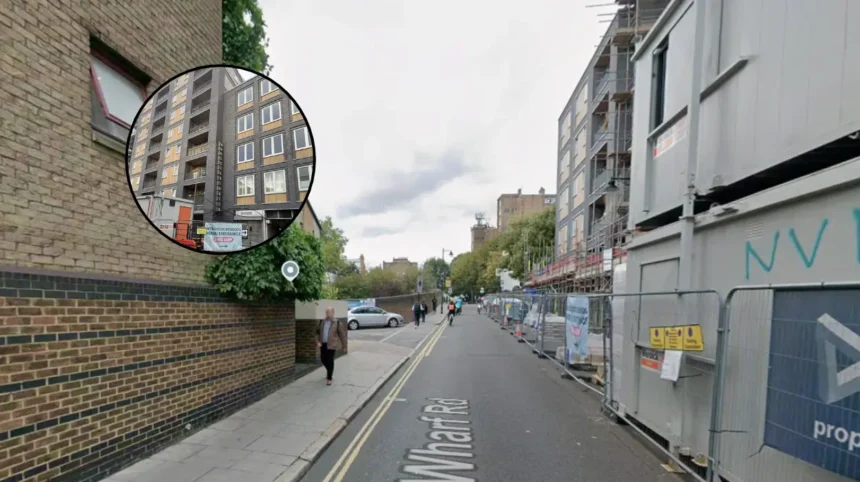
As documented in court filings cited across industry reporting, the disputes trace back to the construction of the Wenlock Building situated on Wharf Road in Islington. United Living, then trading as United House, was engaged under a design and build contract in 2007 to transform the site into a nine-storey residential development, which reached completion in 2009.
Years after completion, building owner Workspace commenced legal action against United Living regarding building integrity and safety non-compliance. The primary defects cited by Workspace included:
- Combustible cladding and insulation materials across the exterior envelope.
- Missing or incorrectly installed cavity barriers designed to inhibit the spread of flame.
- Inadequate fire stopping across compartment walls and floor junctions.
United Living resolved the dispute with Workspace by agreeing to perform comprehensive remedial works across the property. To recoup these costs, the main contractor subsequently launched secondary proceedings against various specialists involved in the original project design and construction.
How did the financial scope of the claims expand to £7.4m?
During the initial round of legal proceedings, United Living expressly excluded the costs of repairing the property’s Velfac curtain walling system from its claims against Hawkins\Brown and co-defendants. At that time, United Living operated under the assumption that the curtain walling issues stemmed primarily from localized installation errors.
Subsequent technical investigations led the contractor to revise its conclusions, indicating that the façade system required total replacement and raising fundamental questions regarding its structural suitability for a nine-storey building.
The current financial breakdown of United Living’s £7.4m claim comprises:
Façade Replacement Costs
United Living allocates £3.1m toward the total removal and replacement of the Velfac curtain walling system.
Structural Fire Protection Remediation
The remaining £4.2m is claimed for rectifying systemic fire protection deficiencies associated with the structural steelwork.
In addition to Hawkins\Brown, the ongoing proceedings cite Dovista UK (formerly Velfac) and sub-contractor Dantaag as co-defendants.
What happens next in the substantive dispute?
The ruling by Mr Justice Eyre does not determine liability or assign fault for the alleged defects at the Wenlock Building. The decision solely permits United Living’s claim to proceed to a full trial on its merits. Hawkins\Brown continues to deny all allegations of breach of duty, design fault, or negligence. The co-defendants, Dovista UK and Dantaag, are also expected to contest the claims as the substantive trial moves forward in the High Court.
Background to the Wenlock Building development and dispute
The site on Wharf Road, Islington, was developed to provide modern mixed-use residential accommodation in inner North London. Following its completion in 2009, updates to UK building safety guidance and post-Grenfell fire safety regulations prompted commercial property owners nationwide to inspect existing high-rise residential portfolios.
When Workspace identified potential fire safety risks and cladding non-compliance at the Wenlock Building, main contractor United Living assumed responsibility for the physical remediation under its build contract warranties. Main contractors in design-and-build contracts often seek indemnity from specialist architectural firms and material manufacturers when alleged design errors or product failures lead to secondary liabilities. The decision by Mr Justice Eyre clarifies how settlement agreements are interpreted when complex, multi-stage building safety rectifications evolve over several years.
Predictions: How will this legal ruling affect the UK construction and architectural sectors?
The High Court’s dismissal of Hawkins\Brown’s application sets a notable precedent for construction litigation, design-and-build contractors, and architectural practices across the United Kingdom.
Impacts on Architects and Design Consultants
Architectural practices can expect stricter scrutiny when drafting settlement agreements. Standard compromise agreements that do not explicitly incorporate comprehensive release language may leave consultants exposed to downstream claims as secondary building inspections unfold. Professional indemnity insurers are likely to advise design consultants to insist upon absolute, global liability releases when settling multi-party building defect disputes.
Impacts on Main Contractors and Building Owners
For main contractors undertaking extensive remediation portfolios, this judgment offers a procedural safeguard. Contractors investigating complex, multi-layered defect claims are not necessarily forced to litigate every potential flaw simultaneously if technical assessments remain incomplete. This enables main contractors to resolve immediate remediation liabilities with property owners without forfeiting the right to seek recovery from design teams as further evidence emerges.