Key Points
- David Stephen Geoffrey Pollock, the 3rd Viscount Hanworth, has received a six-month driving disqualification after accumulating 12 points on his driving licence.
- The peer appeared at Westminster Magistrates’ Court on 7 October 2026, having admitted via the single justice procedure to driving at 27mph in a designated 20mph zone.
- The latest infraction added three penalty points to his existing nine points, which stemmed from three previous speeding offences recorded in May 2024, August 2024, and June 2026.
- Pollock questioned the calibration of speed cameras during his appearance, raising doubts over accuracy and rounding tendencies.
- He withdrew a planned application to avoid a ban under exceptional hardship grounds after learning he would need to present formal medical evidence regarding his family’s health conditions at a deferred hearing.
- Senior District Judge (Chief Magistrate) Paul Goldspring ordered Pollock to pay a £250 fine, £130 in prosecution costs, and a £100 victim surcharge.
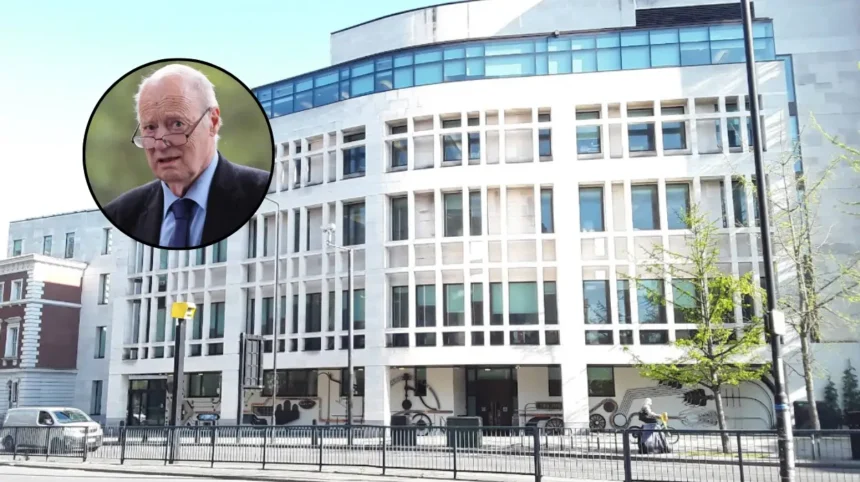
Islington (North London News) October 8, 2026 – A north London peer, David Stephen Geoffrey Pollock, the 3rd Viscount Hanworth, has been disqualified from driving for six months by Westminster Magistrates’ Court after reaching the statutory 12-point limit on his driving licence. As reported by Press Association Crime Correspondent Margaret Davis for MyLondon and The Independent, the 80-year-old hereditary peer from Islington received a mandatory ban following a 27mph speed camera detection inside a 20mph enforcement zone. Having previously pleaded guilty through the single justice procedure, Pollock appeared in person before the bench where he raised doubts regarding camera calibration before abandoning a bid to retain his licence on exceptional hardship grounds.
- Key Points
- Why Did Viscount Hanworth Receive a Driving Disqualification?
- What Occurred During the Westminster Magistrates’ Court Hearing?
- What Penalties and Fines Were Issued by the Chief Magistrate?
- Background of Viscount Hanworth and Previous Driving Offences
- Prediction: How Will This Development Affect Metropolitan Drivers and Speed Enforcement Policy?
Why Did Viscount Hanworth Receive a Driving Disqualification?
As detailed by Margaret Davis of the Press Association, Viscount Hanworth incurred his latest penalty points after being clocked traveling at 27.6mph in a 20mph zone. Under standard court procedural guidelines, speed readings of this nature are rounded down to the nearest whole integer, formally charging him with travelling at 27mph.
The additional three points brought his total license endorsement to 12 points. Under British traffic law, reaching 12 penalty points within a three-year timeframe triggers an automatic minimum six-month driving ban under the “totting-up” procedure, unless extreme and exceptional hardship can be established to the court’s satisfaction.
What Occurred During the Westminster Magistrates’ Court Hearing?
According to reporting published by The Independent and London Now, Pollock directly addressed Senior District Judge Paul Goldspring during his court appearance to challenge the technical reliability of automated speed measurement hardware. As reported by Margaret Davis of the Press Association, Pollock stated in court:
“I have doubt that the camera is properly calibrated. I think there is a tendency to round up the figure.”
The court clarified that the camera had originally recorded his speed at 27.6mph, meaning the speed figure had actually been rounded down in his favour rather than rounded up.
As reported by London Now, Pollock maintained his position as a cautious road user, stating to the bench:
“The only thing I can offer is the fact that I am a cautious driver who only uses his car to take his wife to a clinic and to use for my daughter who has a spinal injury.”
Although Pollock initially intended to submit a formal application claiming that a driving disqualification would cause exceptional hardship due to his familial caregiving responsibilities, he elected to withdraw the application. The court informed him that establishing exceptional hardship on medical grounds would necessitate adjourning the case to present verified medical evidence and documentation at a subsequent hearing. Rather than delaying proceedings to gather medical records, the viscount chose to accept the immediate six-month disqualification.
What Penalties and Fines Were Issued by the Chief Magistrate?
Following the withdrawal of the hardship claim, Senior District Judge Paul Goldspring formally passed sentence. As reported by The Independent, the Chief Magistrate imposed a financial penalty of £250, reduced by one-third from the initial benchmark to reflect Pollock’s early guilty plea.
In addition to the fine, Pollock was ordered to pay court costs of £130 and a statutory victim surcharge of £100, alongside the imposition of the six-month driving ban. Addressing the peer directly from the bench regarding speed compliance, Chief Magistrate Goldspring remarked:
“Speed is an expensive business, don’t do it.”
Background of Viscount Hanworth and Previous Driving Offences
David Stephen Geoffrey Pollock is the 3rd Viscount Hanworth, a title within the Peerage of the United Kingdom created in 1936 for his grandfather, Ernest Pollock, 1st Viscount Hanworth, who served as Master of the Rolls and Attorney General. A viscount represents a historic noble rank within the British peerage structure, positioned hierarchically below an earl and above a baron.
Before the court appearance on 7 October 2026, Pollock’s driving record already held nine active penalty points accumulated across three separate speeding violations over a 25-month period:
- May 2024: First speed limit infraction resulting in three penalty points.
- August 2024: Second speed limit infraction resulting in three penalty points.
- June 2026: Third speed limit infraction resulting in three penalty points.
Combined with the October 2026 offence, these violations completed a sequence of four recorded speeding offences, bringing his cumulative total to 12 points and triggering mandatory disqualification.
Prediction: How Will This Development Affect Metropolitan Drivers and Speed Enforcement Policy?
This court ruling reinforces several practical and legal implications for motorists operating within Greater London and across the United Kingdom:
- Strict Enforcement of 20mph Speed Zones: The judicial outcome underscores that magistrates’ courts maintain a zero-tolerance approach to speed limits in urban residential areas. Drivers operating within 20mph municipal zones face strict adherence measures, with camera technology and automated detection systems consistently upheld by the judiciary regardless of claims surrounding equipment calibration.
- Evidentiary Thresholds for Exceptional Hardship Claims: The case highlights the formal legal burdens required to avoid a mandatory “totting-up” ban. Motorists attempting to claim exceptional hardship—even on the grounds of caring for infirm or disabled relatives—must provide clear, verifiable medical and logistical documentation. Informal verbal representations without documentary backing are insufficient to bypass statutory disqualifications.
- Impact on Elderly and Caregiver Motorists: The six-month ban demonstrates how strict driving laws apply equally across demographic groups and social titles. For individuals acting as primary transport support for dependents with complex medical needs, accumulating points for minor urban speeding violations presents severe practical disruptions, necessitating alternative transport arrangements, non-emergency medical transport services, or private hire care solutions during disqualification periods.