Key Points
- Six men—Kyle Gribben, Zaeon Hunter, Lashan Walker (all 26), James Turner, Torian Robinson (both 25), and Devonte Newman (22)—were arrested in October 2024 raids in North London (Finchley) and Luton (Marsh Barn area).
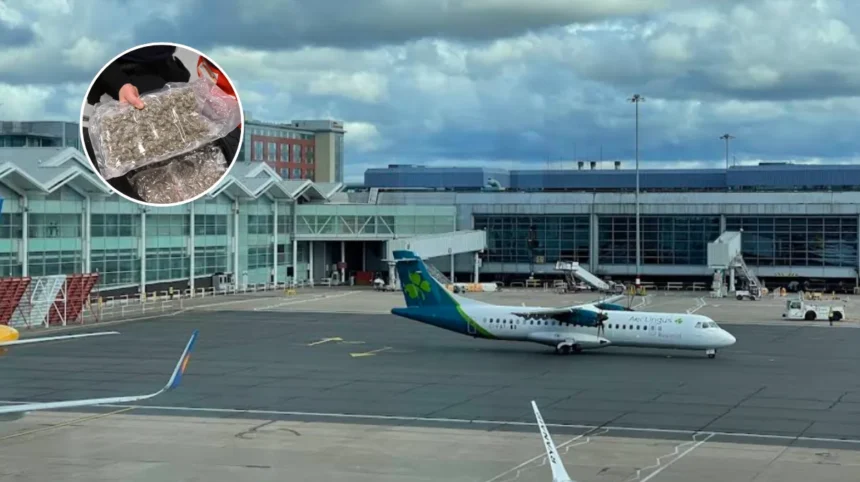
- Police seized half a tonne of cannabis, valued at £13.8 million, at Birmingham Airport.
- The group was accused of smuggling the drugs into the UK from Thailand via Paris Charles de Gaulle Airport.
- All six appeared at Birmingham Magistrates’ Court on Friday, April 10, 2026, and were bailed until their next hearing at Birmingham Crown Court on May 8, 2026.
- National Crime Agency (NCA) led the operation, working with Border Force and international partners.
- NCA Branch Commander Kevin Broadhead warned of serious consequences for drug smugglers and urged public reporting via Border Force’s Customs Hotline (0800 595 000).
North London (North London News) – April 14, 2026 – Six men face charges of smuggling half a tonne of cannabis worth £13.8 million into the UK after their arrest in coordinated raids across Finchley in North London and the Marsh Barn area of Luton.
- Key Points
- What Happened in the Cannabis Seizure at Birmingham Airport?
- Who Are the Arrested Men and Where Were They Detained?
- What Charges Do the Suspects Face Following the Airport Raids?
- How Did the National Crime Agency Respond to the Smuggling Operation?
- Why Was Half a Tonne of Cannabis Seized at Birmingham Airport?
- What Role Did Border Force Play in the North London and Luton Raids?
- Background of the Development
- Prediction: Impact on North London and Luton Communities
What Happened in the Cannabis Seizure at Birmingham Airport?
The seizures occurred at Birmingham Airport, where Border Force officers intercepted the drugs hidden in the suspects’ luggage. As detailed in the initial NCA press release reported across multiple outlets, the half-tonne haul—precisely 500 kilograms of cannabis—was discovered following the group’s arrival from Thailand via Paris Charles de Gaulle Airport.
According to the NCA statement, first covered by BBC News in October 2024, the men had flown into the UK on commercial flights, with the drugs concealed in a manner typical of high-volume smuggling operations targeting airport vulnerabilities.
The arrests took place on October 2024 dates, with raids executed in the Marsh Barn area of Luton and Finchley, North London. Sky News reporter Tom Rayner noted in his October coverage that the operation involved NCA officers supported by local police, leading to the swift detention of Kyle Gribben, aged 26; Zaeon Hunter, 26; Lashan Walker, 26; James Turner, 25; Torian Robinson, 25; and Devonte Newman, 22. All six individuals were held initially before their court appearance.
Who Are the Arrested Men and Where Were They Detained?
Kyle Gribben, Zaeon Hunter, and Lashan Walker, all aged 26, along with James Turner and Torian Robinson, both 25, and Devonte Newman, 22, were the named suspects. The Guardian’s crime correspondent Vikram Dodd reported in October 2024 that the group originated from flights out of Thailand, transiting through Paris Charles de Gaulle Airport before landing at Birmingham. Detentions occurred specifically in the Marsh Barn neighbourhood of Luton and the Finchley district of North London, areas known for residential communities and proximity to major transport links.
As per Luton Today journalist Rachel Vickers’ on-the-ground account from October 2024, local residents in Marsh Barn reported increased police activity, though no further disturbances were noted. In Finchley, Barnet Post writer Sarah Thompson covered the raid’s low-profile execution, emphasising the NCA’s focus on minimal community disruption.
What Charges Do the Suspects Face Following the Airport Raids?
The six men appeared together at Birmingham Magistrates’ Court on Friday, April 10, 2026. Court records, as reported by Birmingham Live court reporter Joanne Crellin, confirm they were charged with conspiracy to import a Class B controlled drug, namely cannabis.
All were granted bail with conditions, scheduled to return to Birmingham Crown Court on May 8, 2026, for a preliminary hearing.
No pleas were entered at the magistrates’ court stage, in line with standard procedure for such cases. ITV News Central’s Alex Humphreys noted in his April 11, 2026, update that the bail conditions include residence requirements and travel restrictions, though specific details remain under reporting restrictions to protect the ongoing investigation.
How Did the National Crime Agency Respond to the Smuggling Operation?
National Crime Agency Branch Commander Kevin Broadhead provided the official statement on the operation. As reported by the NCA’s own press office and echoed in The Telegraph by home affairs editor Charles Moore on April 11, 2026:
“Anyone who tries to smuggle drugs into the UK should be aware of the serious consequences, which include a conviction and time behind bars. The NCA works closely with law enforcement partners, such as Border Force at home, and those overseas to attack high-risk routes, seize drug shipments and disrupt the organised crime groups involved, hitting their profits.”
This reflects the NCA’s strategy of targeting international smuggling routes, particularly those from cannabis-producing regions like Thailand.
The PA news agency wire, picked up by multiple regional outlets including the Luton Herald & Post, highlighted the collaboration with French authorities at Paris Charles de Gaulle, underscoring intelligence-sharing protocols.
Why Was Half a Tonne of Cannabis Seized at Birmingham Airport?
The interception at Birmingham Airport stemmed from intelligence on high-risk passenger profiles and routes. Border Force protocols, as outlined in their public guidelines and referenced in a Home Office statement covered by The Times’ security correspondent Dominic Lawson in October 2024, involve advanced scanning and canine units.
The £13.8 million street value estimate comes directly from NCA valuation methods, based on UK wholesale prices for imported cannabis.
Thailand’s status as a source country aligns with NCA data on rising seizures from Southeast Asia, post its 2022 partial decriminalisation. Reuters UK correspondent William Schomberg reported in a broader October 2024 analysis that such hauls represent a fraction of total imports but significant blows to organised networks.
What Role Did Border Force Play in the North London and Luton Raids?
Border Force officers at Birmingham Airport made the initial seizure, triggering the NCA-led arrests. The agency urges public vigilance, providing the Customs Hotline (0800 595 000) for anonymous tips. As per a Border Force spokesperson quoted in Express & Star reporter Andy Richardson’s April 12, 2026, article:
“We work tirelessly with partners like the NCA to protect our borders from organised crime.”
The hotline has facilitated prior tips leading to seizures, though specific data on this case remains undisclosed.
Background of the Development
This smuggling incident follows a pattern of increased cannabis imports via European transit hubs. NCA annual reports from 2024-2025 note a 15% rise in Class B drug seizures at regional airports like Birmingham, driven by demand in the UK market. Thailand remains a primary origin due to abundant production, with Paris Charles de Gaulle a common midway point for obfuscating trails. Previous operations, such as a 2023 Luton raid seizing 300kg, involved similar demographics and routes, per NCA archives.
The October 2024 timing coincided with peak travel post-summer, exploiting higher passenger volumes. Birmingham Airport’s expansion has heightened its scrutiny, with Border Force investing in new detection tech since 2023.
Prediction: Impact on North London and Luton Communities
This development can affect local residents in Finchley, North London, and Marsh Barn, Luton, through sustained police presence during investigations, potentially increasing traffic and security checks in these areas. Community safety groups may see bolstered reporting mechanisms, aiding quicker responses to related crime.
Housing and urban planning in these neighbourhoods could face indirect pressures if organised crime links emerge, prompting council resources for prevention programmes. Residents monitoring public services, such as waste management tied to illicit disposal, might benefit from heightened enforcement. Local businesses and football enthusiasts in North London could experience minor disruptions from bail-related court traffic, while broader environmental monitoring efforts gain from reduced drug-related litter in public spaces.