Key Points
- Joint Feasibility Study: Alexander Dennis and Volvo Buses are conducting joint feasibility work to assess developing a tram-style articulated electric bus aimed specifically at the UK rapid transit sector.
- Proposed Product Specifications: Dubbed the EnviroMax, the concept pairs an 18-metre body engineered by Alexander Dennis with Volvo’s BZL Electric articulated chassis platform.
- High Battery & Charging Capacity: The proposed underlying BZL chassis supports up to 530kWh of installed battery energy, utilizing lithium-iron-phosphate packs alongside charging speeds reaching 250kW via CCS2 plugs and 450kW via OppCharge pantographs.
- Lower Infrastructure Alternative: The zero-tailpipe-emission vehicle seeks to offer local and combined authorities high-capacity Bus Rapid Transit (BRT) functionality without requiring high capital expenditure for rails, overhead wires, or track beds.
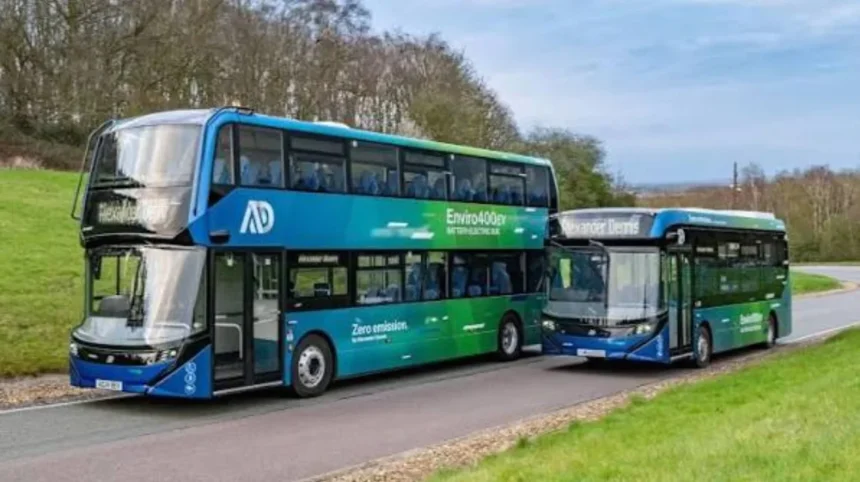
- Industry Collaboration & Synergy: The concept draws upon the previous collaboration between the two companies on the Enviro400XLB double-decker bus as well as technical experience from New Flyer, a sister firm to Alexander Dennis within NFI Group.
- Feasibility Phase Status: The manufacturers have confirmed that the project remains at an exploratory stage, with no commercial production schedules, pricing structures, or confirmed orders announced yet.
London, UK (North London News) October 23, 2026 — As reported by bus transport correspondents, leading vehicle manufacturers Alexander Dennis and Volvo Buses have announced that they are assessing the feasibility of developing a tram-style electric bus designed explicitly for the UK public transport market. The proposed vehicle, designated as the EnviroMax, is intended to offer transport authorities and local councils a high-capacity, zero-tailpipe-emission rapid transit option that emulates the visual appeal and volume of traditional tram systems on conventional road infrastructure.
- Key Points
- What Are the Key Engineering Specifications and Design Details of the Proposed EnviroMax?
- What Executive Statements Have Been Made Regarding the Strategic Intent of the Feasibility Study?
- How Does Stakeholder Consultation and Accessibility Play into the Proposed Vehicle Development?
- What Is the Operational Background of the Alexander Dennis and Volvo Partnership?
- What Are the Industry Predictions and Implications for Local Authorities and Transport Networks?
According to technical coverage published by Sustainable Bus journalist news reports, the initiative combines the engineering and body-building capabilities of Scottish manufacturer Alexander Dennis with Sweden-headquartered Volvo Buses’ established BZL Electric articulated chassis platform. The two companies are investigating how their combined technical expertise can yield a vehicle that fully aligns with UK route infrastructure, operational demands, and regional manufacturing priorities.
What Are the Key Engineering Specifications and Design Details of the Proposed EnviroMax?
As detailed in industry press updates across British automotive channels, the proposed EnviroMax vehicle would measure approximately 18 metres in total length. The structure relies on Volvo’s BZL Electric articulated chassis platform—which features a chassis length of 14.7 metres before body installation—equipped with an EPT802 dual-motor driveline capable of delivering power outputs up to 400kW.
As outlined in technical release documents from Alexander Dennis, the chassis can accommodate up to 12 lithium-iron-phosphate battery packs, providing a total installed energy capacity of up to 530kWh. For depot and en-route replenishment, the platform supports Combined Charging System (CCS2) plug connections at rates up to 250kW alongside roof-mounted OppCharge inverted pantograph charging at speeds up to 450kW.
The body construction proposed by Alexander Dennis will leverage structural approaches established across its existing Enviro bus series. According to manufacturing specifications provided by the builder, this design focuses heavily on maintenance accessibility and parts commonality across fleet components to simplify workshop servicing, lower life-cycle repair costs, and minimize vehicle downtime.
What Executive Statements Have Been Made Regarding the Strategic Intent of the Feasibility Study?
As reported by industrial journalists covering UK commercial vehicles, executive leadership from both manufacturing organizations highlighted the economic and operational motives behind the new feasibility study.
As quoted directly from company announcements, Paul Davies, President and Managing Director of Alexander Dennis, stated:
“This feasibility work gives us an opportunity to consider how our experience in designing and building buses could be combined with Volvo Buses’ electric chassis technology. As part of this, we will be able to draw on the extensive experience that our NFI Group sister company New Flyer has with articulated buses.”
Davies further elaborated on the economic and environmental positioning of the rapid transit concept, stating:
“Our new Enviro Max would offer combined and local authorities a stunning zero-tailpipe-emission rapid transit solution that supports British manufacturing and benefits the wider economy by keeping investment in the country. We believe there is a role for bus rapid transit schemes alongside our conventional Enviro-family single and double-deck buses, and we look forward to engaging with customers and stakeholders to understand their requirements.”
From the chassis supplier perspective, as reported by transport media, Richard Mann, Sales Director at Volvo Bus UK & Ireland, outlined the shifting demand among regional transport planners:
“We are seeing increasing interest from local authorities in tram-style electric bus systems that can deliver the visibility, capacity and passenger appeal associated with tram-style systems, while offering a more flexible and lower-infrastructure route to delivery. Following the successful introduction of the Volvo BZL Electric articulated chassis in Australia earlier this year, we are now exploring with Alexander Dennis how this proven electric platform could support a tram-inspired product tailored to the UK market.”
How Does Stakeholder Consultation and Accessibility Play into the Proposed Vehicle Development?
As reported across trade journals, specific internal passenger layouts for the EnviroMax have not yet been finalized by the engineering teams. Alexander Dennis and Volvo Buses plan to undertake comprehensive consultation sessions with regional transport operators, local council authorities, and passenger advocacy groups. These discussions aim to refine interior configurations to accommodate diverse route demands, depot limitations, and stop layouts.
The proposed vehicle design intends to integrate dedicated floor plans and entry points tailored to maximize accessibility. Architectural goals include expanded boarding areas, level-access boarding zones, and designated spaces reserved for wheelchair users, mobility scooters, and passengers traveling with pushchairs or heavy luggage.
What Is the Operational Background of the Alexander Dennis and Volvo Partnership?
Background of the Development
The joint exploration between Alexander Dennis and Volvo Buses reflects an ongoing industrial partnership between two prominent suppliers in the British public transport sector. The companies have previously collaborated on specialized, high-capacity vehicle configurations for UK operators. A notable precedent is the Enviro400XLB high-capacity double-decker bus, which was engineered on Volvo’s tri-axle B8L diesel chassis to deliver high passenger capacity on busy commuter corridors in cities such as Edinburgh.
The foundation for the EnviroMax feasibility study builds directly upon Volvo’s global expansion of its electric platform architecture. Originally launched in September 2021, the Volvo BZL Electric chassis was initially introduced across single-deck and standard double-deck formats across international markets, including the UK, Australia, and Mexico. In June 2026, Volvo Buses formally expanded the range by introducing the 18-metre BZL Electric articulated variant in Australia, featuring custom bodywork produced locally by Volgren.
Concurrently, Alexander Dennis has expanded its zero-emission product lineup within the UK and international markets through both integral electric buses and partnered bodywork builds. Through its parent company, NFI Group, Alexander Dennis gains access to technical data and operational feedback from North American sister firm New Flyer, which possesses decades of experience in designing, manufacturing, and servicing high-capacity 60-foot (18-metre) articulated buses for rapid transit networks.
The current study is positioned as a market test to establish whether UK local authorities—increasingly tasked with creating zero-emission urban transport corridors under regional decarbonization targets—seek an articulated rubber-tyred transit option that mirrors light rail capacity without incurring the multi-million-pound capital expenditures required to install track bed infrastructure, utility diversions, and overhead wire networks.
What Are the Industry Predictions and Implications for Local Authorities and Transport Networks?
Predictions for the Sector and Target Audience
If the feasibility study progresses from conceptual engineering into commercial production, the availability of the EnviroMax is expected to directly impact UK local authorities, regional combined authorities, public transport operators, and urban transit passengers.
- For Local and Combined Authorities: Transport planning departments facing strict net-zero carbon mandates will gain a practical alternative to costly rail-based light rapid transit (LRT) projects. By leveraging existing road space and designated bus lanes, municipal councils can launch high-profile Bus Rapid Transit (BRT) routes at a fraction of the cost and timeframe associated with traditional tram construction. This allows authorities to stretch public transit budgets further while delivering high-frequency, clean public transport corridors.
- For Fleet Operators: Fleet managers will be able to introduce 18-metre high-capacity vehicles that integrate into existing fleet support ecosystems. The use of common Alexander Dennis body parts and standard Volvo BZL drivetrain components reduces the burden of maintaining isolated spare parts inventories, simplifying technician training and standardizing workshop maintenance procedures across mixed fleets.
- For British Manufacturing and Supply Chains: Confirmation of commercial production would secure UK-based manufacturing jobs. By performing body assembly and localized engineering work within domestic facilities, public sector procurement spending on regional bus fleets remains within the UK economy, reinforcing local industrial supply chains.
- For Passengers and Commuters: Passengers stand to benefit from higher passenger capacity, reduced corridor overcrowding during peak commuting hours, and enhanced journey comfort. The low-floor accessibility, dedicated spaces for mobility devices, and smooth electric acceleration provided by tram-style articulated buses are likely to improve passenger satisfaction and encourage modal shift away from private car usage in congested urban centers.