Key Points
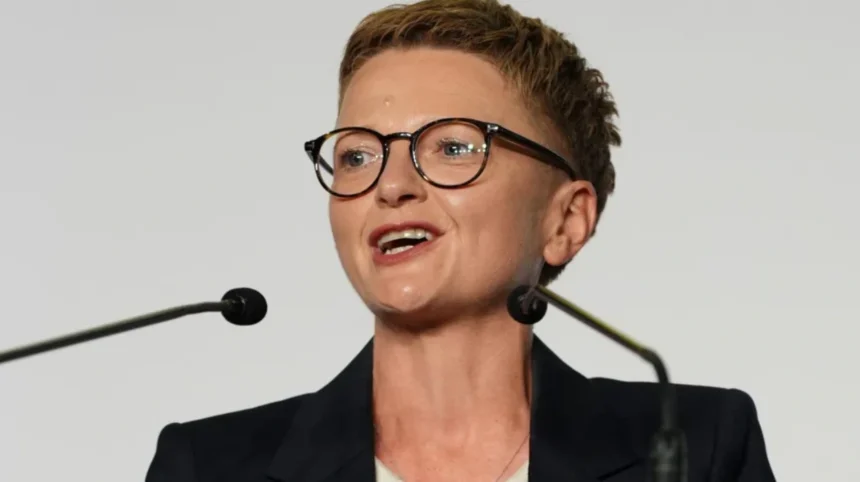
- Election Result: Labour’s Bev Craig won the Greater Manchester mayoral by-election, securing 309,525 votes (66.3%) against Reform UK candidate Sian Astley’s 157,178 votes (33.7%) after second-preference transfers.
- First-Round Standings: Craig led the first round with 47% of the vote, followed by Reform UK’s Sian Astley on 21%, the Green Party on 12%, Rupert Lowe’s Restore Britain on 9%, the Conservatives on 8%, and the Liberal Democrats on 3%.
- By-Election Catalyst: The special election was triggered after former Mayor Andy Burnham won a parliamentary by-election in Makerfield in June, returning to Westminster before becoming Prime Minister in July following Keir Starmer’s resignation.
- Historic Milestone: Craig becomes the first woman elected to lead the Greater Manchester Combined Authority, having previously served as the first female and openly LGBTQ+ leader of Manchester City Council since 2021.
- Voter Turnout: Turnout stood at 25.14%, marking the lowest turnout in any Greater Manchester mayoral contest since the creation of the directly elected office in 2017.
- Voting System: The election marked the return of the supplementary voting system for mayoral contests, allowing voters to select first and second preference candidates.
UK (North London News) August 1, 2026 – Labour’s Bev Craig will succeed Andy Burnham as the new mayor of Greater Manchester after securing victory over Reform UK candidate Sian Astley in a regional by-election. After no candidate achieved an absolute majority in the first round of voting, Craig won 309,525 votes to Astley’s 157,178 once second-preference ballots were added under the supplementary voting system. The contest was called following Burnham’s election as the Member of Parliament for Makerfield in June 2026, which preceded his appointment as Prime Minister in July 2026. Prior to her election as mayor, Craig had led Manchester City Council since December 2021 and served as the Greater Manchester Combined Authority’s deputy mayor for economy, business, and inclusive growth.
- Key Points
- How Did Bev Craig Win the Greater Manchester Mayoral By-Election?
- What Was the Turnout and How Did Political Analysts React?
- What Is the Background Behind the Particular Development?
- What Are the Predictions for How This Development Will Affect Greater Manchester Residents and National Politics?
How Did Bev Craig Win the Greater Manchester Mayoral By-Election?
The election required a runoff after the first-preference results failed to produce a candidate with over 50% of the overall vote share. As reported by James Francis Whitehead of Courthouse News Service, Labour took 47% of first-preference votes, placing Craig well ahead of Reform UK’s Sian Astley, who received 21%. The Green Party finished third with 12%, while Rupert Lowe’s Restore Britain received 9%, the Conservative Party gained 8%, and the Liberal Democrats received 3%.
Under the supplementary voting system, all candidates except the top two were eliminated, and their supporters’ second-preference choices were redistributed. Following the count of the secondary preferences, Craig’s vote count reached 309,525 (66.3%), while Astley recorded 157,178 votes (33.7%).
As reported by Jill Lawless of Associated Press (AP), Craig addressed supporters following the declaration of the result, stating:
“To those that voted for me, thank you. And for those of you that didn’t vote for me, I will still be your mayor. I will defend this city region with every bone in my body and I will fight for a better life for all of us.”
As reported by LabourList, Craig elaborated on her personal journey and commitments, stating:
“I am honoured, I am humbled, and I stand ready to serve the three million people that live across this fantastic city region. I never believed as a girl growing up on a council estate that one day I would have a chance to stand for the place that I love.”
She further remarked that she would “set myself a simple task… That every single decision I take, as your Mayor of Greater Manchester, will pass the test of making your life better,” adding that the region that birthed the Suffragettes had “changed the world” and would do so again.
What Was the Turnout and How Did Political Analysts React?
The total voter turnout for the by-election was recorded at 25.14%, with nearly 540,000 total ballots cast across the ten local borough council areas comprising Greater Manchester. This represents the lowest participation figure across the four mayoral elections conducted in the city region since the office was established in 2017.
As reported by Jill Lawless of Associated Press (AP), Rob Ford, professor of politics at the University of Manchester, evaluated the significance of the result following Labour’s recent difficulties in local elections: “Labour got an absolute pasting, a shellacking in those local elections,” Ford stated, noting that Craig’s victory represents “a really powerful moment” for the party.
As reported by Zoe Crowther of PoliticsHome, the Green Party had previously expressed confidence regarding their prospects in Greater Manchester, referencing their earlier parliamentary success in the Gorton and Denton constituency. However, their candidate ultimately secured third place with 12% of first-preference votes.
What Is the Background Behind the Particular Development?
The mayoral by-election became necessary due to rapid political changes within the national government and local administration. Andy Burnham, who served as Greater Manchester’s inaugural mayor from 2017 following re-elections in 2021 and 2024, stepped down mid-term. Burnham re-entered parliamentary politics by standing in a special election in the Makerfield constituency after Labour MP Josh Simons stepped aside in May 2026.
Burnham won the Makerfield seat in June 2026. Following internal party shifts and the resignation of Sir Keir Starmer as Prime Minister, Burnham was confirmed as the leader of the Labour Party on July 17, 2026, and officially assumed the office of Prime Minister on July 20, 2026.
To fill the resulting vacancy in Greater Manchester, Labour selected Bev Craig as its candidate in June 2026. Craig, who was born in Belfast and moved to Manchester in 2003, had accumulated extensive experience across local government, higher education, and trade union administration with UNISON. She became the leader of Manchester City Council in December 2021, marking the first time a woman and an openly LGBTQ+ individual held the role. Her win in this by-election makes her the first woman to hold the position of Mayor of Greater Manchester.
What Are the Predictions for How This Development Will Affect Greater Manchester Residents and National Politics?
The election of Bev Craig as Mayor of Greater Manchester is expected to have several structural impacts on the region’s 3 million residents, local governance, and the national political landscape:
- Continuity and Execution of Regional Devolution: As the former deputy mayor for economy and business, Craig is anticipated to maintain policy continuity regarding transport integration (the Bee Network), housing strategies, and economic development plans initiated during Burnham’s tenure. Her prior experience leading the region’s largest local authority provides her with immediate administrative oversight of Greater Manchester’s multi-billion-pound devolved budget.
- Local Council Leadership Transition: Craig’s transition to the regional mayoralty creates an immediate leadership vacancy at Manchester City Council. Labour members on the council will need to select a new leader to manage civic governance for the city proper.
- National Political Dynamics: For Prime Minister Andy Burnham’s administration, retaining Labour control over Greater Manchester provides an early electoral endorsement following recent losses to Reform UK in northern local council elections. The decisive second-round margin may serve to stabilize Labour’s core regional base, though the low turnout of 25.14% indicates ongoing challenges with voter engagement across urban constituencies.