

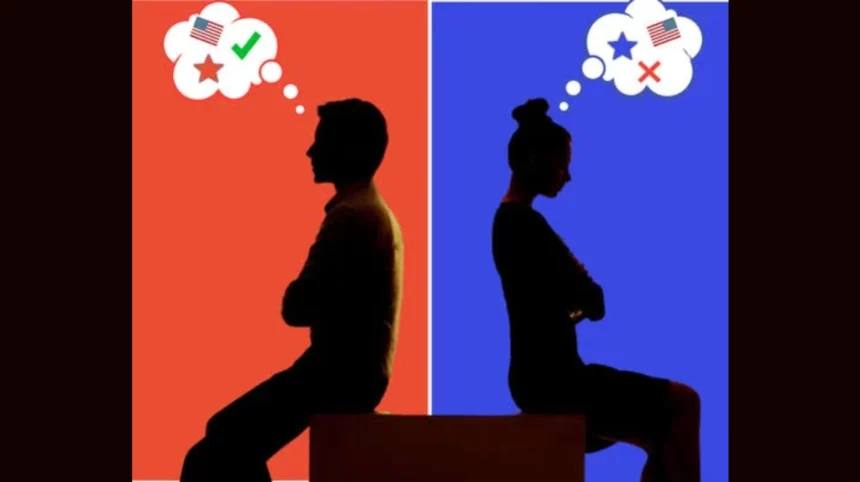
The slogan “the personal is political” is often attributed to the American feminist writer Carol Hanisch, despite her clarification that Shulamith Firestone, Anne Koedt, and Kathie Sarachild—as editors of Notes from the Second Year: Women’s Liberation: Major Writings of the Radical Feminists (1970)—were responsible for shaping it. The slogan became a rallying point for the second wave of the radical feminist movement across the world. Its central idea is that the body is the repository of all labour, creativity, use, abuse, exploitation, and power relationships, especially in relation to the position of women under patriarchal capitalism.
Patriarchal capitalism and its oppressive structural norms domesticate the body for both public and private use; in doing so, they monetise and commoditise the body within domestic and public life. Carol Hanisch, in her celebrated essay on “the personal is political,” therefore argues that “personal problems are political problems.” Personal issues and challenges are not only shaped by politics but also originate from politics. Rape and refugee crises are not personal problems. Hunger, poverty, unemployment, homelessness, education, and mental health issues are not personal problems either; they are created by bourgeois culture and politics, and it can be solved only through an emancipatory political struggle that opposes all forms of bourgeois power which fundamentally opposed to bodily autonomy.
The human body is not only central to production, reproduction, and consumption but is also a repository of human emotions, relationships, customs, and traditions. Without a healthy and happy body and mind, human beings cannot perform their everyday tasks. The body is therefore central to the body politic. However, patriarchal capitalism—together with its gender and sexual division of labour and space, its construction of the private and public spheres, and its distinction between domestic and public life narratives are shaped by class relations and locations, ownership of private property, and the social, religious, and economic structures of society that create regimes and structures of capital accumulation. The material conditions and progress of society depend on healthy human bodies and minds for a sustainable future for people and the planet. Nothing is private or personal except the most intimate emotional relationships, which can neither be displayed nor performed for public consumption.
Historically, and even today, political leaders display their love for animals, family, and friends. They often publicly display reverence for their mothers and fathers as part of public relations outreach. Public displays of affection in politics are a form of political marketing and communication in which leaders marketise their relationships as part of their political strategies. Public displays of affection within the most intimate relationships carry a political message: they convey to the public that their leader is committed and loyal. Personal relationships are thus cashed in as political currency. This again reveals that the personal is political; however, politicising the most intimate relationships for political marketing is a mere lumpenisation of the most precious and priceless relationships. It has nothing to do with a committed politics that serves the people.
Further, it reveals that political leaders who marketise their relationships through public displays of affection for animals and family members primarily lack any form of political ideology, vision, or principles capable of protecting and promoting people’s interests and well-being. It also reveals that nothing remains in the political inventory in terms of alternative policies and a development agenda; emotional and social manipulation of the public is therefore the only option left, as political leaders use their families and intimate relationships to hide their hollow politics. This is a mere lumpenisation of the most intimate, priceless, and precious relationships. It is the most reactionary form of political marketing: it sells neotraditional family values on political billboards in order to undermine the progressive features of politics.
The selling of so-called sacred values and relationships shows that bourgeois politics lacks alternatives. This crude marketing—designed to expand public relations as part of electoral engineering, with love used as leverage for political profiteering—is personal and political lumpenisation. Such lumpenisation is a political strategy to undermine alternative political struggles for human emancipation. It creates a form of social and emotional blockage for the growth of radical leadership from people’s struggle for emancipation.