Key Points
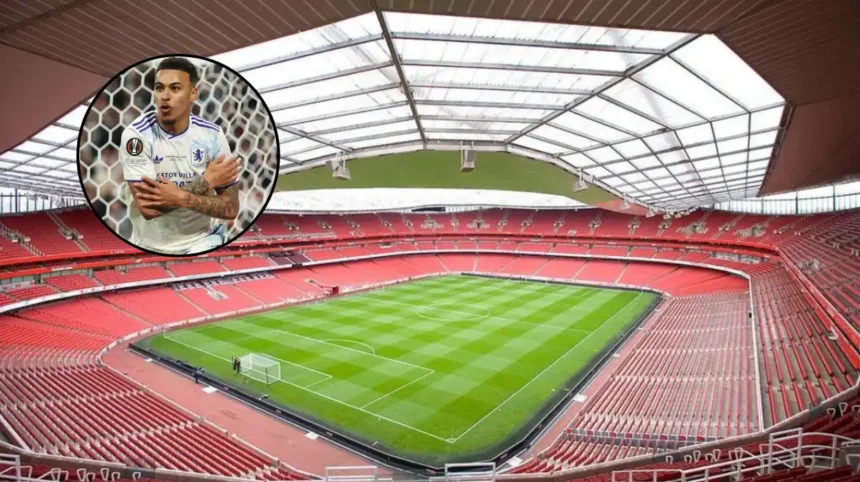
- Arsenal are actively advancing their pursuit of Aston Villa forward Morgan Rogers, opening initial talks to establish the groundwork for formal club-to-club negotiations.
- The North London club has simultaneously structured a verbal agreement to sign Greece international winger Christos Tzolis from Club Brugge for a fee of £34 million.
- Club decision-makers are clear that the arrival of Tzolis does not negate the pursuit of Rogers; both attacking players are viewed as core pillars for the upcoming campaign.
- Arteta’s talent tracking has included heavy scouting during the major summer international knockout phases, where targets like Rogers and Atletico Madrid’s Julián Álvarez have been evaluated.
- Aston Villa hold significant leverage in negotiations, with Rogers under contract until 2031, prompting external valuation estimates to rise dramatically.
Arsenal (North London News) July 18, 2026 — Arsenal Football Club are actively intensifying their efforts to secure the signature of Aston Villa forward Morgan Rogers, moving directly into preliminary discussions to lay the operational foundations for a formal summer transfer. The significant step forward comes despite the Emirates Stadium hierarchy closing in on a parallel deal to sign winger Christos Tzolis from Club Brugge.
According to verified operational logs from Flashscore sources, the North London side monitored high-profile international matches closely over the past week, with specific directives to accelerate primary attacking reinforcements as soon as market windows allowed.
While some sections of the Arsenal fanbase questioned whether a verbal agreement for Tzolis would dilute interest in Rogers, senior recruitment staff have maintained that the Aston Villa star remains the primary target to inject Premier League-proven goalscoring output and central creativity into the squad next season.
How Does the Christos Tzolis Agreement Impact the Deal for Morgan Rogers?
As documented by Standard Sport reporter Simon Collings, Arsenal have already reached an agreement in principle to acquire Christos Tzolis in a deal valued at £33.8 million.
The 24-year-old Greece international, who previously experienced English football with Norwich City, has been identified by manager Mikel Arteta as a tactical replacement for Belgian attacker Leandro Trossard, following the latter’s completed £15.3 million departure to Turkish club Besiktas.
However, internal sources close to the recruitment team have consistently emphasized that the acquisition of Tzolis does not conflict with the profile Rogers offers.
Writing for Football.London, senior football correspondent Kaya Kaynak notes that Arsenal are determined to execute a comprehensive squad refresh in wide and central attacking zones after evaluating shortfalls from the previous season’s UEFA Champions League final.
Rather than choosing between the two profiles, the club views both Tzolis and Rogers as highly complementary assets capable of occupying distinct roles within Arteta’s preferred fluid attacking blueprint.
What are the Details of the Current Negotiations and Aston Villa’s Position?
The financial parameters required to pry Rogers away from Villa Park remain a complex hurdle for new Sporting Director Andrea Berta.
As detailed in a market report published by Ben Jacobs, the 23-year-old forward has seen his market valuation surge exponentially since his initial £8 million move from Middlesbrough in early 2024.
Following a standout campaign that culminated in winning the PFA Young Player of the Year award, Unai Emery’s side successfully tied the playmaker to a long-term contract running until 2031.
This extended contract gives Aston Villa immense leverage at the negotiating table. Transfer market analysts indicate that while the player’s camp is close to outlining personal terms for a potential five-year stay in London, Aston Villa’s hierarchy will demand a premium package that could place the deal among the highest domestic transfers in Premier League history, with some figures circulating between £70 million and £130 million.
When questioned directly regarding these astronomical figures during media duties, Rogers maintained a grounded stance:
“I’m not sure I’m worth all of that! Of course, it’s nice to hear that from people. But I don’t let outside noise dictate me. I’m just going to keep focused, keep being me, keep being the person that got me here and keep trying to improve. I don’t really listen to stuff like that.”
Are There Other Attacking Targets Under Consideration at the Emirates Stadium?
While Rogers remains the priority, Arsenal’s broader contingency planning remains exceptionally active. Transfer specialist Fabrizio Romano reports that the Gunners continue to handle parallel inquiries for elite attacking talent across European leagues. High on Arteta’s wishlist is Argentina international Julián Álvarez, currently at Atletico Madrid.
According to developments tracked by European football writer Ben Jacobs, Andrea Berta has maintained direct communication with contacts at his former club regarding Álvarez’s availability.
While Atletico Madrid are traditionally resistant to offloading key assets, figures inside the Spanish club are reportedly more inclined to conduct business with a non-La Liga suitor than permit a domestic transfer to rivals Barcelona, who remain restricted by ongoing financial fair play margins.
Additionally, internal shortlists at the Emirates continue to feature Newcastle United captain Bruno Guimarães and Paris Saint-Germain’s Bradley Barcola, ensuring the club maintains multiple options to finalise their squad restructure before the summer registration deadline.
Background of the Particular Development
The sudden acceleration of Arsenal’s pursuit of Morgan Rogers is deeply rooted in the structural evolution of the club’s frontline under Mikel Arteta over the past two seasons.
Since missing out on the Premier League title by narrow margins, the coaching staff identified a lack of direct physicality combined with elite ball-carrying capability in central spaces as a primary obstacle against deep defensive blocks.
Rogers’ rapid ascent at Aston Villa provided a perfect statistical match for this tactical vacancy. Signed as a relatively low-profile prospect from Middlesbrough, his integration into Unai Emery’s system transformed him into one of Europe’s most effective progressive ball carriers.
His standout performances in the UEFA Champions League and domestic cup competitions proved he could thrive under high tactical demands.
Concurrently, Arsenal’s squad planning was forced into action by necessary player departures. The aging profile of the squad’s secondary attackers, highlighted by Leandro Trossard’s transfer to Besiktas and ongoing questions surrounding Gabriel Jesus’ long-term durability, accelerated the need for a youth-led squad revolution.
The simultaneous moves for Tzolis and Rogers reflect a deliberate strategic shift toward acquiring explosive, versatile players under the age of 25 to sustain a multi-front assault on domestic and European silverware.
Prediction
The successful completion of this double attacking acquisition stands to significantly alter Arsenal’s competitive dynamics, tactical flexibility, and dressing room culture for the upcoming season.
For the Emirates Stadium match-going fan base and broader global audience, this development will immediately change how they view the team’s attacking output.
The inclusion of Rogers offers a powerful, direct alternative to Martin Ødegaard’s precise orchestration, giving supporters a more dynamic, vertically oriented style of play in transition phases.
Tzolis provides raw pace and authentic touchline width on the left flank, reducing the heavy goalscoring burden that has historically fallen on Bukayo Saka on the opposite wing.
Tactically, this gives Mikel Arteta the depth required to implement a robust rotation policy without suffering a drop in quality, a factor that heavily impacted their previous spring campaigns.
Financially, securing a marquee domestic talent like Rogers for a near-record fee will solidify Arsenal’s standing as an elite destination capable of outbidding European rivals.
This ambition will undoubtedly boost supporter expectations, shifting the minimum benchmark of success firmly toward delivering a major domestic or European trophy.