Key Points
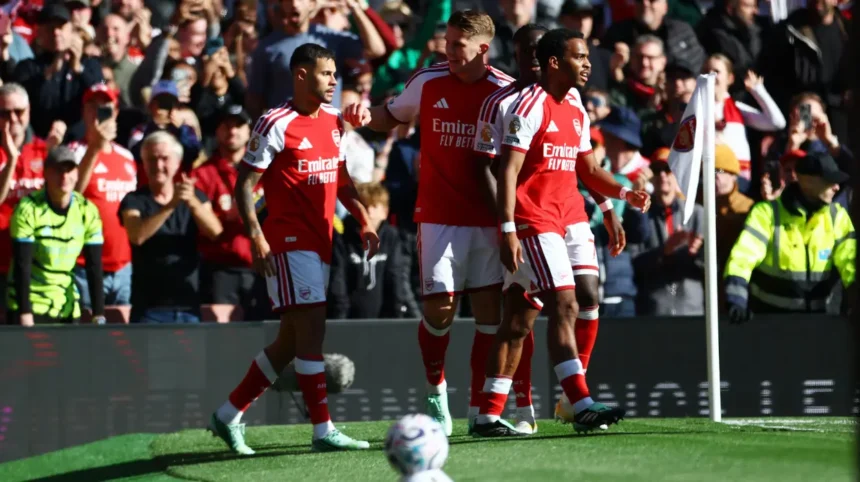
- Match Outcome: Arsenal secured a hard-fought 2-1 victory over Leeds United at the Emirates Stadium, recovering from a goal down to claim all three points.
- Performance Ranking Paradox: Despite losing the match, Leeds United were ranked above Arsenal in The Athletic’s weekly performance-based Premier League power rankings for Gameweek 6.
- Tactical Turnaround: Leeds took a deserved lead early in the second half via James Justin before Riccardo Calafiori brought the hosts level, paving the way for substitute Bruno Guimarães to fire home a 70th-minute winner.
- Assessment Methodology: The Athletic’s ranking index assesses teams purely on match performance quality rather than the official league standings, evaluating play over 90 minutes regardless of the final scoreline.
- League Impact: The victory brought Mikel Arteta’s side level on points with Manchester City at the top of the Premier League table, while Daniel Farke’s Leeds remained fourth in the standings.
Arsenal (North London News) October 13, 2026 — Welcome to week six of The Athletic’s Premier League performance table — a ranking system that will make Nottingham Forest head coach Oliver Glasner instantly feel better. In case you’ve missed the previous five weeks, this is not the official standings, where results are the only thing that matters. In our performance-based take, it is a clean slate at the start of each gameweek, which means you can go from top to bottom (and vice versa) in the space of a few days (or 21 in the case of the last international break), with the 1-to-20 rankings assessed purely on how well each team played in their previous match.
That also means that a team can lose but still be ranked higher than their opponents (can’t wait for the comments on this one, Arsenal fans). If you are wondering how we decide where to position teams, we watch all 10 Premier League games in full, put together a preliminary order prior to the last of those matches… and then tear everything up after Coventry hammer Newcastle. Gameweek six signalled the end of our love affair with Bournemouth, produced the best two-goal defeat of the season so far, and elevated Tottenham Hotspur to dizzying heights. If nothing else, hopefully the summaries below continue to provide you with a weekly snapshot of each club’s performances across the 2026-27 Premier League.
As reported by Nicholas Mendola of NBC Sports, Mikel Arteta’s tactical calculations and bench depth ultimately dictated the outcome at the Emirates Stadium. Mendola highlighted that Arsenal struggled to assert full control in the opening period as Leeds United systematically closed down space and threatened on the counter-attack. According to match analysis from Harry Latham-Coyle and Michael Jones of The Independent, Leeds were well worthy of their 55th-minute opener. Gabriel Gudmundsson and Jayden Bogle combined brilliantly on the flank before Gudmundsson played a low, searching pass across the face of the box, allowing James Justin to slam his shot past David Raya toward the far post.
However, the momentum shifted once Mikel Arteta deployed a bold triple substitution in the 63rd minute. As detailed by Adrian Clarke in The Breakdown for Arsenal’s official media channels, the insertion of Bruno Guimarães, Jurriën Timber, and Viktor Gyökeres immediately swung the territorial advantage back to the Gunners. Arsenal leveled six minutes after Leeds’ opener when Riccardo Calafiori showed remarkable composure to convert in the 62nd minute. Eight minutes later, Bruno Guimarães scored a stunning 70th-minute winner. As noted by Mendola, fine interplay involving Noni Madueke, Martin Ødegaard, and a clever backheel from Declan Rice set up Guimarães to drill a precise first-time strike into the bottom corner.
Why Did Leeds United Earn Higher Performance Marks Despite the Defeat?
The performance metric employed by The Athletic isolates tactical execution, shot creation, expected goals (xG), and defensive organization from the final result. Despite leaving North London without points, Leeds United demonstrated exceptional structural discipline for 60 minutes, limiting Arsenal’s fluid attack while forcing David Raya into several crucial saves.
As reported by Harry Latham-Coyle of The Independent, Leeds kept the reigning title contenders at bay for long spells and looked the more cohesive side prior to Arsenal’s tactical substitutions. The visitors registered 10 shots and limited Arsenal’s territorial control during critical phases of the match. While Arsenal claimed the three points through individual brilliance and elite squad depth, Leeds’ overall execution relative to expectations earned them a higher placing in the subjective weekly power rankings.
Background of the Particular Development
The development of performance-based rankings alongside official league standings reflects a broader trend in modern sports journalism toward advanced analytics. Traditionally, public discourse surrounding the Premier League was dictated solely by match outcomes and points tables. However, the integration of metrics such as expected goals (xG), field tilt, pressing efficiency, and defensive action height has led sports media outlets like The Athletic to introduce alternative evaluation frameworks.
Arsenal entered Gameweek 6 seeking to bounce back from a disappointing 3-0 away defeat to Brighton prior to the international break. Meanwhile, Leeds United had enjoyed an unbeaten start to their Premier League campaign, establishing themselves in the top four with strong defensive displays. The match represented a benchmark test for both clubs: Arsenal looking to maintain their title push alongside Manchester City, and Leeds attempting to prove that their early-season form was sustainable against elite opposition.
Prediction: How This Development Can Affect the Audience
This analytical development and the ongoing narrative surrounding Arsenal and Leeds United will affect the audience—specifically Premier League supporters, fantasy football managers, and sports analysts—in several key ways:
- Shift in Fan Perception and Media Discourse: For general football supporters, performance rankings provide a nuanced perspective that goes beyond binary wins and losses. Fans of clubs like Leeds can take encouragement from strong structural performances despite adverse results, fostering greater patience with managerial tactics during difficult fixture runs.
- Impact on Fantasy Premier League (FPL) Decisions: FPL managers who track performance tables and underlying metrics will view Leeds United assets—such as James Justin, Gabriel Gudmundsson, and Dominic Calvert-Lewin—as high-value options despite tough fixtures. Conversely, Arsenal’s reliance on bench rotations (e.g., Bruno Guimarães and Viktor Gyökeres coming off the bench) highlights potential rotation risks for fantasy managers investing in starting lineups. Google
- Heightened Pressure on Title Contenders: For Arsenal supporters, the performance rankings serve as a reminder that results alone may mask underlying tactical vulnerabilities. As the title race progresses alongside Manchester City, pressure will build on Mikel Arteta to ensure his side dominates matches from the opening whistle rather than relying on late-game rescue acts from the substitutes’ bench.