Key Points
- High-End Experience: Arsenal has launched ‘The Touchline’, a premium matchday package priced up to £6,500 per person for a single Premier League fixture.
- Exclusive Vantage Point: Guests will sit directly behind the dugouts, providing close-proximity seating near manager Mikel Arteta and the technical staff.
- Luxury Inclusions: The premium tier package features a champagne reception, a high-end luxury dining menu, and meet-and-greet opportunities with former Arsenal players.
- Seating Displacement: The area designated for the package was previously used by season ticket holders and academy staff, sparking accessibility concerns among supporter groups.
- Dynamic Pricing: Package costs vary significantly by fixture tier, starting at £3,199 for lower-profile games and rising to nearly £6,500 for high-profile London derbies.
- Industry Trend: The move aligns Arsenal with a growing broader Premier League shift toward maximizing matchday revenue through elite corporate entertainment packages.
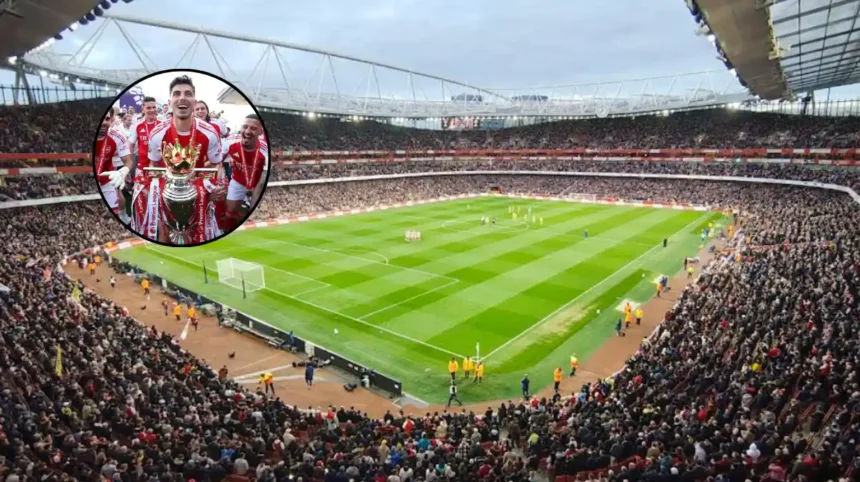
Emirates Stadium (North London News) June 20, 2026 – Arsenal Football Club has officially introduced a new ultra-premium matchday hospitality package titled ‘The Touchline’ for the upcoming Premier League season, with prices scaling up to £6,500 per seat for top-tier fixtures. As reported by The Times, the high-end package grants corporate clients and affluent supporters access to what the club describes as “the most exclusive seats in the ground.” Located directly behind the home and away dugouts, the package offers an unfiltered, close-up view of the pitch and manager Mikel Arteta’s tactical area. The development represents a significant expansion of Arsenal’s corporate hospitality inventory at the Emirates Stadium, positioning the North London club alongside Manchester City and Tottenham Hotspur in the pursuit of multi-tiered, elite stadium experiences.
- Key Points
- What Does Arsenal’s New Touchline Package Include?
- How Much Will Tickets Cost Across Different Fixtures?
- Why Are Supporter Groups Expressing Concern Over the Allocation?
- How Does Arsenal’s Pricing Compare to Other Premier League Clubs?
- Background of the Premium Hospitality Trend in English Football
- Prediction: How This Development Will Affect Traditional Football Supporters
What Does Arsenal’s New Touchline Package Include?
According to promotional and reporting details outlined by The Times, ‘The Touchline’ package has been designed to capture the highest bracket of sports hospitality spenders. Guests purchasing the ticket are provided with a multi-stage matchday itinerary that begins well before kickoff.
The experience commences with a private champagne reception upon arrival at the Emirates Stadium. Following the reception, attendees are served a curated luxury dining menu prepared by elite culinary staff.
In addition to the food and beverage offerings, the package guarantees an interactive element, providing guests with the opportunity to meet and converse with a rotating selection of former Arsenal players and club legends.
The primary selling point of the package, however, remains its physical location within the stadium structure. The seats allocated for ‘The Touchline’ are situated immediately behind the technical areas.
This specific placement allows corporate spectators to sit within arm’s reach of the pitch, offering a direct view of the managers, substitute players, and touchline officials during active play.
How Much Will Tickets Cost Across Different Fixtures?
The club is utilizing a dynamic pricing model for the new hospitality sector, meaning ticket prices will fluctuate heavily based on the profile, timing, and historical rivalry of the opposition. Industry analysis shows that the entry-level price point for low-tier matches still sits well above traditional premium ticketing brackets.
For Arsenal’s opening home fixture of the season against newly-promoted Coventry City, individual tickets within ‘The Touchline’ package are commercially listed at £3,199 per person.
However, for high-profile fixtures, the pricing structure accelerates drastically. For the upcoming London derby against Chelsea scheduled for September, the individual price per seat rises to approximately £6,500.
Because Arsenal has only published pricing structures for a limited initial handful of fixtures, sports business analysts suggest that the £6,500 figure may not represent the absolute ceiling for the season.
Speculation remains high that top-category fixtures later in the campaign—most notably the North London derby against Tottenham Hotspur or crucial title-race clashes against Manchester City—could command even higher premiums.
Why Are Supporter Groups Expressing Concern Over the Allocation?
While the launch represents a commercial milestone for Arsenal’s sales division, it has met immediate friction from local fan networks and traditional match-going communities. The core of the controversy rests on stadium real estate and the displacement of long-term fans.
The specific physical area now designated for ‘The Touchline’ patrons was not vacant space; it was previously occupied by standard season ticket holders, long-standing fans, and members of the Arsenal academy staff. Although the club administration has not released a granular breakdown detailed exactly how the physical seating allocation was altered or where the displaced individuals were re-seated, supporter groups have been quick to voice structural complaints.
Representatives from various independent fan coalitions have stated that converting traditional seating blocks into corporate hospitality zones directly reduces the already limited pool of stadium inventory available to working-class, regular match-goers.
The move has amplified ongoing concerns regarding the creeping gentrification of Premier League football grounds and the systematic pricing out of local fanbases in favor of international corporate tourists.
How Does Arsenal’s Pricing Compare to Other Premier League Clubs?
Despite the substantial financial barrier entry to ‘The Touchline’ requires, data indicates that Arsenal’s pricing remains highly competitive within the upper echelon of English football.
The club is actually the latest in a sequential line of Premier League teams to monetize the areas directly surrounding the team benches and tunnel corridors.
As noted in comparative market reports, Manchester City currently operates the ‘Hero Experience’ at the Etihad Stadium.
That package, which features similar tunnel access and pitch-side views, can reach up to £7,000 per person for select marquee Champions League and domestic fixtures—rendering Arsenal’s maximum tier roughly £500 cheaper than the reigning Premier League champions.
Similarly, Tottenham Hotspur has long utilized a glass-walled ‘Tunnel Club’ at the Tottenham Hotspur Stadium, which allows corporate guests to view the players as they line up before walking onto the pitch.
By launching ‘The Touchline’, Arsenal bridges the commercial gap with their immediate local and competitive rivals, capitalizing on a proven luxury framework that has shown high demand in the modern sports entertainment market.
Background of the Premium Hospitality Trend in English Football
The introduction of ‘The Touchline’ package is the direct result of a decade-long evolution in how European football clubs generate matchday revenue. Historically, football stadiums relied almost entirely on high-volume, low-cost gate receipts from standing terraces and standard grandstand seating.
However, following the mandatory modernization of stadiums in the 1990s and the explosive global commercialization of the Premier League, clubs began viewing stadium architecture through the lens of corporate real estate.
The modern concept of the “Tunnel Club” or “Touchline Experience” was heavily borrowed from American sports franchises in the NFL and NBA, where courtside seating and field-level luxury suites command millions of dollars annually.
Manchester City pioneered this Americanized model in the Premier League during their mid-2010s stadium expansions, proving that an ultra-wealthy demographic was willing to pay tenfold for behind-the-scenes proximity.
For clubs like Arsenal, expanding corporate hospitality is a structural necessity to comply with strict financial regulations, such as UEFA’s Financial Sustainability Regulations and the Premier League’s Profit and Sustainability Rules (PSR).
Because traditional ticket prices for standard fans are often capped or heavily scrutinized by fan advisory boards, clubs use these micro-exclusive corporate zones to extract maximum revenue from a tiny percentage of the stadium’s total capacity, effectively subsidizing other operational costs or boosting transfer market budgets.
Prediction: How This Development Will Affect Traditional Football Supporters
The proliferation of packages like ‘The Touchline’ is projected to accelerate the widening cultural and financial divide between traditional working-class match-goers and corporate sports consumers.
Over the next three to five years, regular supporters can expect to see further localized displacements within stadiums as clubs seek out pockets of prime seating—particularly near the pitch, dugouts, and player entrance tunnels—to redevelop into high-yield hospitality infrastructure.
For the average fan, this trend will likely manifest in two distinct ways:
- Increased Scarcity: As prime lower-tier seats are converted into corporate sectors, the remaining inventory for standard season tickets and general admission memberships will shrink, driving up waitlist times and making single-match ticket allocation algorithms increasingly difficult to win.
- Atmospheric Shifts: Supporter groups frequently warn that replacing passionate, vocal local fans with corporate clients or high-net-worth tourists significantly alters stadium acoustics. The concentration of corporate hospitality along the touchline can lead to “dead zones” of noise directly next to the pitch, potentially dampening the intense, hostile home-ground advantage that traditional English football environments are globally famous for.