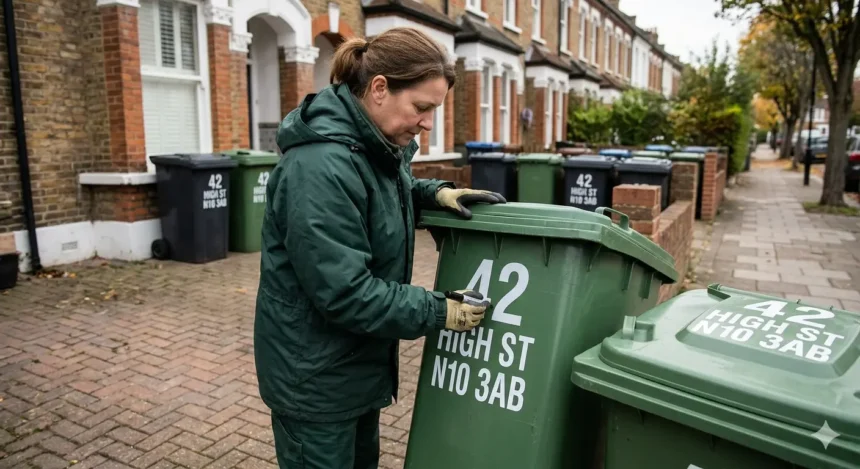
Mark wheelie bins to prevent theft by clearly labelling them with your full house number, postcode, and street name using weatherproof stickers, paint, or UV pens on the lid and sides. This simple step deters opportunistic thieves in North London and helps councils identify your property if bins go missing. Local residents in Brent, Barnet, Enfield, Camden, Haringey, and Islington can follow these practical methods for quick, legal protection.
Why This Issue Matters to Local Residents
Wheelie bin theft affects households across North London, leaving families without essential waste collection and facing replacement costs or delays. In busy boroughs like Brent and Barnet, bins often get mistaken for strays or deliberately taken, disrupting bin day routines and causing overflowing rubbish. North London council areas see this as a common frustration, with residents reporting misplaced bins after collections or windy nights.
The problem hits harder in terraced streets of Camden and Haringey, where shared access makes bins easy targets. Enfield and Islington locals deal with similar issues during peak waste days, leading to fly-tipping risks if bins vanish. Protecting bins ensures smooth council services and keeps neighbourhoods tidy without extra hassle for residents.

Step-by-Step Actions to Solve the Problem
Start by gathering basic marking materials like permanent markers, weather-resistant stickers, or plastic engraving tools, available from local shops. Clean the bin surface thoroughly with soapy water to remove dirt, then dry it completely for better adhesion.
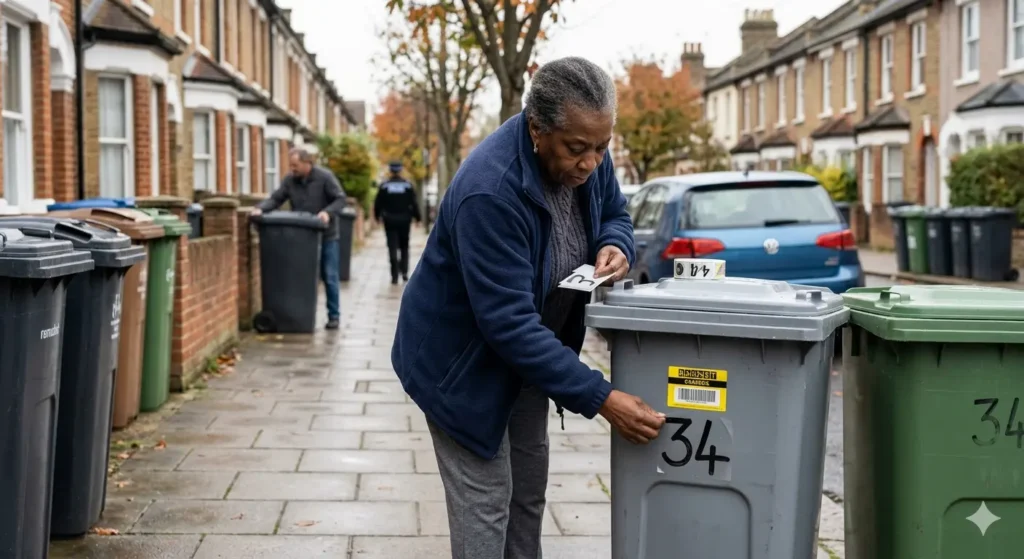
Apply your house number boldly on the lid and at least two sides using large, high-contrast letters—black on light bins or white on dark ones works best. Add your full postcode and street name below the number to make identification unmistakable from a distance.
For extra security, use a UV marker pen to write your postcode inside the lid, visible only under blacklight for councils or police. Test durability by spraying with water and leaving outdoors for a week. Repeat on all household bins to create a uniform system.
Which Council Service Handles It
North London councils manage wheelie bin issues through their dedicated waste and recycling teams. Brent Council handles bin marking queries via its environmental services department, while Barnet Council directs residents to its refuse collection support. Enfield Council’s street cleansing team oversees lost or stolen bins.
Camden Council’s waste management service supports marking advice, and Haringey Council uses its recycling enforcement officers for related concerns. Islington Council’s bin replacement team provides guidance on identification methods. Contact your local council’s waste services for borough-specific tips tailored to North London residents.
Information or Documents Needed
No formal documents are required to mark your own bins, but keep your council tax statement handy for address proof if reporting a theft. Note your bin’s serial number, often printed on the barcode label inside the lid, for replacement requests.
Photograph marked bins before and after labelling, including close-ups of numbers and postcodes. Record the date of marking in a household log. This simple paperwork helps if Brent Council or Barnet Council needs verification during investigations.
Expected Response Time
Councils typically acknowledge bin-related reports within 3-5 working days, with marking advice available immediately online or via general enquiries. If a marked bin goes missing, North London councils like Enfield or Camden aim to inspect or replace within 10-14 days, depending on stock.
Delays may occur during peak seasons, but labelled bins speed up recovery as collectors spot them faster. Haringey and Islington residents often see quicker resolutions with clear markings. Follow up politely if no update arrives after two weeks.
What to Do If Follow-Up Is Required
If initial marking doesn’t prevent issues, revisit your council’s waste team with photos of the markings and theft evidence like empty collection points. Request a site visit from Barnet Council or Islington Council’s officers to check local patterns.
Escalate persistent problems by emailing the borough’s environmental health department, referencing your original report number. Join neighbourhood watch groups in Camden or Haringey for community support. Track all communications in writing for records.
Rights and Responsibilities Under UK Rules
Under UK Environmental Protection Act guidelines, residents have the right to secure waste receptacles without council interference, as long as markings don’t obstruct official barcodes. Councils must provide replacement bins free if theft is proven, but charge for unmarked or damaged ones.
North London residents must ensure markings comply with highway obstruction rules—no protruding tags that snag collection trucks. Report suspected theft to police non-emergency lines, treating it as fly-tipping prevention. Responsibilities include returning neighbour’s bins if miscollected, fostering community cooperation.
Practical Tips to Avoid the Problem in Future
Store bins in a locked garage or behind gates overnight, especially in Enfield’s suburban streets. Chain lids with affordable clamps to prevent casual dumping, which attracts thieves. Position bins close to your property boundary on collection day, not loose on pavements in Haringey.
Encourage neighbours in Brent or Camden to mark collectively for street-wide deterrence. Use reflective tape around numbers for night visibility. Rinse bins regularly to avoid odours drawing unwanted attention. Invest in bin storage units for Islington townhouses to keep them out of sight.
In Barnet’s leafier areas, anchor bins to walls with sturdy straps during storms. Schedule reminders to retrieve bins promptly post-collection. These habits, combined with clear how to mark wheelie bins to prevent theft strategies, safeguard North London homes long-term.
How do you stop a wheelie bin from being stolen?
Mark your bin clearly with your house number and postcode using permanent paint, stickers, or an engraving tool. Visible identification makes the bin harder to steal or reuse and easier for neighbours or the council to return if it goes missing.