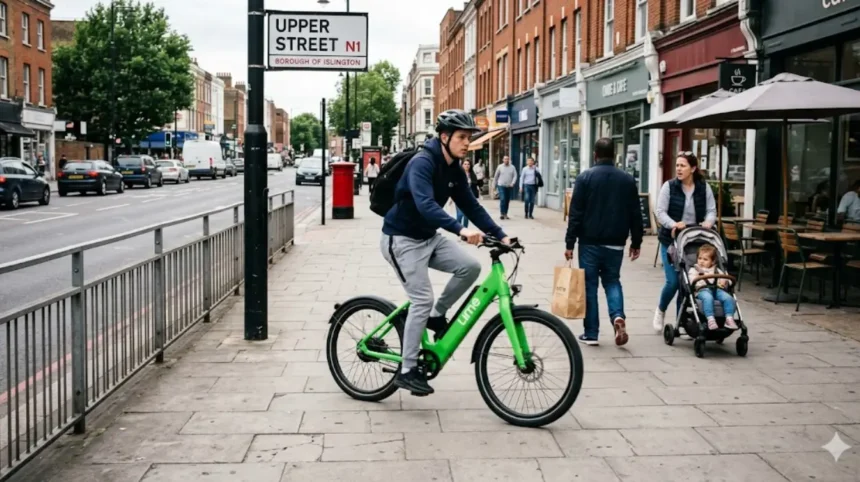
If you see an e-bike being ridden on the pavement in Islington, the issue is usually handled through the council, TfL, the rental company, or the police depending on the situation. Islington Council states that cycling on the pavement is an offence and says residents can report persistent problems, while TfL says its Streetcare reporting tool is the quickest way to report street and road safety issues.
Why pavement riding matters
Riding a bike on the pavement is not allowed in the Highway Code, and Islington Council specifically says the offence can lead to an on-the-spot fine or fixed penalty notice. That matters in a borough like Islington, where narrow streets, busy shopping areas, schools, station approaches, and high-footfall routes make pedestrian safety especially important.
E-bikes can create extra concern when riders travel too fast on shared spaces, weave through pedestrians, or use pavements as shortcuts. In practice, the most useful report is one that explains exactly where it happened, when it happened, and whether it involved a rental bike, a privately owned e-bike, or reckless riding by an identifiable rider.
The main ways to report it
In Islington, the best reporting route depends on what you saw. TfL says most street and road issues can be reported through its Streetcare tool, especially when the matter is a safety concern. Islington Council also encourages residents to report issues to rental companies directly and says it works with partners and police on targeted action where pavement cycling is persistent.
If the bike was from a rental operator, report it to the operator as well as the council or TfL if it was parked dangerously or being used antisocially. Islington Council lists the contact numbers for several rental schemes on its safer spaces page, including Lime and other operators, which makes direct reporting a practical first step for hire-bike problems. If the rider was not on a rental bike and was endangering people, the police may be the right route, especially if the behaviour was dangerous rather than just inconvenient.
What to include in your report
A strong report should be short, factual, and specific. Include the exact location, the time, what the rider was doing, and whether the bike was a dockless hire bike or a private e-bike.
Try to include:
- The street name and nearest landmark.
- The time and date.
- A clear description of the bike and rider.
- Whether the rider was on the pavement, speeding near pedestrians, or causing danger.
- Photos or video if you have them and if it is safe and lawful to take them.
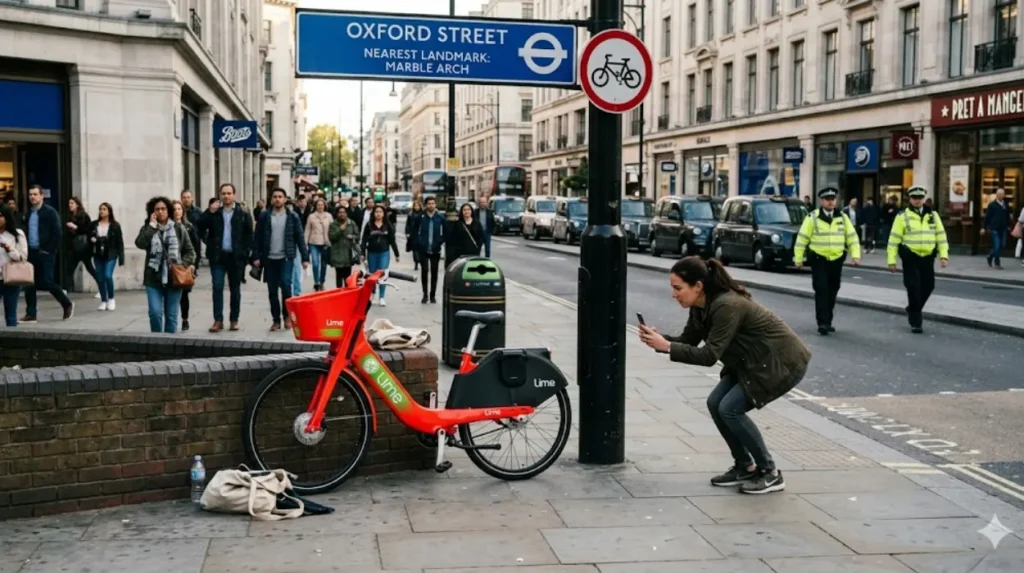
The more precise the report, the easier it is for the council, TfL, or the operator to identify a pattern and take action.
If it is a rental e-bike
Rental e-bikes are often the easiest to report because the operator may be able to identify the bike through its app or fleet system. Islington Council says residents should report issues to the rental companies, and it names contact routes for operators on its site. Other London boroughs have also been directing residents to report badly parked or abandoned rental e-bikes to operators for faster removal, showing that direct operator contact is now a standard part of how London councils manage these schemes.
If the issue is repeated in one place, such as the same pavement outside a station, shop, or park, report it every time. Pattern evidence is often what leads to enforcement, signage changes, or targeted patrols.
If it is a private e-bike
Private e-bikes are harder to trace, so details matter more. If a rider is using the pavement dangerously, the main concern is not the brand of bike but the offence and the safety risk to pedestrians. If the rider is behaving aggressively, speeding toward people, or causing an immediate hazard, police reporting is more appropriate than a general parking complaint.
You should avoid chasing the rider or putting yourself at risk to get more information. A clear description from a safe distance is enough for a useful report, especially if the behaviour is happening in a place where local officers already know there is a problem.
Where Islington focuses its action
Islington Council has said it works with TfL and other partners on problem areas where cycling on pavements is persistent, and it has already used signs and action days in some locations to improve awareness and enforcement. The council also points to examples such as Highbury Corner, where signage was made more visible after ongoing concerns. That suggests reports from residents are not just logged; they can feed into local measures that change how specific streets are managed.
Local reporting also helps where the issue overlaps with hire-bike parking and antisocial use. Community discussion around Islington’s hire-bike problems has highlighted the value of low-speed zones, dedicated parking, and better controls in busy pedestrian spaces. Those measures are part of the wider policy environment that makes resident reporting important, because it gives councils the evidence they need to justify change.
When to use police reporting
If the e-bike rider is putting people in immediate danger, obstructing the pavement in a way that creates a serious safety risk, or committing an obvious traffic offence, the police are the correct escalation route. Islington Council says the offence of riding on the pavement can be punished by an on-the-spot fine or fixed penalty notice, which reflects that enforcement can be formal where the behaviour is clear.
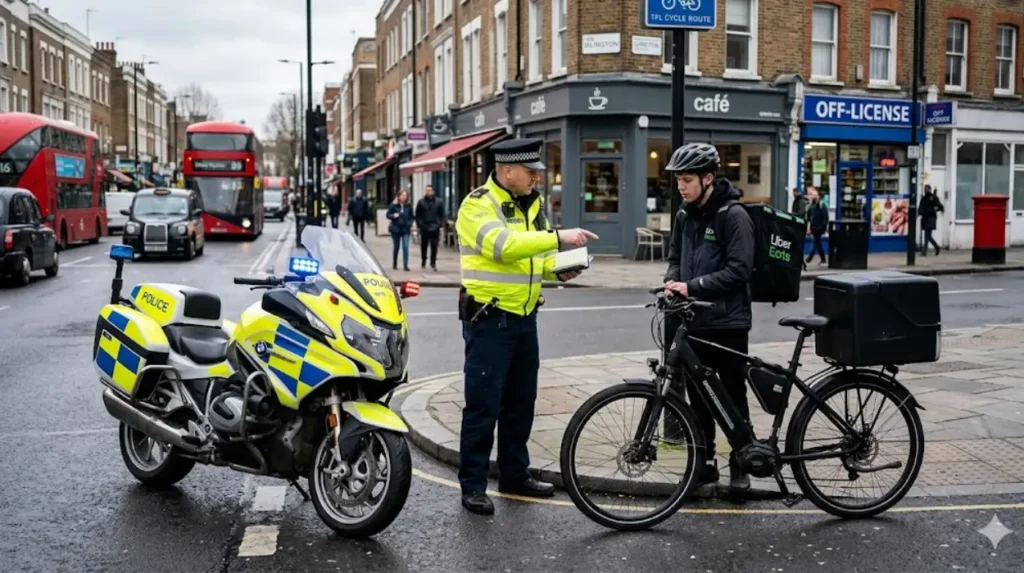
Use emergency services only if there is an immediate threat or collision risk. For lower-level but still important incidents, keep to the council, TfL, or operator route so the issue is logged and can be tracked over time.
A practical reporting approach
The fastest way to deal with an e-bike pavement speeding issue in Islington is to report it through the most relevant route, then send the same details to any second body that applies. TfL says Streetcare is the quickest way to report most street and road issues, while Islington Council says residents should also notify rental companies and use its safer spaces reporting guidance.
A good approach is simple: report the incident, keep the details factual, and repeat the report if the problem continues. That creates the record needed for enforcement, operator action, or local street changes.
Why this matters for Islington
Islington is a dense inner-London borough with many narrow pavements, busy town centres, and high pedestrian activity, so even a small number of fast or careless e-bike riders can create a disproportionate safety issue. Councils across London are already tightening responses to e-bike misuse, dangerous parking, and pavement riding, which means resident reports now play a real role in shaping enforcement and policy.
For residents, the key point is straightforward: if an e-bike is being ridden on the pavement or used in a way that endangers pedestrians in Islington, report it promptly, clearly, and to the right place. That is the most effective way to help keep local pavements safer for everyone.