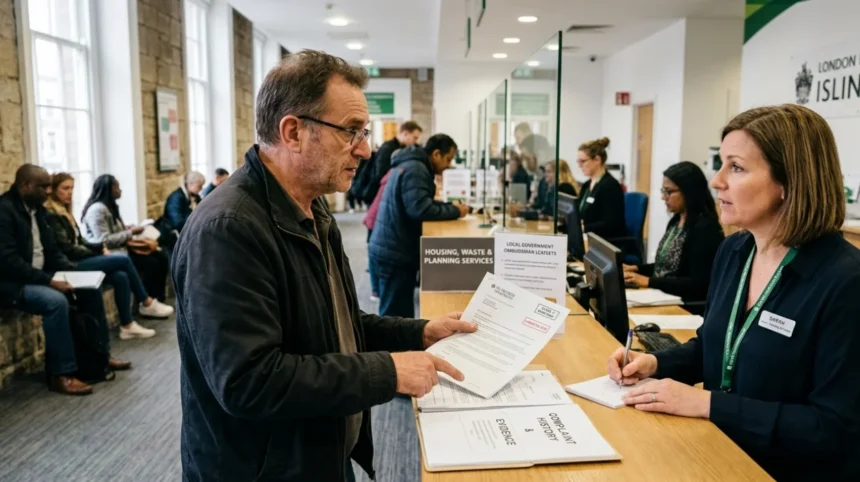
If a London council has not resolved your complaint after following its internal stages, you can escalate to the Local Government and Social Care Ombudsman or other independent bodies, provided you stay within set time limits and clearly show how the council’s actions caused you loss or distress. This process applies across all London boroughs and the City of London, with broadly similar stages for housing, waste, planning, and other local services.
- What counts as an unresolved council complaint?
- Why should you escalate a council complaint?
- What is the Local Government and Social Care Ombudsman?
- How many stages are there in a London council complaint?
- What should you do before escalating to the Ombudsman?
- How do you escalate to the Local Government and Social Care Ombudsman?
- When can you skip the council and go straight to the Ombudsman?
- What happens after the Ombudsman investigates?
- What other options exist besides the Ombudsman?
- How long do complaint and escalation processes take in London?
- What evidence strengthens an escalation?
- What cannot be escalated or investigated?
- How can North London residents handle complex complaints?
- What impact does escalating a council complaint have on future services?
- What practical steps should you follow now?
What counts as an unresolved council complaint?
A complaint is unresolved if the council has not given a fair, full answer within its published timeframes, or if its final response does not put right the harm you suffered.
An unresolved complaint usually means you have:
- raised the issue in writing (email, online form, or letter) and given the council time to respond,
- asked for a formal review if the first reply is inadequate, and
- received a final decision that still fails to correct the problem, admit error, or offer a practical remedy.
Councils across London are required to have a formal complaints procedure, normally with at least two stages. Examples include:
- Stage 1: a local team manager’s response within 10–15 working days.
- Stage 2: a senior manager review within a further 15–20 working days.
Only when you have completed all stages, or when the council ignores or exceeds these timescales, does your case become “unresolved” for the purpose of external escalation.
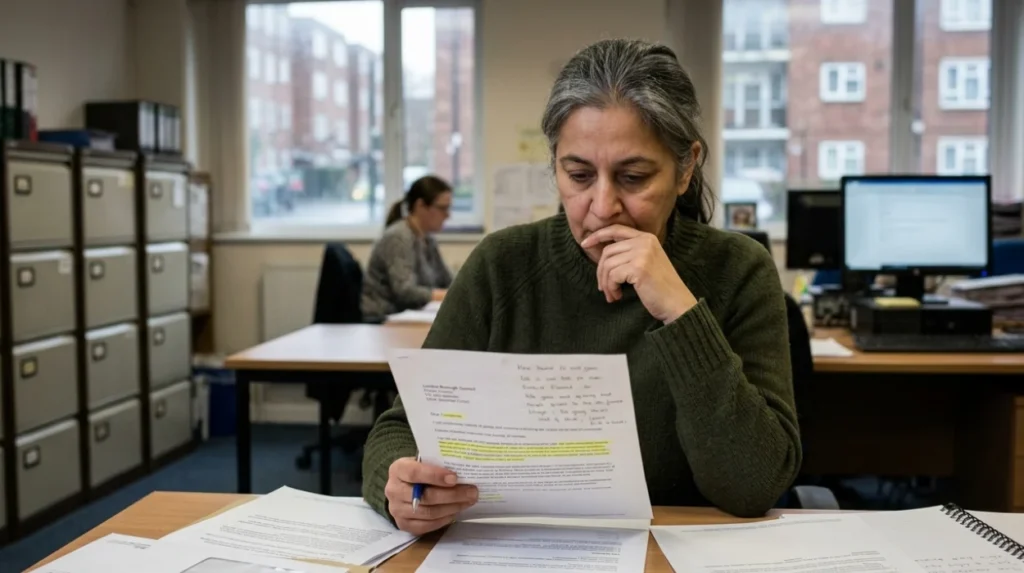
Why should you escalate a council complaint?
Escalation is designed to force an independent review of the council’s actions and to secure a fair remedy if the council made significant errors or caused you real loss.
The council’s own complaints system is meant to correct mistakes internally, but research shows that many residents still feel their concerns are dismissed or poorly handled. Escalating to an external body raises the risk of reputational and legal consequences for the council, which can push it to reconsider its position.
Key reasons to escalate include:
- The council has refused to admit fault despite clear evidence,
- The council has applied the wrong policy or ignored guidance, or
- You have suffered tangible harm such as financial loss, long delays in housing repair, or distress from poor social‑care handling.
For North London residents, escalation can also shine a spotlight on repeated problems in specific boroughs, such as housing allocations in Camden, bin‑collection delays in Enfield, or planning decisions in Barnet.
What is the Local Government and Social Care Ombudsman?
The Local Government and Social Care Ombudsman (LGSCO) is an independent, free body that investigates complaints about English local authorities and social‑care providers when internal processes fail.
The LGSCO was created under the Local Government Act 1974 and operates as a statutory “ombudsman” scheme, meaning councils must cooperate with its investigations and follow its final recommendations. It handles complaints about:
- most council services (housing, waste, planning, education, benefits, highways),
- all adult social‑care providers (care homes, home‑care agencies), and
- some other local public‑service bodies.
Residents in Barnet, Camden, Enfield, Haringey, Islington, and other North London boroughs can all use the LGSCO once their council’s own complaints stages are exhausted. The LGSCO does not have the power to overturn legal decisions, but it can order financial compensation, apologies, service‑policy changes, and other corrective actions.
How many stages are there in a London council complaint?
Most London boroughs use a two‑stage complaints procedure: first‑line local resolution, then a senior‑manager review, with some councils adding a third “panel” stage.
The standard sequence looks like this across many boroughs:
- Stage 1 – Local resolution
- A team manager or front‑line supervisor investigates and responds within about 10–15 working days.
- Stage 2 – Senior manager review
- If you are dissatisfied, you request escalation; a director or senior officer reviews the case and replies within about 15–20 working days.
Some councils, such as Islington, also allow a third “panel” or “review” stage that brings in councillors or external members when the dispute is particularly serious. Each stage must be completed, and you must receive a written final‑response letter before you can escalate externally.
What should you do before escalating to the Ombudsman?
You must complete all stages of your council’s internal complaints process and gather clear evidence of the council’s failings and the harm they caused you.
Before you contact the LGSCO, take these steps:
- Check your council’s policy.
Each London borough publishes its formal complaints procedure, including response times and escalation routes, on its website. - Document everything.
Keep copies of emails, letters, online‑form submissions, and notes of phone calls, including dates, names, and what was agreed. - Request a final decision.
If the council hints at further “internal consideration” but does not send a formal closure letter, ask clearly for a written final decision that confirms whether you can escalate to the Ombudsman.
Once you have a Stage 2 closure letter that still fails to resolve your complaint, you are ready to move to external escalation.
How do you escalate to the Local Government and Social Care Ombudsman?
You escalate by submitting a complaint through the LGSCO’s online form or telephone line, enclosing your council’s final‑response letter and a clear timeline of events.
The LGSCO expects:
- your contact details and those of the council service involved,
- a concise description of what went wrong and how it affected you,
- the dates of your council complaint stages and copies of key correspondence, and
- details of any financial loss, distress, or other “personal injustice” you suffered.
You must normally complain to the LGSCO within 12 months of becoming aware of the council’s final decision. In “exceptional” cases, such as serious illness or long‑term legal proceedings, the Ombudsman may accept complaints up to five years after the harm occurred.
The LGSCO will acknowledge your complaint within a few working days and then decide whether it meets its criteria for investigation. If accepted, it usually takes 2–6 months to complete an investigation.
When can you skip the council and go straight to the Ombudsman?
You can usually skip the council’s internal stages only if the council has no formal complaints procedure, consistently ignores your complaints, or unreasonably delays responding.
The LGSCO expects you to exhaust the council’s process first because councils must be given a chance to correct their own mistakes. However, if:
- Your council refuses to accept a formal complaint,
- Your council does not respond within its published timeframes for several weeks, or
- Your council blocks you from using its Stage 2 review,
Then the Ombudsman may investigate even though you have not completed all stages. In these cases, you must show that the council’s behaviour prevented you from following the normal route.
What happens after the Ombudsman investigates?
The LGSCO investigates whether the council committed “maladministration” that caused you “personal injustice”, then issues a report and binding recommendations.
The investigation typically involves:
- asking the council to explain its actions and provide internal records,
- contacting you for further evidence, and
- writing a decision report that sets out whether the council is at fault and what remedy is appropriate.
If the LGSCO finds fault, it can recommend remedies such as:
- financial compensation for proven loss,
- an apology and explanation of the error,
- a change in how the council handles similar cases, and
- training for staff.
The council must implement these recommendations within an agreed timeframe, usually about 20 working days. If it refuses, the LGSCO can issue a public “failure to comply” statement, which can damage the council’s reputation.
What other options exist besides the Ombudsman?
For some complaints, you can also appeal to regulators, Ministers, or MPs, or use specialist ombudsmen such as the Housing Ombudsman.
Relevant alternatives include:
- Housing Ombudsman.
For registered social landlords (housing associations) and some private‑rented‑sector issues, you can escalate to the Housing Ombudsman after the landlord’s and council’s own complaints stages. - Regulator of Social Housing (RSH).
For complaints about serious governance or regulatory failures by housing providers, you or the Ombudsman can refer the matter to the RSH. - Ministers and MPs.
If a council decision has national policy implications, you can ask your MP to raise the case with a relevant Minister, though this rarely overrides a legal decision.
For environmental‑health or planning‑enforcement notices, you may also have a statutory right of appeal to a tribunal or court, depending on the type of notice. These routes are narrower and usually require legal advice.
How long do complaint and escalation processes take in London?
Most London councils aim to respond to Stage 1 complaints within 10–15 working days and to Stage 2 reviews within a further 15–20 working days.
When a case is complex, councils may extend these times, but they must explain the delay and keep you updated. Overall, completing both stages can take roughly 4–8 weeks, after which you can escalate to the LGSCO.
The LGSCO targets an investigation decision within 2–6 months, though this can stretch longer if the council is slow to provide information or if there are technical issues to unpick. For North London residents, delays are more common in boroughs with high caseloads in housing and social‑care complaints.
What evidence strengthens an escalation?
Strong escalations include a clear timeline, dated evidence of council errors, and proof of real harm such as bills, receipts, rent increases, or medical‑stress notes.
To build a persuasive case, collect:
- emails and letters from council officers, with dates and names,
- copies of tenancy agreements, repair request forms, waste‑collection schedules, or planning decisions,
- invoices or receipts showing extra costs you incurred (e.g. owing for temporary accommodation, paying for private repairs), and
- medical or counselling records, if distress affected your health.
You should also keep a short written log of key events, such as:
- When you first reported a leaking roof,
- When the council promised a repair,
- when the repair failed, and
- the impact on your health or finances.
This kind of structured evidence makes it easier for the LGSCO to see maladministration and personal injustice.
What cannot be escalated or investigated?
The LGSCO will not investigate complaints that are too old, lack evidence of harm, duplicate ongoing legal proceedings, or challenge purely policy decisions.
Typical limits include:
- cases where you did not complain within 12 months of the final council decision (unless exceptional),
- situations where the council followed rules correctly and simply made a reasonable judgment, and
- disputes that are already being decided in court or a tribunal.
The Ombudsman also will not overturn planning decisions or compulsory‑purchase orders that councils took legally, even if you dislike the outcome. In these cases, separate appeal routes, such as planning appeals or judicial review, may apply, but they are more complex and often require legal representation.
How can North London residents handle complex complaints?
Residents in North London boroughs should combine council‑level escalation with targeted use of the LGSCO, housing ombudsmen, and local‑councillor support.
For example:
- A Camden resident facing delayed housing repairs can:
- Complain formally to Camden Housing Services,
- escalate to Stage 2 if the response is unsatisfactory, and
- Refer the unresolved case to the LGSCO or Housing Ombudsman as appropriate.
- An Enfield resident unhappy with a bin‑collection or parking‑charge decision can:
- complain through the council’s online portal,
- Request a senior manager review, and
- escalate to the LGSCO if the council refuses to cancel a clearly wrong penalty.
In many North London boroughs, local councillors can also put pressure on departments by raising your case in council meetings or writing to the chief executive, which can speed up resolution before the matter reaches the Ombudsman.
What impact does escalating a council complaint have on future services?
A successful escalation can lead not only to individual remedy but also to changes in council policy, staff training, and service design.
The LGSCO publishes annual reports that highlight recurring problems in areas such as housing repairs, homelessness decisions, and social‑care assessments. Councils are expected to act on these findings, so an individual complaint can prompt borough‑wide improvements.
For North London residents, repeated escalations from boroughs such as Barnet, Islington, and Haringey have led to:
- clearer guidance for housing officers,
- revised templates for rejection letters, and
- new internal checks before issuing certain penalties.
Even if your personal case is complex or only partly successful, the formal record of escalation can become part of wider evidence that regulators and auditors use to hold councils accountable.

What practical steps should you follow now?
Now, list your council’s final decision, gather all evidence, and decide whether to escalate to the LGSCO, a specialist ombudsman, or a tribunal‑style appeal.
For a North London resident, the sequence is:
- Confirm you have completed all internal stages of your borough’s complaints procedure.
- Collect a clear timeline, documents, and proof of harm.
- Choose the right escalation route (LGSCO, Housing Ombudsman, RSH, or legal appeal) based on the type of complaint.
- Submit the escalation within the 12‑month deadline unless you have exceptional circumstances.
By following this structured path, you give yourself the strongest chance of a fair outcome and help ensure that future residents in your borough do not face the same unresolved problems.
What happens if a council ignores my complaint in London?
If a London council ignores your complaint or fails to respond within its published timescales, you can escalate the matter to the Local Government and Social Care Ombudsman after showing you attempted to use the council’s internal complaints process.