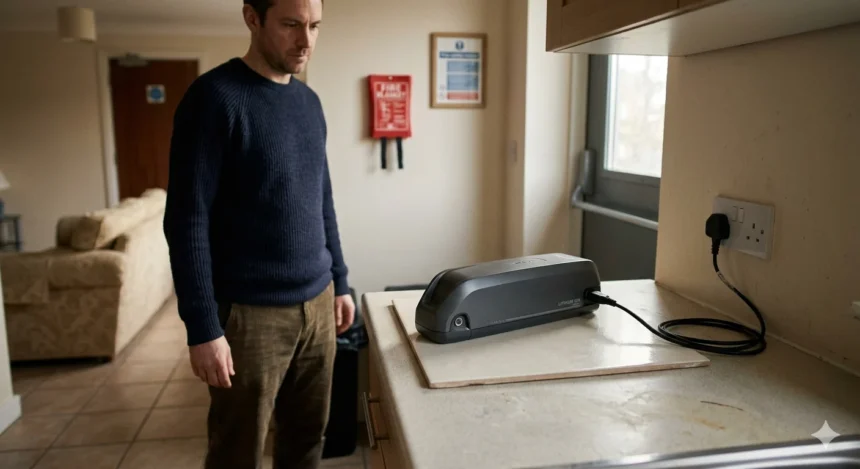
How to charge e-bikes safely to avoid flat fires starts with using the manufacturer’s charger, charging on a hard non-flammable surface, and never leaving the battery unattended. For North London residents, the safest approach is to keep the battery away from exits, soft furnishings, and heat sources, and to follow local fire-safety guidance.
Why this issue matters locally
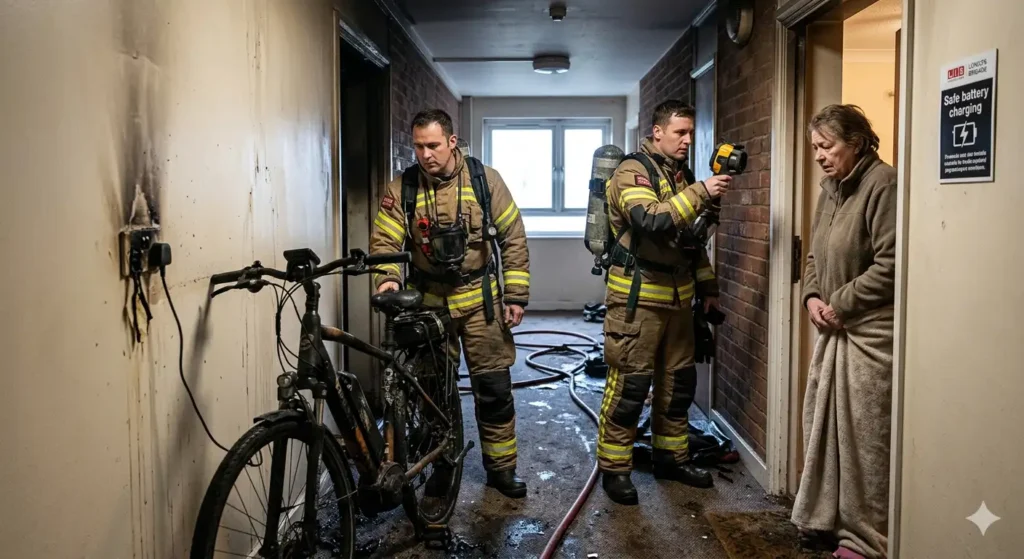
E-bike battery fires can spread quickly in homes, flats, shared hallways, and converted buildings, which is especially important for local residents living in Brent, Barnet, Enfield, Camden, Haringey, and Islington. London fire guidance says most e-bike and e-scooter fires happen in homes and are often linked to charging, so safe charging is a practical way to protect people and property.
In densely populated parts of North London, a single battery fire can affect several households, damage communal areas, and block escape routes. That is why councils and fire services across the city stress safe charging, proper storage, and using equipment that meets UK safety standards.
How to charge safely
The best way to prevent flat fires is to make charging routine and controlled. The key steps are to use the right charger, charge on a hard surface, avoid overcrowding the socket, and unplug once charging is complete.
- Use the charger supplied by the manufacturer, or an official replacement from a reputable seller.
- Charge on a hard, flat, non-flammable surface such as a tiled or concrete floor.
- Keep the battery and charger away from curtains, paper, sofas, bedding, and other combustible items.
- Do not charge in hallways, doorways, bedrooms, or any space that could trap people if a fire starts.
- Do not cover the battery or charger while charging, because this can cause overheating.
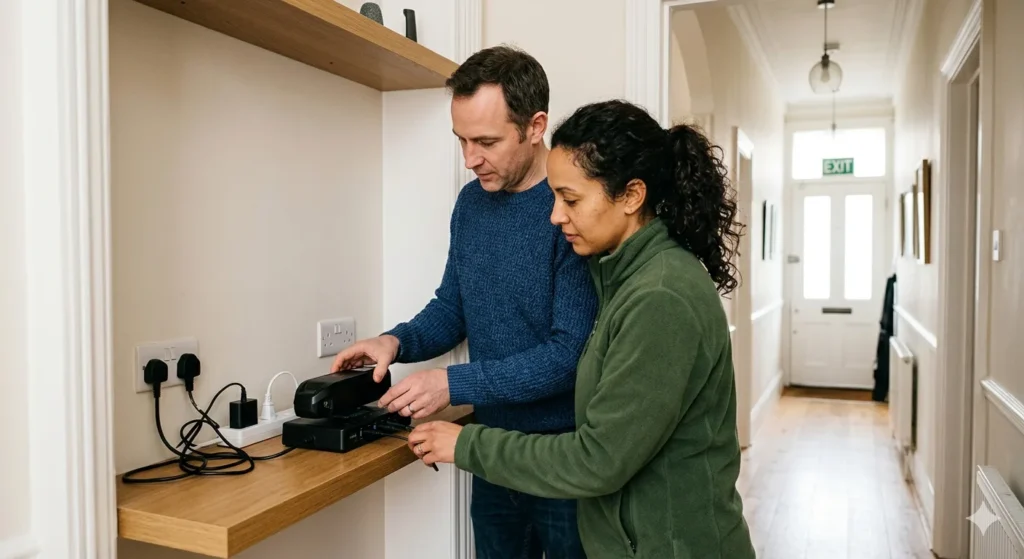
- Avoid overloading socket outlets and do not use unsuitable extension leads.
- Unplug the charger when the battery is full and do not leave it charging overnight or when you are out.
What residents should check
Before charging, local residents should look for visible damage, swelling, strange smells, overheating, or loose wiring. If a battery or charger looks worn, it is safer to stop using it and replace it with an approved part rather than risk a fault during charging.
You should also make sure the battery was bought from a trusted seller and meets UK safety standards. Camden Council’s guidance and London Fire Brigade both stress that reputable products and correct chargers are part of reducing fire risk at home.
Which council service handles it
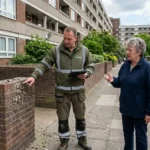
If the issue is a private e-bike charging habit in your own home, the first point of contact is usually not a council repairs team but your landlord, housing association, or building manager if you live in a managed block. If the concern affects a shared building, communal hallway, or storage area, the housing or environmental health service within the relevant North London council may advise on fire risks and communal safety.
For Brent Council, Barnet Council, Camden Council, Enfield Council, Haringey Council, and Islington Council, residents should use the council’s housing, environmental health, or community safety channels where the charging setup affects shared spaces or building safety. Camden Council’s public guidance shows councils are involved in spreading safe-charging advice, especially where communal use or fire risk is involved.
Information needed
If you report a problem or ask for advice, have the following ready:
- Your full address and postcode.
- The building type, such as flat, maisonette, converted house, or tower block.
- Whether charging happens in a private home or communal area.
- The make and model of the e-bike and charger, if known.
- Photos of any visible damage, overheating, or unsafe charging location.
- Details of whether there have been smells, smoke, sparks, or repeated breaker trips.
This information helps the council, landlord, or fire-safety contact judge the risk more quickly and decide whether the issue needs urgent attention.
Expected response time
Response times vary depending on the risk and who manages the property. A clear immediate danger, such as smoking batteries, burning smells, or a charger overheating, needs urgent action straight away rather than waiting for a routine reply. London Fire Brigade guidance treats battery fires as a serious home safety issue and advises people to get out, stay out, and call 999 if fire breaks out.
If the problem is advisory rather than urgent, such as a resident charging safely but in a poor location, a council or housing team may deal with it through normal service times. Where a landlord or managing agent is responsible for communal safety, their response should be quicker if the charging area could block escapes or affect multiple households.
If follow-up is required
If the first report does not solve the issue, follow up with the same team and keep a record of dates, names, and any replies. If the battery, charger, or storage area still looks unsafe, ask for a formal inspection or written advice about safe charging in the block.
If there is a pattern of unsafe charging in a shared building, ask the landlord or managing agent to remind residents of the rules for battery storage, charging, and escape routes. NFCC guidance also says e-bikes should not be stored or charged near communal means of escape or in areas that could put people at risk.
Rights and responsibilities
Under UK safety guidance, residents have a responsibility to charge e-bike batteries safely, use the correct charger, and avoid blocking exits or communal escape routes. They also have a responsibility not to tamper with batteries or use unapproved chargers that may increase fire risk.
Landlords, managing agents, and responsible persons in shared buildings also have duties to think about the fire risks linked to e-bike charging in communal areas, bike stores, and charging rooms. NFCC guidance says these risks should be considered carefully because they can affect escape routes and resident safety.
Future prevention tips
The safest long-term habits are simple and repeatable. Keep charging to one dedicated place, use only approved equipment, and build in checks before every charge.
Useful habits include:
- Charging during the day when someone is awake and at home.
- Leaving space around the charger for airflow.
- Storing the battery in a cool, dry place when not in use.
- Replacing damaged chargers immediately.
- Avoiding makeshift extension setups or overloaded sockets.
- Keeping anything flammable well away from the charging area.
For flats in North London, the safest option is often a clear charging spot away from the bedroom, hallway, and front door, so a fault does not cut off the exit. In buildings with shared access, good charging habits help protect both your home and your neighbours.
Local advice for residents
For people in Brent, Barnet, Enfield, Camden, Haringey, and Islington, the message is the same: charge smartly, use approved equipment, and avoid charging in escape routes or soft-furnished rooms. Camden Council’s guidance and London Fire Brigade’s ChargeSafe advice both support these steps as the most practical way to reduce risk.
If you live in a flat, remember that what looks like a small battery fault can become a building-wide emergency very quickly. Following safe charging guidance is the simplest way for local residents to keep homes, neighbours, and common areas protected.
Can an e-bike battery catch fire when not plugged in?
Yes. An e-bike battery can still catch fire even when it’s not charging, usually due to internal damage, overheating, or a fault in the battery cells. Proper storage, avoiding physical damage, and keeping the battery away from heat sources reduces the risk.