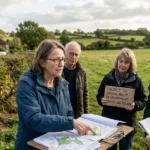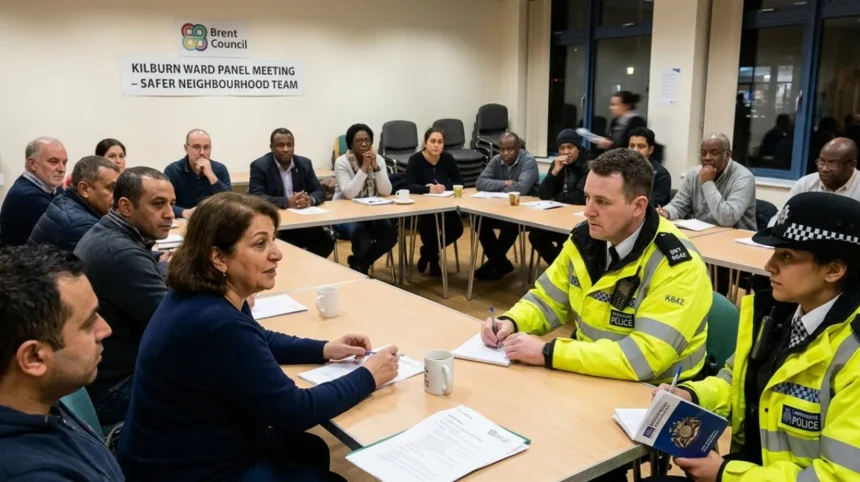
Brent Safer Neighbourhood Teams operate in each of Brent’s 22 wards across North West London. Residents join through ward panels to set policing priorities and scrutinise police work. This involvement strengthens community safety in areas like Kilburn, Harlesden, and Wembley.
- What is a Safer Neighbourhood Team in Brent?
- What is the Brent Safer Neighbourhood Board?
- How do you join a Safer Neighbourhood ward panel in Brent?
- What are the requirements to join a Brent safer neighbourhood team panel?
- What wards are covered by Safer Neighbourhood Teams in Brent?
- What benefits come from joining a Brent safer neighbourhood panel?
- How does the Brent Safer Neighbourhood Board differ from ward panels?
- What is the history of Safer Neighbourhood Teams in Brent?
- What impact have Brent safer neighbourhood initiatives had?
What is a Safer Neighbourhood Team in Brent?
Safer Neighbourhood Teams in Brent consist of two police constables and one police community support officer per ward, managed by a sergeant overseeing three wards. Ward panels of local residents meet quarterly with the team to set priorities on crime and antisocial behaviour, scrutinise performance, and report actions back to the community. This structure ensures focused policing tailored to local concerns in Brent’s 22 wards.
Safer Neighbourhood Teams form the core of visible, accessible policing in Brent, a London borough with 22 wards established after boundary changes. The Metropolitan Police Service assigns dedicated ward officers to every ward, with ongoing recruitment for police community support officers where gaps exist. Panels enable residents to influence priorities such as knife crime or antisocial behaviour.
Brent police newsletters detail team activities, like patrols in Dudden Hill or Northwick Park wards. Panels include ward councillors and council antisocial behaviour officers for joint problem-solving. This setup addresses local issues effectively, as panels feed community concerns directly to officers.
The process starts with panel meetings where residents voice issues. Police report on crimes, arrests, and interventions. Panels then define three to five priorities for the next quarter, such as reducing burglaries or youth violence.
What is the Brent Safer Neighbourhood Board?
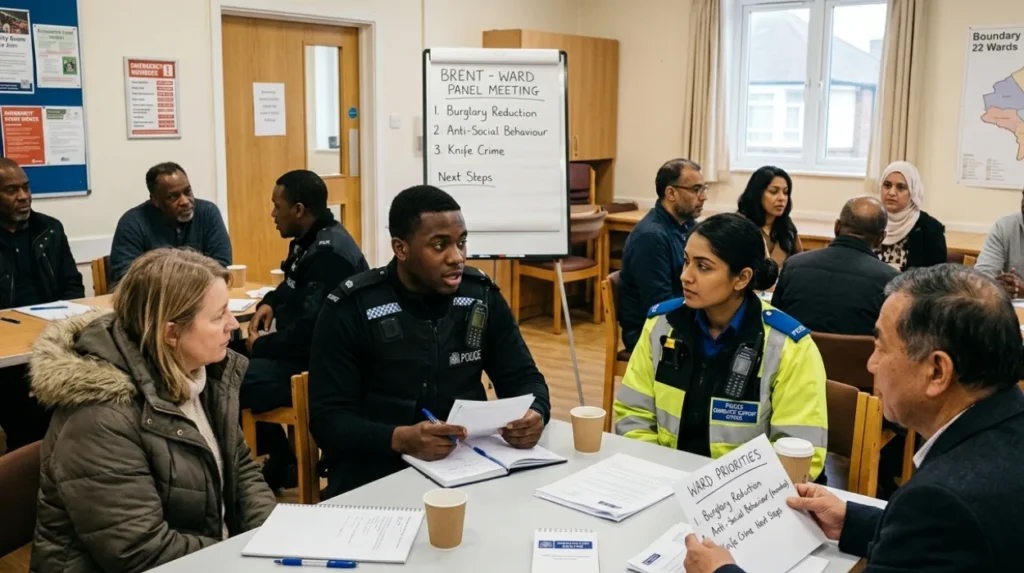
The Brent Safer Neighbourhood Board comprises Brent residents, including ward panel chairs, Brent Connects forum members, youth parliament representatives, community safety councillor, Victim Support, and Neighbourhood Watch. It holds four private meetings and one public meeting yearly to scrutinise borough-wide policing, set priorities aligned with the Police and Crime Plan, and monitor crime performance. Contact community.safety@brent.gov.uk for membership details.
The board holds local police accountable and shapes priorities borough-wide. Set up by the Mayor of London via the Mayor’s Office for Policing and Crime (MOPAC), it receives annual funding of £18,936 for projects and £5,200 for administration since 2014/15. Projects target violence prevention, domestic abuse awareness, and trust-building.
Membership represents diverse groups: three ward panel chairs from north, central, south; five from Brent Connects forums in Harlesden, Kilburn & Kensal, Kingsbury & Kenton, Wembley, Willesden; two from Brent Youth Parliament. Attendees include senior police, council community safety head, MOPAC, independent custody visitors, advisory groups, stop and search monitors, and probation services.
Public meetings focus on issues like knife crime, drugs, and police trust. The 2022 public meeting at Brent Civic Centre addressed collaboration for confidence-building. Online meetings in 2020-2021 allowed questions to the borough commander.
Board functions include local engagement, police scrutiny, violence reduction, victim support, and exploitation prevention. It monitors ward panels and integrates with groups like Neighbourhood Watch. Implications include better resource allocation, with funded initiatives training street pastors or promoting Online Watch Link messaging.
How do you join a Safer Neighbourhood ward panel in Brent?
Email owl.brent@met.police.uk expressing interest in your specific ward panel. Brent Police recruits continuously for all 22 ward panels to ensure representation of residents, workers, and students. Attend quarterly evening meetings to discuss concerns, set priorities, and review police actions alongside councillors and officers.
No formal application form exists; direct contact initiates involvement. Panels seek diverse members to reflect ward demographics in Brent’s North West London areas. Download the Ward Panel Handbook for Community Members from Brent Council site for guidance on roles.
Recruitment emphasises inclusivity across ages, ethnicities, and sectors. Once contacted, new members shadow meetings before full participation. Panels meet four times yearly in evenings, typically local venues or online.
During meetings, members raise issues like vehicle crime in Kensal Green or ASB in Stonebridge. Police present data on incidents, stops, and outcomes. Panels prioritise actions, such as increased patrols or awareness campaigns.
Examples include Kilburn (Brent) SNT partnering with authorities and leaders on long-term solutions. In Harlesden, panels address youth violence via microgrants. Joining impacts safety, as Neighbourhood Watch schemes reduce crime where active.
What are the requirements to join a Brent safer neighbourhood team panel?
Residents, workers, or students in Brent qualify without specific qualifications; commitment to quarterly evening meetings and representing diverse ward views suffice. Panels prioritise underrepresented groups for balance. No criminal record checks mentioned, but police vetting applies during recruitment.
Panels recruit openly to mirror ward populations in Brent’s 22 wards. Diversity covers ethnic minorities, youth, seniors, and businesses. Members commit to four meetings annually, plus occasional events.
No age minimum or maximum stated; Brent Youth Parliament members on the board show youth inclusion. Time commitment totals 8-12 hours yearly, focused on preparation and attendance.
Police confirm suitability via email exchange. Handbook outlines expectations: active listening, priority-setting, feedback provision. Training occurs informally through meetings.
Examples: Victim Support representative brings expertise; Neighbourhood Watch adds vigilance knowledge. Implications: Balanced panels lead to equitable priorities, reducing biases in policing focus.
What wards are covered by Safer Neighbourhood Teams in Brent?
Brent’s 22 wards each have a Safer Neighbourhood Team following 2022 boundary changes, including Alperton, Brondesbury Park, Dudden Hill, Harlesden, Kensal Green, Kilburn, Kenton, Kingsbury, Mapesbury, Northwick Park, Preston, Queen’s Park, Stonebridge, Sudbury, Tokyngton, Wembley Central, Wembley Hill, Willesden Green, Barnhill.
Boundary adjustments increased wards from 21 to 22, ensuring dedicated officers per ward. Some lack full PCSO staffing but receive neighbour support; recruitment continues.
Teams tailor to ward specifics: Wembley Central focuses on retail crime; Stonebridge on violence prevention. Panels per ward set unique priorities.
Data shows Dudden Hill and Northwick Park previously understrength, now allocated dedicated ward officers. Contact local team via Met Engage for ward-specific emails, like Kilburn(Brent)@contact.metengage.co.uk.
This coverage spans North West London, impacting 350,000+ residents. Implications: Comprehensive presence reduces borough crime rates through localised action.
What benefits come from joining a Brent safer neighbourhood panel?
Joining reduces local crime via proven Neighbourhood Watch impact, builds police trust through direct dialogue, influences priorities on issues like ASB or burglary, and connects with councillors and officers for joint solutions. Panels foster community resilience in Brent’s diverse wards.
Panels set actionable priorities reviewed quarterly. Crime drops where schemes exist, per Neighbourhood Watch data. Members gain insights into police stats, like arrests or stop searches.
Examples: Brent panels prioritise knife crime, leading to targeted patrols. Public meetings amplify voices borough-wide. Insurance discounts apply for Watch members.
Broader implications: Enhanced confidence, as board projects reach £29,280 pre-2020/21. Violence prevention initiatives protect youth and families.
How does the Brent Safer Neighbourhood Board differ from ward panels?
Ward panels operate locally per ward, setting SNT priorities quarterly with 10-20 residents; the board oversees borough-wide at four meetings plus one public, with fixed members from panels, forums, and groups scrutinising overall performance. Panels feed into board priorities.
Panels focus micro: ward crimes like Harlesden ASB. Board addresses macro: violence reduction across Brent. Board elects chair, vice-chair; panels rotate leadership.
Attendance differs: panels include public; board restricts to members, attendees. Funding: board gets MOPAC grants for projects; panels none.
Examples: Panels in Kilburn prioritise local patrols; board funds domestic abuse training. Synergy ensures local input shapes borough strategy.
What is the history of Safer Neighbourhood Teams in Brent?
Safer Neighbourhood Teams launched borough-wide in Brent by 2006-2007 under Metropolitan Police. Brent Safer Neighbourhood Board formed around 2014 with MOPAC funding, holding first meeting 23 April that year. Ward boundary changes to 22 wards occurred pre-2023, with continuous staffing adjustments.
Early questions in 2006 queried team numbers; by 2021, focus shifted to full staffing. Board met thrice in first year, electing leaders by September.
Funding consistent since 2014/15: projects funded youth violence prevention, street pastors. Public meetings evolved from in-person 2022 to online 2020-2021 amid pandemic.
Stats: 204 professionals trained on domestic abuse 2021/22; 85 attended women’s safety event November 2021. Implications: Evolved model sustains long-term safety gains.
What impact have Brent safer neighbourhood initiatives had?
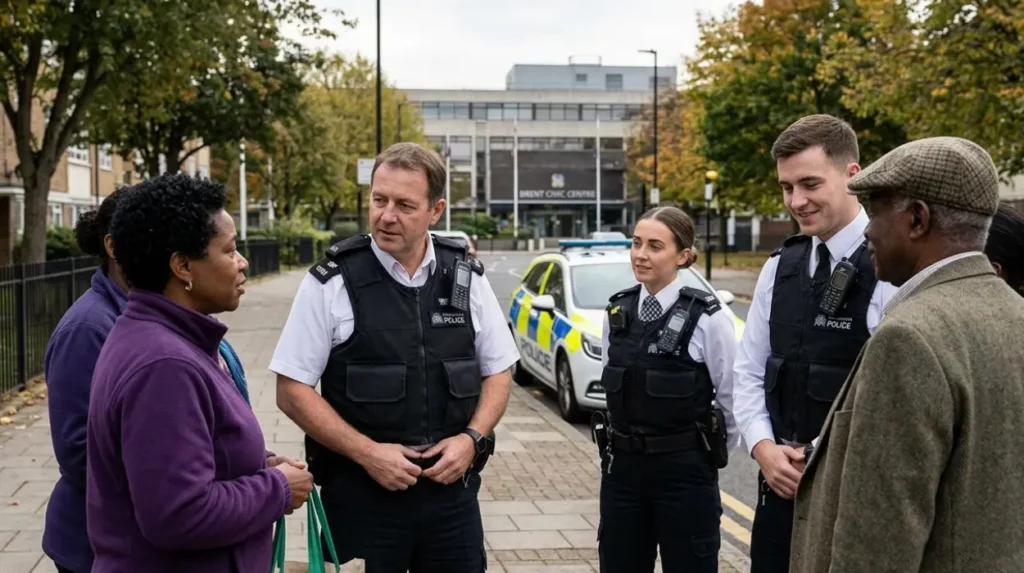
Safer Neighbourhood initiatives reduced crime where panels and Watch active; board projects addressed violence, with £18,936 annual funding post-2020/21 supporting prevention. Training reached 204 professionals in 2021/22; public meetings boosted trust via commander Q&A.
Neighbourhood Watch proves crime decline in covered areas. Microgrants target estates like Chalkhill, Stonebridge for youth safety.
Data: Domestic abuse champions retained at 25; events gathered 85 feedbacks. Panels scrutinise performance, ensuring accountability.
Examples: OWL messaging increases engagement; probation payback aids cleanup. Future relevance: Ongoing recruitment fills PCSO gaps, enhancing coverage amid 350,000 population.
What is a Safer Neighbourhood Team in Brent?
A Safer Neighbourhood Team (SNT) in Brent is a local policing unit made up of police officers and PCSOs assigned to each ward. They work with residents through ward panels to tackle crime and antisocial behaviour based on local priorities.