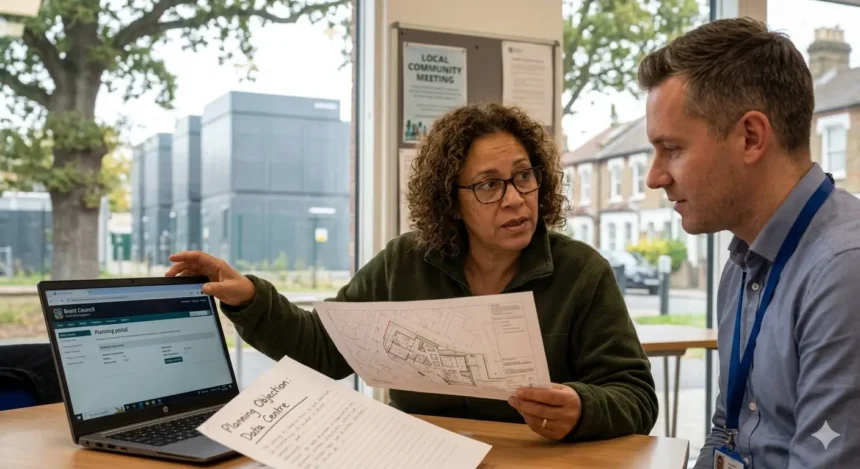
To object to new data centres in North London, submit a formal written objection via your local council’s online planning portal during the public consultation period, referencing material planning considerations like green belt impact and local infrastructure strain. Residents in Brent, Barnet, Enfield, Camden, Haringey, and Islington can follow council-specific processes to ensure their views are registered legally and promptly.
Why This Issue Matters to Local Residents
New data centres can transform quiet green spaces in North London boroughs such as Brent, Barnet, and Enfield into large industrial facilities. These developments often require significant land, power, and water resources, potentially straining local supplies already under pressure from growing populations.
For residents in Camden, Haringey, and Islington, the visual and noise impacts from cooling systems and traffic can alter neighbourhood character. Protecting these areas helps maintain property values, community wellbeing, and access to parks or green belt land that residents rely on daily.
North London councils receive numerous planning applications yearly, and resident input shapes decisions under UK planning law. Early objections ensure local needs, like reduced traffic or preserved wildlife habitats, are prioritised over large-scale builds.
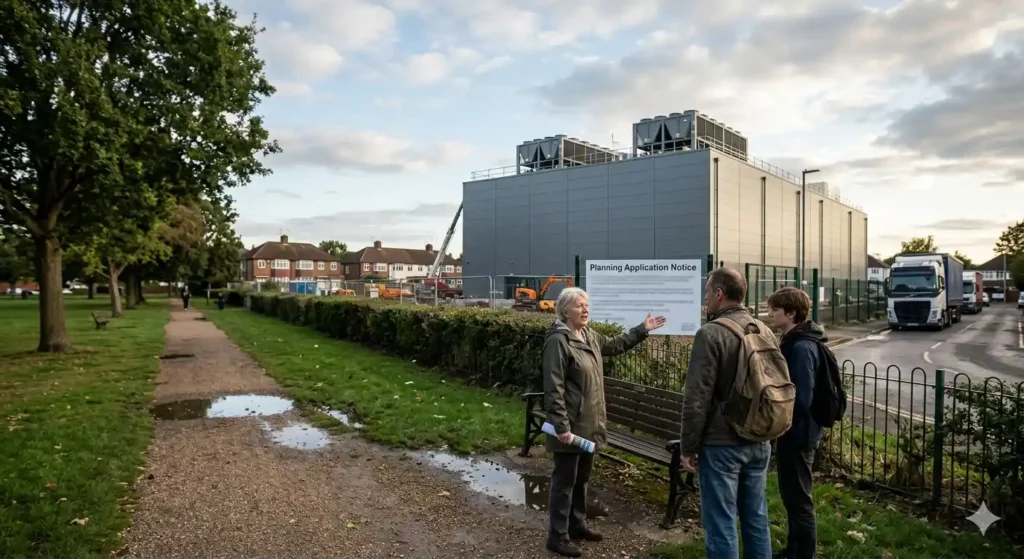
Step-by-Step Actions to Solve the Problem
Identify the planning application first by checking your North London council’s website under the planning section—search by postcode or keywords like “data centre.”
Register on the council’s planning portal, such as Brent Council’s portal or Barnet Council’s planning register, to view full proposal details and the consultation deadline, typically six to eight weeks from validation.
Draft your objection letter focusing on planning policies: explain how the data centre conflicts with the local plan, such as green belt protection in Barnet or traffic limits in Enfield.
Submit online via the portal, emailing planning@ followed by your borough name (e.g., planning@camden.gov.uk), or posting to the council’s planning department before the deadline.
Request to speak at the planning committee if offered—contact the case officer listed on the application to express interest.
Keep records of your submission, including date and reference number, for any follow-up.
Which Council Service Handles It
Each North London borough manages objections through its Development Management or Planning Services team. Brent Council handles applications via its Planning Applications team; Barnet Council uses its Development Management service.
Enfield Council’s Planning Policy team oversees strategic sites, while Camden, Haringey, and Islington direct queries to their respective Planning Departments.
Find the exact service on your council website by navigating to “Planning” or “Planning Applications.” Case officers assigned to data centre proposals coordinate public input and committee reviews.
These services ensure compliance with the Town and Country Planning Act 1990, weighing objections against national and local policies.
Information or Documents Needed
Your full name, address (to prove local interest), and contact details establish standing as a resident.
The planning application reference number, site address, and proposal description from the council portal provide context.
Material considerations only: note specific local plan policies (e.g., Barnet’s Core Strategy on green belt) or evidence like traffic surveys showing overload.
Attach photos of the site, maps marking the location, or reports on local power grid capacity if relevant—keep files under portal limits, usually 10MB.
Personal details remain confidential under data protection rules, but objections are public unless exceptional circumstances apply.
No legal expertise required; clear, factual statements suffice for council consideration.
Expected Response Time
Councils acknowledge objections within 10 working days via email confirmation with a reference.
Full officer assessments, including neighbour consultations, take eight to 13 weeks before committee scheduling.
Planning committees in North London boroughs meet every four to six weeks; decisions follow shortly after, often within two weeks of the meeting.
If approved or refused, formal notices issue within days, with appeal rights outlined.
Delays occur for complex data centre proposals needing specialist reports, extending to six months total.
Track progress via the portal using your reference number.
What to Do If Follow-Up Is Required
If no acknowledgement arrives after two weeks, email or call the planning department quoting the reference.
Monitor the portal for officer reports; respond to any inaccuracies within the consultation window.
If the committee decides against your objection, check for appeal routes—applicants can appeal refusals to the Planning Inspectorate within six months.
Join resident groups via council notices or community forums to coordinate stronger representation.
For unresolved concerns post-decision, request a review under council complaints procedures, escalating to the Local Government Ombudsman if needed.
Document all communications for potential judicial review, though this requires legal advice.
Rights and Responsibilities Under UK Rules
Under the Town and Country Planning (Development Management Procedure) Order 2015, residents have a right to comment on applications affecting their area.
Objections must stick to material planning matters: land use, design, highways, ecology—not private views or competition.
Councils must publicise applications via site notices, neighbour letters, and press ads in boroughs like Haringey.
Your input carries weight if evidenced; repeated duplicates may be discounted, so personalise submissions.
Responsibility lies in submitting timely, accurate details; false claims risk dismissal.
Data protection under UK GDPR protects personal info, with objections viewable online minus sensitive parts.
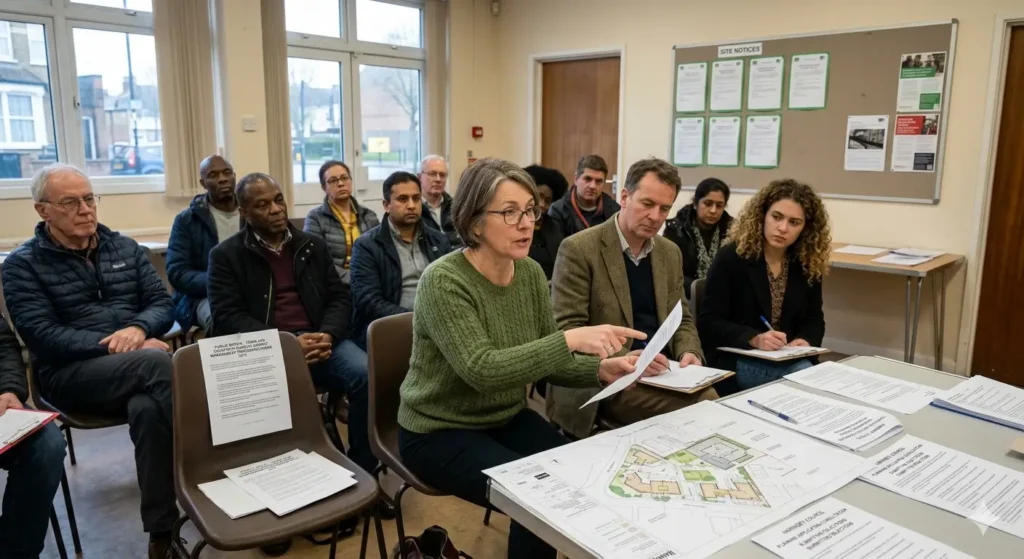
Practical Tips to Avoid the Problem in Future
Stay alert by subscribing to council planning alerts for Brent, Barnet, or Enfield—select keywords like “data centre” or “industrial development.”
Join Neighbourhood Watch or local resident associations in Camden and Islington for early notifications on proposals.
Review your borough’s Local Plan during consultations; comment on sites unsuitable for data centres.
Attend council planning briefings or webinars, often listed under “Planning Events.”
Encourage neighbours to object individually for greater impact.
Support policies favouring brownfield sites over green spaces in North London council strategies.
Monitor national infrastructure plans via government sites, as they influence local decisions.
Why object to data centres?
Residents often object due to noise, high energy and water use, visual impact, and limited local benefit.