Phone snatching on Islington buses is a mobile‑theft crime that occurs when someone steals a smartphone from a passenger while boarding, travelling, or leaving a bus in or around the London Borough of Islington. Reporting it correctly helps the police, Transport for London (TfL), and bus operations teams track patterns, secure evidence such as CCTV, and deploy targeted patrols to reduce repeat incidents on routes such as the 21, 73, 141, and 76.
- What counts as phone snatching on a bus?
- When is it an emergency, and when can you report later?
- Who should you contact first after a phone‑snatching incident?
- What exact information should you collect on the bus or at the stop?
- How do you report a phone snatching to the police in North London?
- How to report a phone‑snatching incident directly to TfL
- What role do bus drivers and onboard staff play when a phone is snatched?
- How does CCTV from Islington buses help in phone‑snatching cases?
- What immediate steps should you take with your phone after it is snatched?
- How can you protect your phone from being snatched on Islington buses?
- Why is reporting every phone‑snatching incident important, even if the phone is not recovered?
- What support and follow‑up can you expect after reporting a phone snatching on an Islington bus?
- What long‑term changes are being made to reduce phone snatching on London buses?
What counts as phone snatching on a bus?
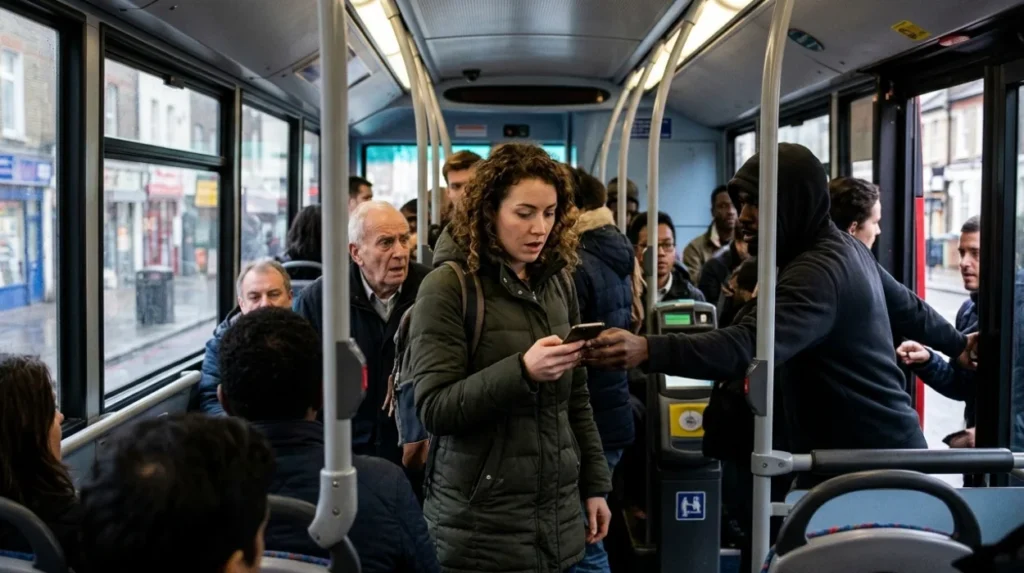
Phone snatching on a bus is when someone steals a mobile phone from a passenger in, on, or immediately next to a bus, including while boarding, alighting, or at a stop. This covers grab‑and‑run thefts, pickpocket‑style thefts from pockets or bags, and distraction‑theft incidents where a second person blocks or distracts you while another person grabs your device.
On Islington‑area buses, snatching often happens at busy stops near schools, tube stations, markets, or residential estates, especially when the bus is pulling in or moving off, and passengers are focused on their phones. You can report it as theft, robbery, or distraction‑theft depending on whether the thief used force, threatened you, or merely grabbed the device and ran.
When is it an emergency, and when can you report later?
Phone snatching is an emergency if the thief uses or threatens violence; if there is no immediate danger, you can still report it urgently to the police and TfL within 24 hours. On TfL‑run or TfL‑regulated buses in Islington, you must call 999 if you or another passenger is injured, threatened, or being held against their will.
If the thief is gone and you are safe, you should still report quickly because CCTV footage from buses, stops, and nearby cameras is usually kept for only 28–31 days. Quick reporting improves the chance that police and TfL can identify the offender, cross‑reference footage, and act before the evidence is overwritten.
Who should you contact first after a phone‑snatching incident?
Contact the police first if a crime has occurred; then notify TfL so they can log the incident and share CCTV information with investigators. In London, this means either the Metropolitan Police (through 999 or 101) or the British Transport Police (via text to 61016 or online) if the incident is treated as a transport‑network‑related crime.
For Islington‑area buses, you would usually call 101 (non‑emergency) or 999 (emergency) through the London Police force, then use TfL’s online crime‑and‑safety form or the TfL crime‑reporting page so the bus operator and central control team are notified. TfL operators such as Metroline, Arriva, or Stagecoach also keep onboard CCTV for 28 days, so prompt reporting triggers a hold‑down procedure on that footage.
What exact information should you collect on the bus or at the stop?
Immediately after a phone snatching, note the route number, time, stop name, bus number, and any description of the thief or witnesses. You should also record whether the bus was in motion or stopped, and whether the thief was alone or part of a group.
On an Islington bus, key details include:
- The bus route (for example, 21, 73, 141, 76) and the time of day.
- The specific stop (street name, bus‑stop code, or nearby landmark) and the bus’s registration or fleet number, if visible.
- A description of the thief (height, build, clothing, backpack, face covering, accent, and any unusual behaviour) and any other passengers who saw what happened.
If you were near the doors or stairs, also note whether the thief entered from outside or moved from the back to the front of the bus, as this can help match CCTV‑camera angles.
How do you report a phone snatching to the police in North London?
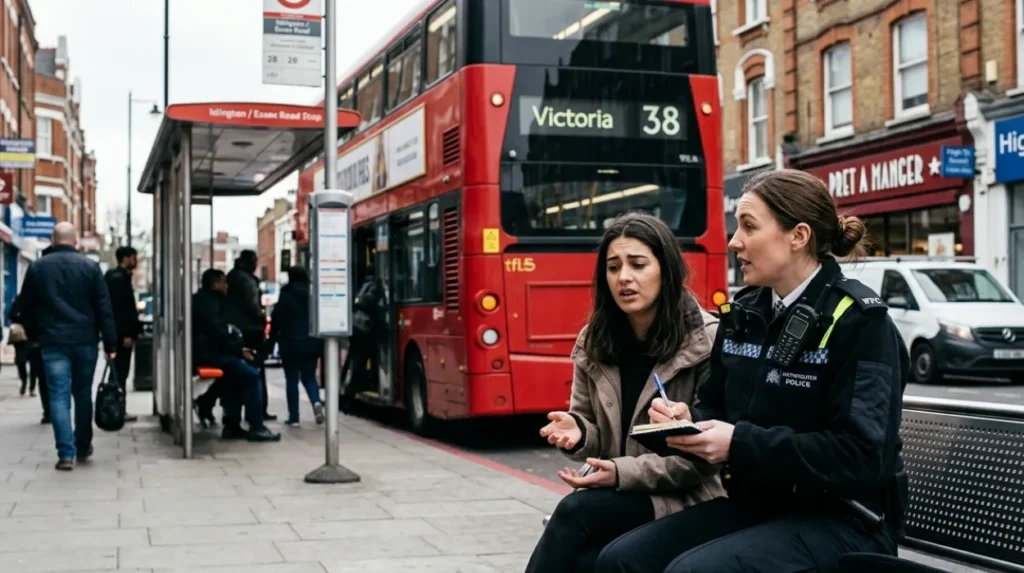
In North London, phone‑snatching on a bus is reported to the Metropolitan Police either online or by calling 101; if there is immediate danger, call 999. TfL’s crime‑reporting page can also generate a referral that is shared with the relevant police force.
To report to the Met Police:
- Access the online crime‑reporting form for theft or robbery on the Metropolitan Police website and select “theft” or “robbery” depending on whether force or threats were used.
- Provide the date, time, route number, bus number, stop name, and a description of the thief and any witnesses.
- If you suspect the incident is linked to schools or youth groups, you can mention this in the narrative so the force can flag it for local patrol‑allocation patterns.
TfL also notes that British Transport Police (BTP) receives a text‑to‑61016 option for discreet, no‑charge reporting of crimes on the transport network, which has seen a 20% increase in reports in 2025.
How to report a phone‑snatching incident directly to TfL
To report a phone‑snatching on an Islington bus, use TfL’s online “Report a safety incident or crime” form or the TfL site’s crime‑and‑safety reporting page. This route ensures the incident is logged in TfL’s incident database and linked to the specific bus operator and CCTV vault.
Steps to report via TfL:
- Go to the TfL “Report a safety incident or crime” page and select “bus” as the mode of transport.
- Enter the route number, approximate time, bus number (if known), and the bus stop or street name; then describe the phone‑snatching, including whether the thief used force or threats.
- Provide your contact details so TfL or the police can follow up if CCTV footage identification is possible within the 28‑day retention window.
TfL warns that if you choose to report anonymously, you may not receive updates or be contacted if evidence is found, so providing an email or phone number improves the chance of feedback.
What role do bus drivers and onboard staff play when a phone is snatched?
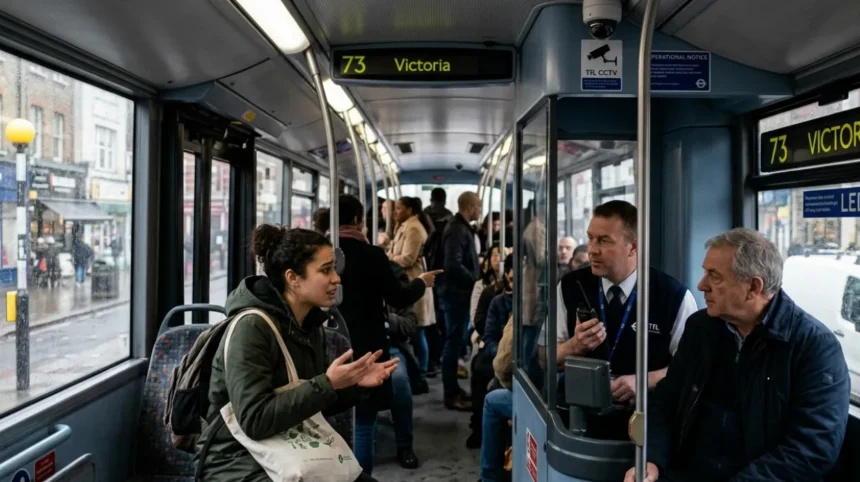
Bus drivers and onboard staff can press the onboard emergency alarm, describe the thief over the radio, and help passengers report the incident to TfL and the police. They are trained to prioritise safety and to avoid direct confrontation with thieves, but they can isolate the situation and support the victim.
If a phone is snatched while you are on an Islington bus:
- Tell the driver immediately if it is safe to do so, stating when and where the theft happened and a rough description of the thief.
- The driver may contact control, alert upcoming stops, and in some cases trigger an onboard or depot‑linked CCTV “flag” so the relevant footage is preserved.
- Existing policy encourages staff to assist with witness‑statement collection and, where possible, to stop at the next major stop if the thief is still on board and poses a risk.
Passengers are advised not to leave the bus until the driver or police confirms it is safe, especially if the thief fled on foot, and you may be a key witness.
How does CCTV from Islington buses help in phone‑snatching cases?
CCTV from Islington buses and nearby stops is a primary source of evidence for identifying phone snatchers, but footage is typically kept for 28 days unless a crime report triggers a hold. Area‑specific camera angles include bus‑interior cameras, exterior door‑cameras, and stop‑area CCTV controlled by TfL or local boroughs.
Factors that strengthen CCTV use include:
- Reporting the incident within 24–48 hours so operators can retain footage from the specific bus and route; late‑reported cases often miss the 28‑day window.
- Providing the exact time, bus number, and stop name so technicians can pull the correct sequence from the digital archive.
- Matching onboard footage with nearby street‑camera footage from Islington Council or London borough networks, which can track the thief’s escape route.
In 2025, TfL and BTP reported that almost 97% of hate‑crime and VAWG‑related transport incidents did not lead to charges, underlining the importance of reporting every theft to build enough data for pattern‑based enforcement.
What immediate steps should you take with your phone after it is snatched?
Immediately after a phone snatching, lock or erase the device remotely, cancel linked cards, and note the IMEI number for police and network reporting. On buses in Islington, this should be done either before you leave the bus or as soon as you are safe and connected to Wi‑Fi or mobile data.
Steps to secure your device:
- Use Find My iPhone (iOS) or Find My Device (Android) to mark the phone as lost, lock it remotely, or erase it if you believe it cannot be recovered.
- Contact your network provider with your phone number, account details, and IMEI (printed on the box or in the SIM tray) to block the device and prevent SIM‑swap fraud.
- Cancel or freeze any payment apps (Apple Pay, Google Pay, banking apps) linked to the phone and change passwords on your email and social‑media accounts.
If you manage to track the phone and it shows up in a nearby area such as Finsbury Park or Highbury, you should not approach it yourself; instead, share the live‑location data with the police.
How can you protect your phone from being snatched on Islington buses?
To reduce the risk of phone snatching on Islington buses, keep your phone in a zippered inner pocket, avoid using it near doors, and stay alert at busy stops. Users on routes like the 21, 73, 141, and 76 report higher‑risk zones near estates, tube stations, and school‑transition times.
Behaviour‑based precautions include:
- Holding your bag or backpack in front of you, zipped and with a strap across your body, especially when standing near the front or rear doors.
- Avoid scrolling, gaming, or taking photos close to the door or stairs when the bus is pulling into or leaving a stop, as this gives thieves a clear window.
- Using a phone‑lanyard or wrist strap if you need to hold your device, and keeping headphones or earbuds at a low volume so you can hear announcements and nearby movement.
Community‑level efforts in Islington, such as local‑group alerts on platforms like Facebook or Reddit about repeat‑snatching hotspots, also help passengers avoid high‑risk stops and times.
Why is reporting every phone‑snatching incident important, even if the phone is not recovered?
Reporting every phone‑snatching incident on Islington buses builds a data set that helps police and TfL identify hotspots, allocate patrols, and justify long‑term safety measures. TfL statistics show 24,192 offences across the network in 2025, a 46% increase on pre‑pandemic averages, with 4,593 violence‑against‑women‑and‑girls‑related offences alone.
System‑level impacts of consistent reporting include:
- Creating heat maps of frequent‑theft routes and stops so police can deploy plain‑clothes or uniformed patrols during peak hours.
- Encouraging TfL and bus operators to test additional measures such as clearer signage, better‑lit stops, or increased frequency of monitored routes.
- Helping insurance and mobile‑network providers refine fraud‑prevention rules by showing where and how thefts occur on buses compared with other locations.
Given that a large share of reported public‑transport crimes do not result in charges, each report strengthens the aggregate evidence courts and oversight bodies use to demand better enforcement.
What support and follow‑up can you expect after reporting a phone snatching on an Islington bus?
After reporting a phone snatching on an Islington bus, you can expect a crime reference number, possible updates if CCTV identifies the suspect, and guidance on insurance or device‑recovery options. TfL and police may also ask you to attend a short interview or provide a formal statement if your evidence is pivotal.
Typical follow‑up steps:
- Receiving a crime‑reference number from the Metropolitan Police or British Transport Police, which you can use to track your case online or when contacting TfL.
- Being contacted if CCTV or witness‑statements identify the thief; in some cases, police may arrange a video‑line‑up or ask you to confirm the identity.
- Being advised on insurance claims, mobile‑network procedures, and possible compensation schemes if your case is part of a larger pattern of theft on a specific route.
If you are travelling for work, school, or medical reasons, you can also request that TfL or the police flag your case as high‑impact so it appears in internal patrol‑allocation reports for Islington‑area buses.
What long‑term changes are being made to reduce phone snatching on London buses?
London is expanding CCTV coverage, improving reporting channels, and increasing police‑and‑community‑partnership patrols to reduce phone snatching on buses serving Islington and other boroughs. TfL and the Mayor’s Office are also reviewing data from 2025, which shows 24,192 recorded offences on the transport network, a 46% rise over pre‑pandemic levels.
Current‑and‑future measures include:
- Expanding the use of text‑to‑61016 and online reporting tools so passengers can discreetly flag phone snatching without drawing attention on the bus.
- Working with borough councils and school‑safety teams to run awareness campaigns in hot‑spot areas such as Finsbury Park, Holloway, and Newington Green.
- Considering additional onboard security measures, such as improved signage, more visible police presence, or experimental deterrent‑technology pilots, once cost‑effectiveness and privacy‑impact assessments are complete.
Residents and commuters in North London are encouraged to keep reporting every incident so authorities can refine these strategies and demonstrate that phone‑snatching on Islington buses is being taken seriously at both the local and citywide levels.
What should I do if my phone gets snatched on a London bus?
Report it to the Metropolitan Police (999 if urgent, 101 if not), then inform Transport for London to help secure CCTV footage.