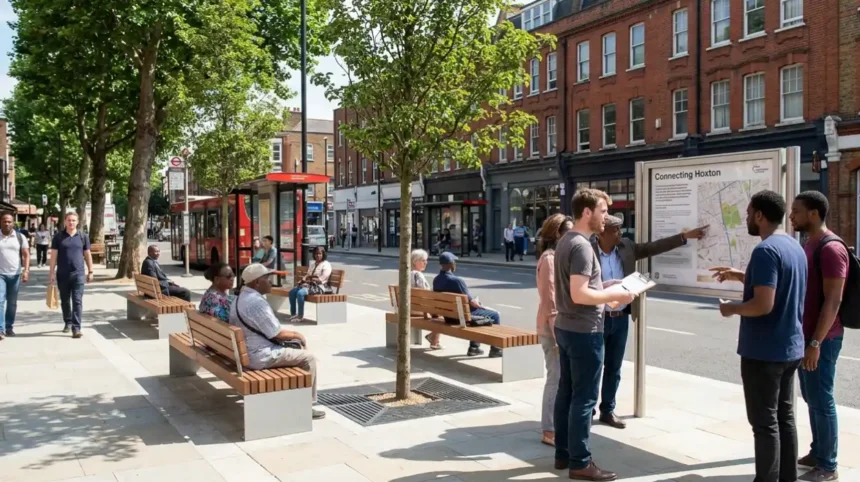
Hoxton Street runs through Hoxton in the London Borough of Hackney, North London. Public realm changes on this street include widening footpaths, planting street trees, adding seating, and improving green spaces under projects like Connecting Hoxton.
- What is the Hoxton Street public realm?
- What are the public realm changes on Hoxton Street?
- Why petition for Hoxton Street public realm changes?
- Who manages Hoxton Street public realm changes?
- What is the petition process in Hackney Council?
- How do I start a petition for Hoxton Street changes?
- How do I submit a Hoxton Street public realm petition?
- What happens after submitting a petition?
- What are successful Hoxton Street petition examples?
- How can I make my petition effective?
What is the Hoxton Street public realm?
Hoxton Street public realm consists of all publicly accessible outdoor spaces along the street, including footpaths, carriageways, green areas, and street furniture in Hoxton, Hackney. Changes involve upgrades like widened pavements with high-quality surfacing, new street trees, seating, and greenery to enhance pedestrian safety, reduce pollution, and boost social interaction, as funded by the Mayor of London’s Civic Partnership Programme up to £3 million.
Public realm refers to the shared outdoor environment owned or managed by local authorities. In Hoxton Street, this spans from key landmarks like Hoxton Street Market to local estates. The London Borough of Hackney defines public realm improvements as interventions that prioritise walking, cycling, and community use over vehicle dominance.
Historical context traces to 2015 cycle improvements consultations on Hoxton Street, where residents provided input on safety enhancements. Recent efforts under Connecting Hoxton, launched in 2024, identified six guiding principles from resident workshops: improved green infrastructure, biodiversity, and cultural frontages. Phase 1 trials began in early 2025 with small-scale projects around the market, informing larger Phase 2 works planned for summer 2026 to March 2027.
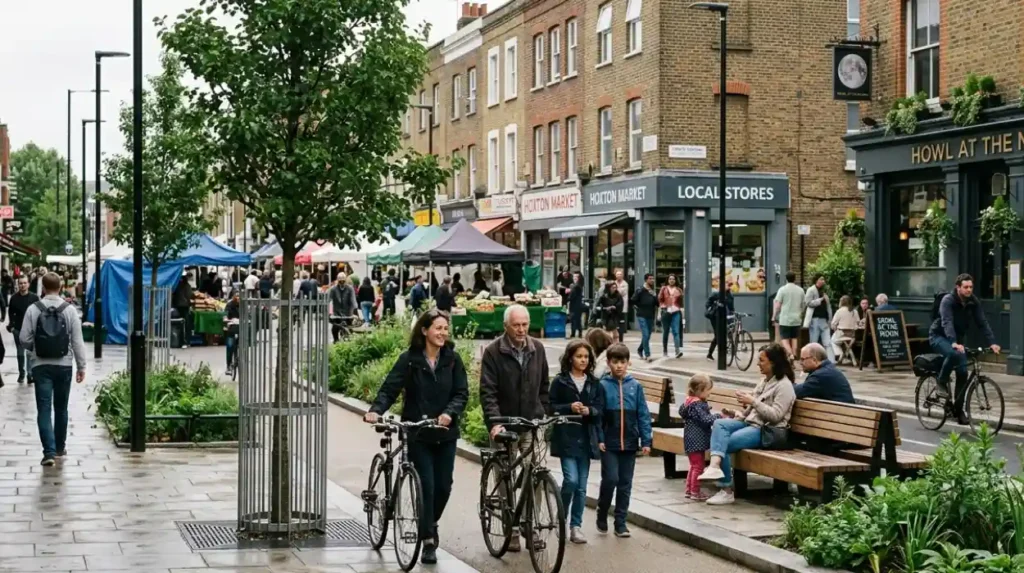
Key components include resurfaced footways, rain gardens for flood reduction, and extra space outside venues like the Howl at the Moon pub. These elements reduce road accidents, improve air quality, and add biodiversity. Implications extend to stronger community belonging, with ongoing design sessions scheduled into autumn 2025.
Data shows Hackney’s public realm schemes, like Nile Street nearby, aim to cut emissions and make streets greener. Hoxton Street’s upgrades align with this, projecting completion of Phase 1 by March 2027.
What are the public realm changes on Hoxton Street?
Public realm changes on Hoxton Street encompass specific upgrades such as widening footpaths, installing new street trees and seating, adding greenery outside pubs, improving estate connections like Purcell Gardens to Arden Estate, and trialling small-scale green infrastructure. These stem from the Connecting Hoxton project, funded by £3 million from the Greater London Authority, with Phase 1 ongoing since 2025 and Phase 2 construction from summer 2026.
Macro context positions Hoxton Street as a vital east-west connector in Hoxton, supporting markets, businesses, and residents. Changes address narrow pavements and car dominance, prioritizing pedestrians and cyclists.
Subtopics cover green enhancements: new trees, biodiversity boosts, and rain gardens. Structural details include high-quality surfacing and safer crossings. Examples include space expansion at Howl at the Moon pub for quieter social areas and landscaping between estates.
Processes involve statutory approvals for measures needing them, with decisions published post-approval. Implications include reduced pollution and flooding risks, plus enhanced cultural landmarks. Future relevance ties to full Phase 2 delivery by spring 2027, building on 2025 consultations.
Statistics from similar Hackney projects, like Luke Street, highlight safer junctions via rain gardens. Hoxton Station area benefits from these, with 836 signatures on a related 2026 traffic petition showing community engagement levels.
Why petition for Hoxton Street public realm changes?
Petitions drive Hoxton Street public realm changes by compelling Hackney Council to review proposals, hold debates, or adjust plans based on resident input, as seen in a 836-signature petition against 2026 traffic measures and past Low Traffic Neighbourhood oppositions. They ensure community voices shape £3 million funded upgrades like greener streets and safer crossings.
Broad context reveals petitions as a democratic tool in UK local governance, mandated under Hackney’s Petitions Scheme. They address gaps in consultations, like Hoxton Street cycle plans from 2015.
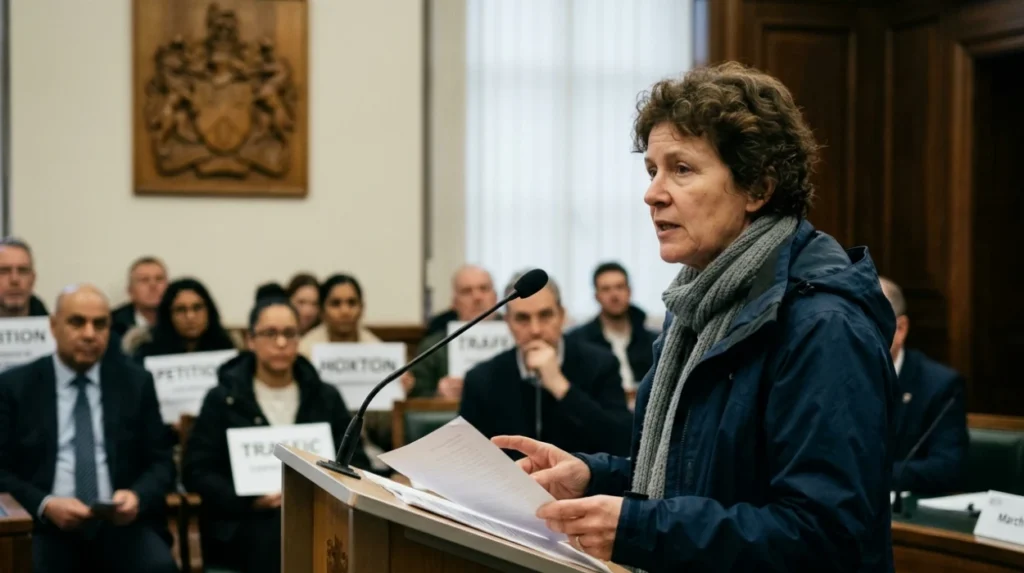
Mechanisms trigger actions: 750+ borough-wide signatures prompt full Council debate; 250+ from one ward lead to neighbourhood meetings. Examples include the December 2025 petition against Hoxton Low Traffic Neighbourhoods, submitted to the Governance team, and a 2026 petition with 836 signatures presented at Town Hall.
Implications involve policy shifts, such as abandoning unwanted schemes or accelerating green spaces. Research from Hackney’s scheme shows responses like inquiries or public meetings. Future relevance grows with Phase 2 planning in 2026, where petitions can influence designs.
Data indicates high impact: petitions with 500+ signatures hold officers accountable at Scrutiny Commissions. Hoxton’s active history, including LTN backlash, underscores its role in balancing improvements.
Who manages Hoxton Street public realm changes?
The London Borough of Hackney manages Hoxton Street public realm changes through its Streetscene team and Hoxton Community Partnership, collaborating with residents, businesses, and Root And Erect for co-design. Funding comes from the Mayor of London’s Civic Partnership Programme, with statutory approvals handled by council committees.
Hierarchy starts at Hackney Council, the statutory authority for borough streets. Hoxton falls under Hoxton East & Shoreditch or similar wards. The Connecting Hoxton project coordinates via partnerships formed in 2024 workshops.
Key players include the Corporate Director of Neighbourhoods, accountable via petitions, and external firms like Root and Erect for engagement. Examples: Hackney led 2025 consultations shaping Phase 1 trials.
Processes route changes through consultations on the Citizen Space platform, with decisions at Cabinet or committees. Implications ensure accountability, with petitions escalating to Overview and Scrutiny. Future phases to 2027 involve ongoing council oversight.
Stats from Hackney’s site show multiple active e-petitions, proving resident involvement efficacy.
What is the petition process in Hackney Council?
Hackney Council’s petition process requires at least 10 signatures from residents, workers, or students, with a clear statement of concerns and requested action, submitted to Governance Services by post, in-person, or e-petition online. Acknowledgement arrives within 10 working days; thresholds trigger debates (750 borough-wide, 250 ward), officer accountability (500 signatures), or other responses like consultations.
The scheme overview stems from UK local authority guidelines, formalised in Hackney’s Petitions Scheme. Paper petitions go to Room 137, Hackney Town Hall, E8 1EA; e-petitions via the moderngov site after registration.
Steps: Include organiser contact, signatory names/addresses; avoid vexatious content. Categories: Petitions for Debate, Hold Officer Accountable, Exempted (planning/licensing), General, E-petitions. Examples: e-petitions last up to 12 months, published after a 5-day check.
Responses include action taken, Council debate (5-min presenter speech, 15-min discussion), inquiry, or Scrutiny referral. Implications: Published outcomes on website, appeals to Scrutiny if mishandled.
Data: Minimum 10 signatures; 750 triggers full debate every 6-8 weeks.
How do I start a petition for Hoxton Street changes?
Start by drafting a clear statement of concerns (e.g., “Improve Hoxton Street public realm with more trees and seating”) and requesting action, gather at least 10 Hackney-based signatures with names/addresses, identify an organiser, and submit via e-petition on hackney.moderngov.co.uk, post to Governance Services, or present in-person after a 10-day notice.
Context: Targets Streetscene or Connecting Hoxton leads. Use platforms like Change.org for amplification, then formalise to the Council.
Details: Register for e-petition with email/password; set 12-month duration. Promote via social media, door-to-door in Hoxton wards. Examples: Hoxton LTN petition gathered 836 signatures via community feedback.
Implications: Builds momentum for consultations. Track via website listings.
How do I submit a Hoxton Street public realm petition?
Submit by posting to Governance Services, Room 137, Hackney Town Hall, E8 1EA; online via e-petition after registration on hackney.moderngov.co.uk with name, address, email; or request a presentation at the Council meeting with 10 working days’ notice to 020 8356 3321. Include organiser details and ensure 10+ valid signatures.
Submission follows receipt within 10 days of acknowledgement. E-petitions auto-submit post-closure. Examples: 2025 Hoxton LTN petition confirmed via Governance on 15 December.
Post-submission: Published online (minus personal data), emailed to signers opting in.
What happens after submitting a petition?
Council acknowledges within 10 working days, publishes response online, and acts based on size: debate at Council for 750+ signatures, Scrutiny for 500+ officer calls, or meetings/consultations for smaller ones. For Hoxton changes, it may inform Phase 2 designs or trigger public meetings.
Flow: If actionable, close; else, escalate. Examples: Debates every 6-8 weeks; officers questioned publicly.
Implications: Influences decisions, like abandoning LTNs. Appeals are possible to Scrutiny.
What are successful Hoxton Street petition examples?
Successful examples include the December 2025 petition against Hoxton Low Traffic Neighbourhoods, meeting criteria and reported to committees, and an 836-signature 2026 traffic measures petition presented at Town Hall, prompting a backlash review. Earlier 2015 cycle consultation inputs shaped designs.
Context: High-signature petitions force responses. Hoxton LTN opposition abandoned proposals.
Details: Presented with the organiser’s speeches. Stats: 836 locals voiced opposition.
Implications: Adjusted plans, like more consultations.
How can I make my petition effective?
Make petitions effective by targeting 750+ signatures for debate via Hoxton networks, using precise language on public realm specifics like “add 20 new trees on Hoxton Street,” promoting on Change.org, then formalising, and following up post-acknowledgement. Collaborate with businesses and estates for rapid growth.
Strategies: Ward focus for 250 threshold. Examples: Community leaflets in Connecting Hoxton boosted engagement.
What is the Hoxton Street public realm project?
It’s a street improvement programme in Hoxton led by the London Borough of Hackney to make the area greener, safer, and more pedestrian-friendly.