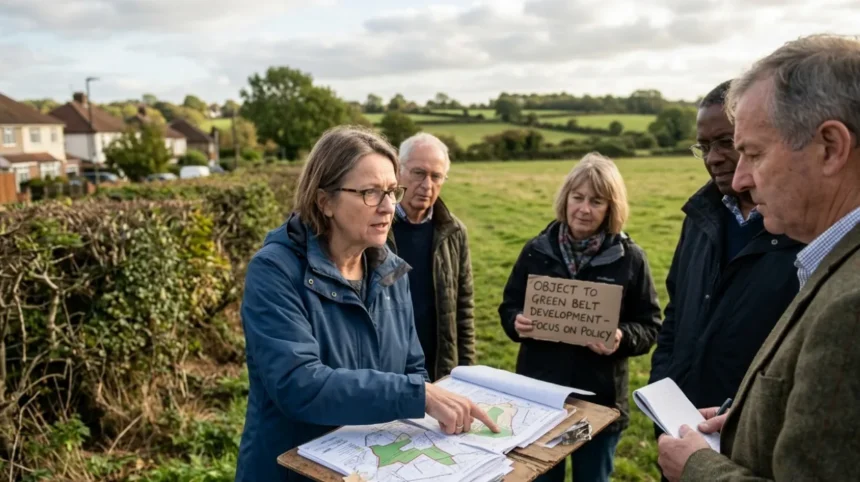
Objecting to Enfield green belt building plans requires a planning-based response, not a general complaint. The strongest objections focus on Green Belt policy, openness, very special circumstances, alternative sites, and local plan compliance. In Enfield, comments are normally submitted through the council’s planning process, and they should reference the relevant application number and planning grounds.
- What counts as a valid objection?
- Why does Green Belt protection matter in Enfield?
- How do you write a strong objection letter?
- Which planning grounds work best?
- What evidence should you include?
- Where do you send the objection in Enfield?
- What should an objection say about very special circumstances?
- How does the local plan fit in?
- What are common mistakes to avoid?
- What does a model objection look like?
- Why does timing matter?
- How does this affect North London?
What counts as a valid objection?
A valid objection is a planning representation that cites policy harm, not a personal preference. It should explain how the proposal conflicts with Green Belt rules, local plan policy, transport capacity, landscape quality, design standards, or heritage protection. Planning officers assess material planning considerations, so the objection must stay focused on those points.
Green Belt objections work best when they use the language of planning law and policy. The National Planning Policy Framework, or NPPF, says the Green Belt’s essential characteristics are openness and permanence, and it identifies five purposes of the Green Belt, including checking urban sprawl and safeguarding the countryside from encroachment. A written objection should show how the proposal harms those purposes. If the site is in or affecting the Green Belt, the key question is whether the development is inappropriate and whether very special circumstances exist.
A clear objection also identifies whether the scheme is a planning application, a local plan allocation, or a consultation on a boundary change. The route and timing differ, but the logic stays the same: use policy-based arguments, evidence, and the correct submission channel.
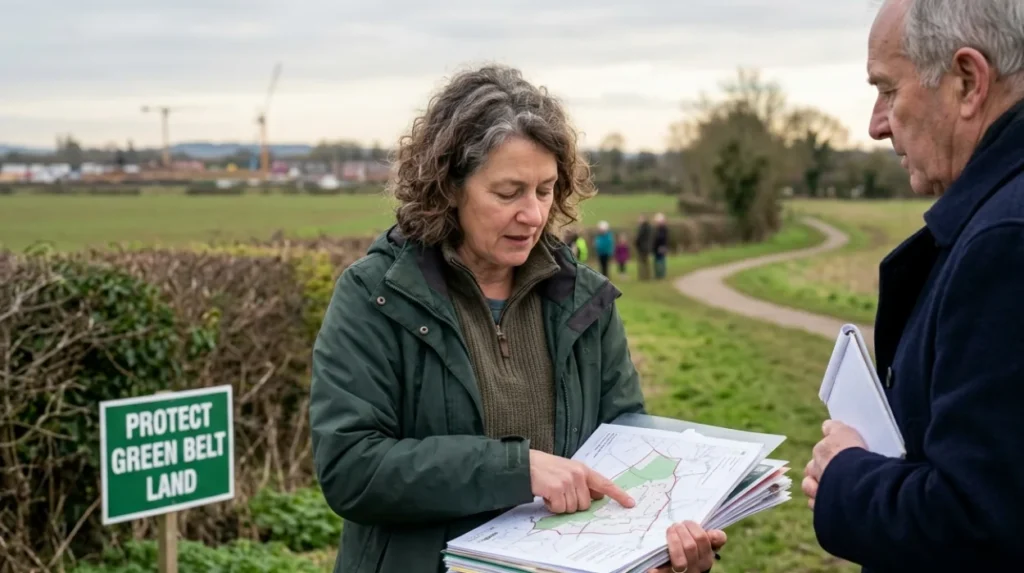
Why does Green Belt protection matter in Enfield?
Green Belt protection matters because national and London planning policy treat these areas as strategic open land that should remain open unless exceptional tests are met. In Enfield, objections that connect the proposal to Green Belt harm, local openness, and borough-wide planning pressure have the strongest planning weight.
The NPPF states that substantial weight must be given to any harm to the Green Belt, including harm to openness. It also states that inappropriate development is harmful by definition and should not be approved except in very special circumstances. That policy framework gives residents a direct basis for objection when building plans place homes, commercial space, fencing, hardstanding, or other built form on Green Belt land.
London Plan policy also supports Green Belt protection. The Mayor of London’s Green Belt policy framework says Green Belt and Metropolitan Open Land perform strategic functions, including limiting further built expansion and supporting biodiversity, recreation, and climate resilience. For North London residents, that matters because Enfield sits within a wider urban edge where incremental loss can create precedent and pressure for further release.
How do you write a strong objection letter?
A strong objection letter names the application, states the planning harm in the first paragraph, and then supports each point with policy and evidence. It should be concise, specific, and tied to material planning grounds such as Green Belt harm, design impact, access, ecology, flood risk, traffic, and cumulative precedent.
Start with the application reference, site address, and your position. Then state the main reason for objection in one sentence. For example, a robust opening says the proposal constitutes inappropriate development in the Green Belt, causes unacceptable harm to openness, and fails to demonstrate very special circumstances. That framing matches the NPPF test and keeps the focus on planning merit.
The body of the letter should follow a logical order. First, identify the Green Belt harm. Second, explain why the site’s openness changes materially. Third, challenge any claim that the development is needed or justified. Fourth, refer to local and London policy where relevant. This structure helps planning officers and committees extract the issue quickly.
Which planning grounds work best?
The strongest grounds are Green Belt inappropriateness, loss of openness, failure to prove very special circumstances, and conflict with local or London policy. Other strong grounds include traffic, access, drainage, ecology, landscape, heritage setting, and poor site planning if they are evidenced and directly connected to the proposal.
The NPPF gives a direct basis for Green Belt objections. It defines the Green Belt’s five purposes, requires exceptional justification for boundary changes, and says that, for planning applications, harm to openness must carry substantial weight. If the application includes large buildings, extensive hard surfaces, lighting columns, fencing, parking, or engineering works, those elements should be described in plain terms because they affect openness and permanence.
If the applicant claims the proposal is acceptable because of housing need or regeneration, the objection should test that claim against the policy sequence in the NPPF. The framework says decision-makers should examine brownfield land, underused land, higher-density alternatives, and discussions with neighbouring authorities before justifying Green Belt change. That point is especially useful in North London, where boroughs often have regeneration capacity inside existing urban areas.
What evidence should you include?
Evidence should include the application reference, site plans, photographs, public access maps, policy extracts, and any technical documents that show harm. The best objections use facts from the planning file, not assumptions, and they compare the proposal against actual policy wording and site conditions.
Useful evidence includes images of the site, measurements of building height or footprint, and references to existing land use. If the proposal affects landscape or views, cite visible changes from streets, footpaths, or public open space. If the site is ecologically sensitive, refer to habitat surveys, tree reports, or biodiversity statements in the application documents.
For Green Belt sites, evidence should show how the proposal changes openness in both spatial and visual terms. A small site plan change can still be significant if the land is currently open and the scheme introduces enclosure, built mass, or permanent urban character. The NPPF specifically treats openness as a core characteristic of the Green Belt, so evidence of enclosure matters.
Where do you send the objection in Enfield?
In Enfield, objections normally go to the council’s planning system or planning department, and some applications also accept email or postal submissions. The safest approach is to use the channel listed on the specific planning application page and include the exact application number in the subject line or body.
Public guidance used in Enfield shows that residents can object through the online planning register, and some cases also accept email or post. The planning portal is the standard route, and users are usually asked to create an account before submitting comments. For written submissions, the council guidance referenced in local campaign material shows the need to include the planning application number and site details so the comment is attached to the correct case.
Deadlines matter. Objections should be submitted during the consultation period, but comments often remain relevant right up to committee consideration if the application is still live. For that reason, residents should not wait until the last day if the file is complex or the portal is slow.
What should an objection say about very special circumstances?
An objection should say that very special circumstances have not been demonstrated, because the NPPF requires the harm to the Green Belt and any other harm to be clearly outweighed by other considerations. If the applicant relies on housing need, the response should test whether brownfield alternatives, density increases, and other sites were fully examined first.
The NPPF says very special circumstances do not exist unless the harm to the Green Belt, including inappropriateness and any other harm, is clearly outweighed. That is a demanding test. If the application uses the language of need, regeneration, or affordable housing, the objection should ask for evidence that the proposal satisfies the policy sequence and does not simply displace development pressure onto protected land.
The NPPF also says authorities should make as much use as possible of suitable brownfield sites and underutilised land, optimise density, and explore whether neighbouring authorities can help meet need. That point is powerful in North London because it reframes the debate from “this site is convenient” to “this site is justified after all reasonable alternatives have been examined.”
How does the local plan fit in?
The local plan matters because it translates national policy into Enfield-specific rules for land use, landscape protection, and site allocation. A planning objection gains strength when it shows conflict with the borough’s own adopted or emerging policies, especially where Green Belt protection or open-space standards apply.
London Plan policy has strategic weight in Enfield planning decisions. The Mayor’s Green Belt framework says Policy G2 protects London’s Green Belt from inappropriate development and preserves openness and permanence. The same source explains that the Green Belt and Metropolitan Open Land support biodiversity, recreation, and urban climate functions, so development that erodes those roles becomes harder to justify.
Local plan conflict matters even more if the scheme sits within an area that the council has already identified for protection. In practice, objectors should quote the exact policy reference from the relevant Enfield plan document or consultation paper, then explain the conflict in one or two sentences. That creates a direct line between the site proposal and the policy breach.
What are common mistakes to avoid?
The most common mistakes are using emotional language, repeating the same point, and raising issues that are not planning matters. A strong objection avoids personal disputes, noise about the applicant, and general dislike of development, because those points reduce the force of the planning case.
Do not write a petition-style comment if you want the objection to carry planning weight. Planning officers cannot refuse an application just because many people dislike it. They need material reasons tied to policy and evidence. Keep the focus on Green Belt harm, design massing, access pressure, landscape impact, and policy conflict.
Do not rely on one broad sentence such as “this is overdevelopment.” Explain why the proposal is overdevelopment in planning terms. For Green Belt cases, that usually means the proposal is inappropriate, too large, visually intrusive, or inconsistent with openness and permanence. Specificity matters more than volume.
What does a model objection look like?
A model objection states that the proposal is inappropriate development in the Green Belt, harms openness, fails the very special circumstances test, and conflicts with the NPPF and relevant London or Enfield policy. It then adds site-specific evidence on height, footprint, access, landscape, traffic, and ecology.
A concise model opening reads: “I object to application [number] at [site] because it proposes inappropriate development in the Green Belt, causes unacceptable harm to openness and permanence, and fails to demonstrate very special circumstances as required by the NPPF.” That sentence mirrors the legal test and gives the planning officer a clear basis for assessment.
The next paragraph should identify the local impact. For example, if the scheme replaces open land with enclosed built form, note the loss of openness, visual change, and possible precedent for nearby land. If the site affects a boundary, a footpath, or a view, name that feature directly. The more concrete the objection, the more useful it becomes to the decision-maker.
Why does timing matter?
Timing matters because planning objections work best while the application is still under consultation and before the committee report is finalised. Early submission gives the case officer time to register the concern, assess the policy conflict, and include it in the planning balance.
Late objections still matter, but early comments create more influence. They can shape the officer’s understanding of local concern, prompt clarification on evidence, and strengthen the record if the application proceeds to committee or appeal. That matters in Green Belt cases because the key issue is often whether the applicant has fully justified the proposal before decision day.
Residents should also remember that objections can be echoed to ward councillors and community groups, provided the content stays factual and planning-based. Wider public support helps demonstrate the level of concern, but the substance still needs to rest on policy and evidence.
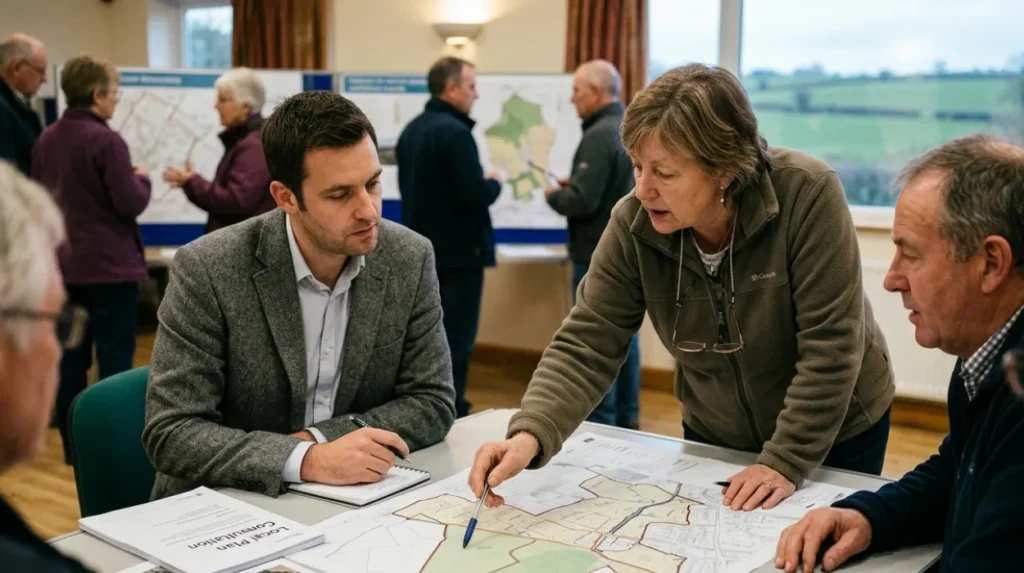
How does this affect North London?
North London faces intense planning pressure, so Green Belt objections matter as a long-term planning safeguard. In Enfield, each objection contributes to the record on openness, site selection, and the balance between housing delivery and land protection.
The strategic issue is not one site alone. The NPPF says Green Belt review requires full examination of alternatives, and the London framework stresses compact urban growth and protection of open land. In that context, an Enfield objection supports a wider argument that growth should focus first on previously developed land, underused land, and sustainable urban sites.
That is why a successful objection is both local and strategic. It describes the site, but it also shows that the proposal sits inside a broader planning system that treats Green Belt land as permanently open land with a high level of protection.
The best way to object to Enfield green belt building plans is to use the planning system’s own language: Green Belt harm, loss of openness, lack of very special circumstances, and conflict with national and London policy. A short, evidence-led objection written early in the process is the most effective format.
A strong objection is not a protest note. It is a policy document in plain English. When it names the application, cites the NPPF, points to local impact, and uses site evidence, it gives Enfield Council a clear basis to refuse or amend a harmful Green Belt scheme.
How do I object to a planning application in Enfield Green Belt?
Submit your objection through Enfield Council’s online planning portal or by email/post, clearly stating the application number, site address, and your planning-based reasons for objection.