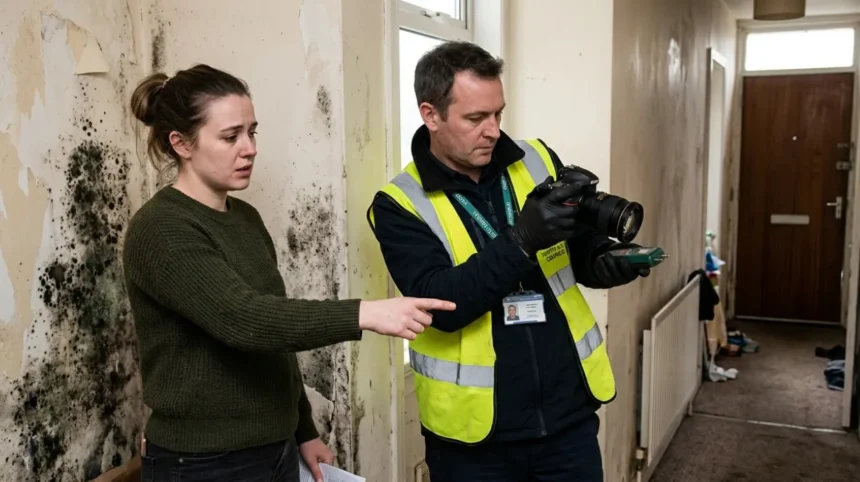
Mould growth in rental properties affects 43% of UK tenants, with higher rates in North London due to damp weather patterns. Landlords must address structural causes under UK law, while tenants follow specific steps to enforce repairs. North London councils provide dedicated reporting channels for swift intervention.
- What Causes Mould in Rental Properties?
- Structural Defects Leading to Mould
- Tenant-Related Moisture Sources
- North London Climate Factors
- What Are Landlord Responsibilities for Mould?
- Key Legislation Defining Duties
- Distinction from Tenant Duties
- Is Mould a Legal Hazard in UK Rentals?
- Category 1 vs Category 2 Hazards
- Health Impacts Backed by Data
- What Are Your Rights as a North London Tenant?
- Protections Against Retaliation
- Compensation Entitlements
- How Do You Document Mould Issues Effectively?
- Essential Records to Maintain
- Tools for Measurement
- What Steps Follow Landlord Refusal?
- Written Communication Protocol
- Escalation Timelines
- Which North London Council Handles Complaints?
- Camden Procedures
- Haringey and Islington Specifics
- When Does Environmental Health Intervene?
- Intervention Triggers
- Outcomes of Inspections
- Can You Withhold Rent for Mould Repairs?
- Legal Risks and Alternatives
- What happens in court against the landlord?
- Claim Process
- Awards and Precedents
- How Do You Prevent Future Mould Recurrence?
- Tenant Daily Actions
- Landlord Post-Repair Measures
What Causes Mould in Rental Properties?
Mould forms from excess moisture combining with temperatures below 15°C, often due to structural defects like leaking gutters (65% of cases), walls (61%), or ceilings (43%). Tenants ventilate daily; landlords fix root causes under Section 11 of the Landlord and Tenant Act 1985.
Mould is a fungus that spreads spores in humid environments exceeding 70% relative humidity. In UK rentals, penetrating damp from failed gutters penetrates external walls, while rising damp climbs through foundations. Condensation mould arises when warm, moist air meets cold surfaces.
Structural Defects Leading to Mould
Leaking roofs with slipped tiles allow water ingress into ceilings. Blocked downpipes force moisture into walls. Cracked render exposes interiors to rain.
Tenant-Related Moisture Sources
Cooking releases steam; showers generate humidity without extractor fans. Drying clothes indoors raises moisture levels by 30%.
North London Climate Factors
Frequent rain in boroughs like Camden increases external damp by 20% annually. Poorly insulated Victorian properties in Haringey amplify condensation.
Landlords investigate all reports within 14 days to distinguish causes. Failure exposes them to fines under the Housing Health and Safety Rating System (HHSRS), which rates mould as a Category 1 or 2 hazard.
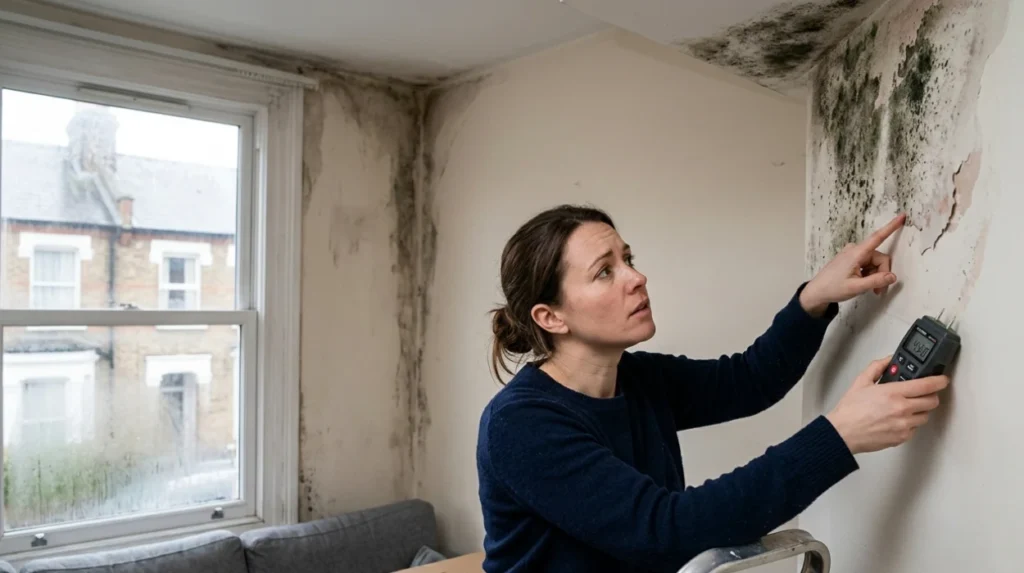
What Are Landlord Responsibilities for Mould?
Landlords repair structure, exterior, and installations causing mould under Section 11 of the Landlord and Tenant Act 1985. They ensure fitness for habitation per the Homes (Fitness for Human Habitation) Act 2018 and investigate under Awaab’s Law timelines.
Section 11 mandates repairs to roofs, gutters, drains, and heating systems. The 1985 Act implies these covenants into tenancies under seven years.
Key Legislation Defining Duties
Homes (Fitness for Human Habitation) Act 2018 requires properties to be free from serious damp at tenancy start and ongoing. Awaab’s Law, effective October 27, 2025, mandates social landlords to inspect significant mould within 10 working days and repair within 5 more.
Renters’ Rights Act 2025 bans Section 21 evictions, protecting renters.
Distinction from Tenant Duties
Tenants ventilate by opening windows and use extractors; landlords handle leaks. Unenforceable clauses shifting mould duty to tenants violate the statute.
In North London, 60% of mould cases link to structural issues per local surveys. Non-compliance risks council enforcement notices and compensation orders.
Is Mould a Legal Hazard in UK Rentals?
Mould qualifies as a Category 1 hazard under HHSRS if risking serious harm, triggering mandatory council action. Black mould from structural defects breaches habitability laws.
HHSRS assesses 29 hazards; damp and mould score high when covering over 1 square meter or affecting vulnerable residents.
Category 1 vs Category 2 Hazards
Category 1 demands immediate remediation; examples include mould causing respiratory illness in children. Category 2 allows longer fixes but still enforces repairs.
Health Impacts Backed by Data
31% of UK residents face ongoing mould, worsening asthma in 20% of cases. Awaab Ishak died in 2020 from prolonged exposure, prompting the 2025 laws.
North London reports rose 367% in some areas, like nearby Northamptonshire analogues. Courts award compensation for health damages.
What Are Your Rights as a North London Tenant?
Tenants gain protection from retaliation under the Deregulation Act 2015 and Renters’ Rights Act 2025. Properties must meet HHSRS standards; breaches allow court claims for repairs and damages.
Rights stem from implied covenants ensuring habitable homes. Tenants report without eviction fear post-Section 21 ban.
Protections Against Retaliation
Landlords cannot evict for valid complaints; invalid notices fail in court.
Compensation Entitlements
Claims cover medical bills, ruined belongings, and distress. Small Claims Court handles breaches.
In Haringey and Camden, policies affirm “freedom from damp” per the amended 1985 Act. Vulnerable tenants (under 16, over 65, asthmatic) prioritise.
How Do You Document Mould Issues Effectively?
Photograph affected areas daily, note dates, symptoms, and communications. Keep records spanning 21-28 days before escalation; include metre measurements for extent.
Documentation proves disrepair and landlord inaction. Photos show progression; logs track health effects.
Essential Records to Maintain
Emails and letters to landlords with read receipts. The doctor notes linking symptoms to mould. Moisture readings over 70% RH.
Tools for Measurement
Use hygrometers for humidity; thermal cameras detect cold bridges. North London tenants submit to councils like Islington’s damp team.
Records support HHSRS inspections, where councils issue notices if hazards are confirmed.
What Steps Follow Landlord Refusal?
Send a written notice demanding action within 14 days, then contact local Environmental Health. Escalate to court if unresolved; councils enforce via improvement notices.
Initial refusal triggers formal process. Written demands reference Section 11.
Written Communication Protocol
Use recorded delivery, citing laws and hazards. Demand inspection within 7 days.
Escalation Timelines
Post-21 days, report to the council. Awaab’s Law sets 24-hour emergency responses.
Implications include forced repairs or landlord fines up to £30,000.
Which North London Council Handles Complaints?
Contact your borough’s Environmental Health: Camden (online form, 24-hour high-priority visits), Haringey (damp policy team), Barnet (housing committee), Islington (action team), Hackney (Ombudsman-monitored).
Each of seven North London boroughs (Camden, Barnet, Enfield, Haringey, Islington, Hackney, Waltham Forest) runs dedicated services.
Camden Procedures
Report online with photos; visits in 24 hours for priority (asthma, children). 90% chat responses in 2 minutes.
Haringey and Islington Specifics
Haringey policy mandates equality in responses; Islington made 3,300 visits via an action plan.
Councils use HHSRS; non-acting landlords face works in default.
When Does Environmental Health Intervene?
Intervene after 21-28 days of inaction, cosmetic fixes, health impacts, or >1m² mould. They inspect, rate hazards, and order repairs.
Environmental Health officers assess under HHSRS. Priority for vulnerable households.
Intervention Triggers
Extensive mould, tenant illnesses, or repeated complaints. Examples: leaking pipes, failed ventilation.
Outcomes of Inspections
Improvement notices compel fixes; appeals are rare. Hackney faced the Ombudsman for delays.
North London saw Barnet updates on council stock progress.
Can You Withhold Rent for Mould Repairs?
Withhold only after formal notice, council confirmation of hazard, and pro-rated amounts into escrow. Courts rarely approve without prior steps.
Withholding breaches tenancy unless habitability fails severely. Deposit into the dedicated account advised.
Legal Risks and Alternatives
Risk eviction claims; prefer council action. Successful cases recover withheld sums post-repair.
Use for leverage after Environmental Health validation.
What happens in court against the landlord?
County Court orders repairs, compensation (up to £25,000), and costs under breach of covenant. Small Claims track for claims under £10,000.
Claims cite the 1985 Act and the 2018 Act. Evidence from documentation wins 80% of disrepair cases.
Claim Process
File via Money Claim Online; serve particulars. Mediation first.
Awards and Precedents
Damages for health (e.g., asthma treatment), relocation. Anthony Gold Solicitors note Legal Aid availability.
Future relevance: 2025 Acts strengthen tenant wins.

How Do You Prevent Future Mould Recurrence?
Maintain ventilation (extractors on 20 minutes post-use), heat to 18-20°C, and wipe condensation daily. Landlords install positive input ventilation post-repair.
Prevention divides duties: tenants daily habits, landlords systems.
Tenant Daily Actions
Open windows for 10 minutes daily; avoid overcrowding. Three types: mechanical extractors, dehumidifiers, and trickle vents.
Landlord Post-Repair Measures
Upgrade insulation, fix leaks permanently. Sensors trial in Islington detects early.
Data shows 17% national drop via prevention. North London complies with council policies.
Can I sue my landlord for black mould in the UK?
Yes. If the landlord ignored mould caused by structural problems, leaks, damp, or poor ventilation systems, tenants can bring a housing-disrepair claim for repairs and compensation.