Key Points
- Gordon Brown described child poverty as “the scar that demeans Britain” during his time as Chancellor, leading to the creation of the Sure Start scheme.
- Sure Start provided integrated early years and family support services, lifting life chances for millions of children.
- A report by the Institute for Fiscal Studies (IFS) found that early access to Sure Start improved test scores, reduced hospitalisations, school absences, exclusions, and special educational needs support, with the greatest benefits in poorer areas covering programme costs.
- After 2010, the Conservative government cut the budget by two-thirds, resulting in 1,416 Sure Start centres closing in England.
- Islington maintained its centres, now called Bright Start, offering services from conception to age five, including maternity advice, breastfeeding support, baby massage, new parents’ groups, immunisations, and stay-and-play.
- Last month, a visit by the minister for Early Education, Olivia Bailey MP, to an Islington Bright Start centre highlighted ongoing support.
- Islington provides free school meals for every primary and nursery child and spends over £1,000,000 daily on youth and family services.
- Recent government changes include expanded free breakfast clubs, lifting the two-child benefit limit, and 30 hours of funded childcare for working parents.
- Islington faces child poverty affecting 47.5% of children after housing costs, ranking 4th highest in England, with 20,000 children impacted.
- Bright Start operates across North, Central, and South areas with services like health clinics, parenting programmes, speech therapy, and family support.
Islington (North London News) May 8, 2026 – Sure Start continues to play a vital role in supporting Islington’s children despite national cuts, as evidenced by a recent ministerial visit and long-term studies affirming its benefits.
- Key Points
- What Is Sure Start and How Did It Begin?
- What Are the Long-Term Effects of Sure Start?
- How Did National Cuts Impact Sure Start Centres?
- Why Did Islington Preserve Its Sure Start Services?
- What Services Does Bright Start Offer in Islington?
- How Is Government Policy Supporting Families Now?
- What Challenges Does Child Poverty Pose in Islington?
- How Has Islington Stood Firm Against Cuts?
- Background of the Development
- Prediction
What Is Sure Start and How Did It Begin?
As reported in the provided article, it was Gordon Brown who stated that
“child poverty is the scar that demeans Britain”
and under his Chancellorship, the pioneering Sure Start scheme came into being. The programme offered a free one-stop shop of integrated early years and family support services, dramatically lifting the life chances of millions of children.
Launched in 1998 by the Labour government and expanded nationwide, Sure Start focused on disadvantaged areas initially before universal coverage.
At its peak in 2009, it reached 3,632 centres across England, costing £2.7 billion annually in today’s prices.
What Are the Long-Term Effects of Sure Start?
Over 25 years later, the long-term effects were examined in a report by the Institute for Fiscal Studies (IFS), funded by the Nuffield Foundation. The findings were clear:
“early access to Sure Start improved test scores; reduced hospitalisations in childhood and adolescence; reduced school absences and exclusions; and reduced the share of children receiving less intensive support for special educational needs”.
These benefits proved greatest in poorer areas, with improvements in health, attendance, and test scores significant enough to cover the programme’s costs.
The IFS analysis estimated £2.4 billion in long-run public benefits for a peak cohort, including £0.6 billion in savings on health, SEND, and social care, plus £1.9 billion from higher tax revenues. At current spending levels of under £600 million yearly, such integrated services appear cost-effective when benefits are factored in.
How Did National Cuts Impact Sure Start Centres?
After 2010, the Conservative government reduced the Sure Start budget by two-thirds, leading to 1,416 closures in England.
Official data showed a 14% drop from 3,632 to 3,123 centres between 2009 and 2017, but independent analysis indicated up to 1,000 losses—twice the reported figure.
This decline, amid suspended Ofsted inspections and budget pressures, thinned services, particularly affecting disadvantaged families. Nationally, a 30% drop in centres occurred post-2010, leaving thousands without vital support.
Why Did Islington Preserve Its Sure Start Services?
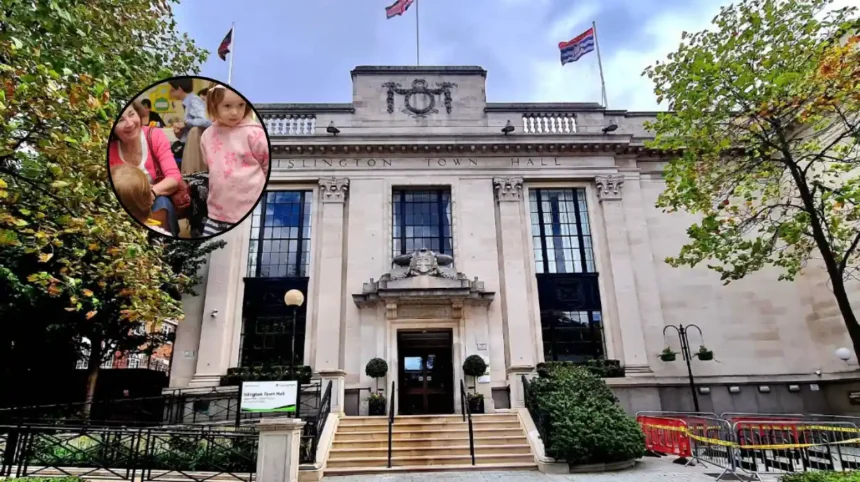
In Islington, the centres remained operational, rebranded as Bright Start—the successor to Sure Start. Last month, alongside Minister for Early Education Olivia Bailey MP, a visit to one of Islington’s Bright Start centres showcased continued commitment.
From conception to age five, every child and parent accesses vital support. Services include maternity and antenatal advice, neonatal support, breastfeeding guidance, baby massage, new parents’ groups, immunisations, and stay-and-play sessions.
What Services Does Bright Start Offer in Islington?
Bright Start operates across North, Central, and South areas, delivered via children’s centres, nurseries, health centres, libraries, and community venues. Families register online to access drop-ins, with no area restrictions for most activities.
The range extends to child health clinics, health visiting, parenting programmes, free Healthy Start vitamins, speech and language therapy, benefits advice, job help, pop-up vaccinations, and SEND support. Timetables cover indoor, outdoor, and online sessions for under-fives.
Islington also funds free school meals for all primary and nursery pupils and allocates over £1,000,000 daily to youth and family services.
How Is Government Policy Supporting Families Now?
With the current government aligning with council efforts, free breakfast clubs have expanded, the two-child benefit limit lifted—affecting 5,940 Islington children—and working parents are eligible for 30 hours of funded childcare.
These measures address rising poverty, with national data showing 4.5 million children affected, many in working households. In Islington, expanded free meals and early years investment aim to close developmental gaps.
What Challenges Does Child Poverty Pose in Islington?
Outsiders perceive Islington as affluent amid leafy lanes and Georgian squares, yet pockets of severe child poverty persist. It ranks 4th highest nationally after housing costs, impacting 47.5% of children—around 20,000—up sharply recently.
Anna Feuchtwang, Chair of the End Child Poverty Coalition, noted:
“[g]rowing up in poverty means growing up trapped. It restricts a child’s chances of doing well at school, of living a healthy and happy life, and of finding well paid work as adults.”
Big cities like Islington see poverty as the norm in parts, with 500,000 more children affected since the decade’s start.
Schools report hunger, overcrowding, instability, and gaps, underscoring Bright Start’s role.
How Has Islington Stood Firm Against Cuts?
For years, Islington resisted while other councils closed centres, through conscious political choices prioritising young children and families. This investment in today’s children yields tomorrow’s rewards, via Bright Start’s comprehensive support.
Local efforts complement national shifts, providing a strong foundation despite challenges.
Background of the Development
Sure Start emerged in 1998 under Labour, expanding to peak provision by 2009 with integrated services targeting early intervention.
Post-2010 austerity slashed funding, closing over 1,400 centres nationally, but Islington rebranded and sustained Bright Start, now incorporating Start for Life and Family Hubs up to age 19 (or 25 for SEND). IFS research in 2025 reaffirmed benefits, amid ongoing poverty affecting nearly half of Islington’s children.
Prediction
This development can affect Islington’s children and families by sustaining access to early intervention services that improve educational outcomes, health, and long-term earnings potential, particularly in high-poverty areas. Combined with policy changes like benefit expansions and free meals, it may reduce immediate hardships such as hunger and instability while fostering school readiness. Sustained local investment could mitigate the effects of national decline, supporting over 20,000 children at risk.