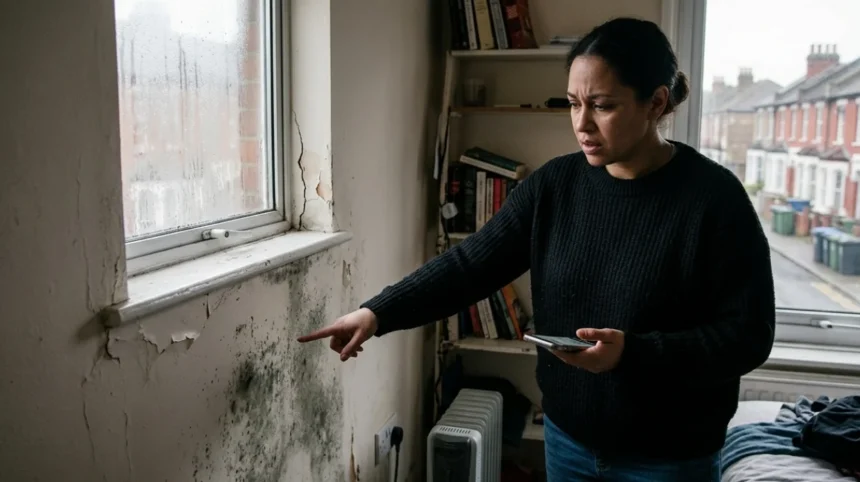
Unsafe private rented housing in London is reported first to the landlord or letting agent in writing, then to the relevant borough council’s private sector housing or environmental health team if the problem is serious or unresolved. In North London, councils such as Haringey say tenants and other residents can report serious disrepair, including damp and mould, faulty electrics, pests, leaks, and no heating in winter.
- What counts as unsafe private rented housing?
- Which hazards should you report?
- Who should you contact first?
- How do you report it to the council?
- What happens after you report?
- How should you document the problem?
- What if the landlord does nothing?
- What rules apply to landlords?
- What if you live in an HMO?
- Why does this matter in London?
- What should North London tenants do now?
What counts as unsafe private rented housing?
Unsafe private rented housing includes serious disrepair or hazards that put a tenant’s health or safety at risk. In London, this covers damp and mould, faulty electrics, pest infestations, leaks, drainage problems, no heating in winter, smoke alarm failures, and fire risks in shared homes.
The legal framework matters because local authorities do not just respond to poor condition as a general complaint. They assess housing hazards under the Housing Health and Safety Rating System, known as HHSRS, which was introduced by the Housing Act 2004 and applies in England and Wales. HHSRS uses a risk-based method and assesses 29 hazards, including excess cold, damp and mould, electrical dangers, and fire-related risks.
Unsafe housing also includes homes that are not fit for human habitation. The Homes (Fitness for Human Habitation) Act 2018 gives many tenants the right to take legal action when a rented home is dangerous or unhealthy, and this applies alongside council enforcement powers. In practical terms, this means a tenant can report a problem to the council and also, in some cases, pursue the landlord through the courts.
Which hazards should you report?
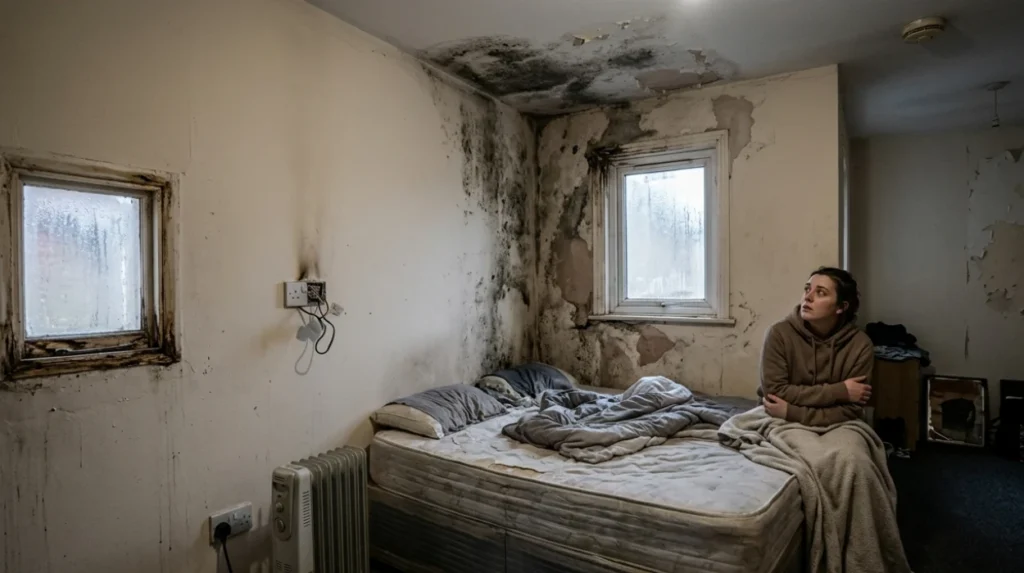
Report any hazard that creates serious disrepair, unsafe living conditions, or a likely risk to health. The most common examples in London are damp and mould, no heating, leaks, pests, electrical faults, unsafe stairs, broken windows, and missing or faulty smoke and carbon monoxide alarms.
North London councils list examples such as no heating in winter, damp and mould, faulty electrics, pest-related issues like cockroaches, mice and bedbugs, drainage problems, and leaks between properties. London Fire Brigade and GOV.UK also set clear fire-safety duties for landlords, including smoke alarms on every floor and carbon monoxide alarms in relevant rooms. These are not optional extras; they are core safety duties in private rented housing.
A common London-specific issue is damp and mould. London reporting in 2023 found 438 homes identified with category one hazards linked to damp and mould in the year to March 2022, and damp and mould made up 28 per cent of category one hazards recorded by London councils. That does not replace a council inspection, but it shows how frequently this issue appears in the capital.
Who should you contact first?
Contact your landlord or letting agent in writing first, then contact the council if the problem is serious, ignored, or not fixed within a reasonable time. Haringey and Westminster both advise private tenants to keep written records and give the landlord time to respond before escalation.
This first step matters because it creates evidence. Councils such as Haringey say tenants should notify the landlord in writing and allow a reasonable time to respond, and they ask for the tenant’s address, landlord’s details, a description of the issue, and supporting documents such as photos or a tenancy agreement. Westminster gives the same basic advice and specifically says tenants should keep a written record of communication and upload photos where possible.
The written complaint should be clear and factual. It should identify the defect, state when it started, explain how it affects use of the home, and ask for repair within a defined period. For serious risks, councils can act faster, but they still expect evidence that the landlord has been informed unless there is an immediate danger.
How do you report it to the council?
Use your borough council’s private housing or environmental health reporting route. In North London, Haringey accepts reports of serious private housing disrepair and unlicensed properties through its private sector housing process, and it asks for landlord details and evidence such as photographs.
London housing enforcement is borough-based, so the correct council depends on the property’s location. A tenant in Haringey reports to Haringey Council, a tenant in Westminster reports to Westminster Council, and the same pattern applies across the capital. The council then decides whether the issue requires inspection, formal enforcement, licensing checks, or another response.
The most useful report includes the exact address, contact details, landlord or agent details, details of the defect, dates, photos, and copies of messages already sent to the landlord. Some councils also ask whether anyone in the household is vulnerable, because health risks can change the urgency of enforcement. If the property is an HMO, or house in multiple occupation, the council can also check whether it needs a licence.
What happens after you report?
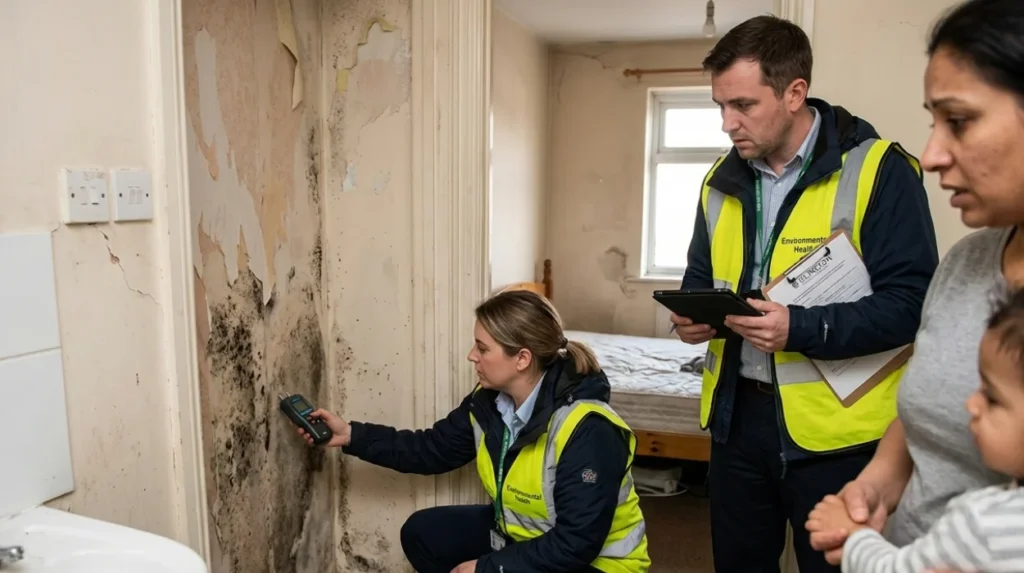
After a report, the council can inspect the property, assess hazards under HHSRS, and take enforcement action where needed. Serious hazards are usually treated more urgently, and councils can require repairs, serve notices, or act against unlicensed properties.
HHSRS is the key inspection system. It looks at how likely a hazard is to cause harm and how severe that harm could be, rather than only whether something looks worn or old. If the council identifies a category 1 hazard, that is the most serious type and triggers a duty to take action. Category 2 hazards are less severe but still give councils power to intervene.
Enforcement can include requiring repairs, checking safety compliance, and acting on licensing breaches. London councils also have powers to tackle unlicensed private rented properties, which matters because some London homes need a property licence and the landlord is responsible for getting it. Where a home is dangerous and not fit for human habitation, tenants also have civil rights under the Homes Act, including court action for repairs and compensation in appropriate cases.
How should you document the problem?
Keep a dated record of every defect, message, visit, repair attempt, and safety concern. Strong evidence includes photographs, videos, emails, text messages, tenancy papers, repair logs, and notes of any health impact linked to the housing condition.
Evidence drives enforcement. Councils ask for documents because housing enforcement depends on showing the defect exists, how long it has existed, and whether the landlord knew about it. Photographs of damp patches, mould growth, leaking ceilings, damaged sockets, broken windows, or pest activity help an officer decide whether an inspection is needed.
A simple record works well. Note the date, the problem, who you told, what they said, and whether anyone attended. Keep all communication in writing. This matters because courts and councils both rely on paper trails when deciding whether a landlord failed to act.
What if the landlord does nothing?
If the landlord ignores the complaint, gives no proper response, or leaves the hazard unresolved, the council route becomes the next step. For serious disrepair, tenants can also rely on the Homes (Fitness for Human Habitation) Act 2018 and, in some cases, apply to court for repairs or compensation.
A council complaint is not the only remedy. The Homes Act gives tenants a legal route where a rented home is unsafe or unhealthy, and the court can order repairs and compensation. That means an unsafe property can face both public enforcement by the council and private legal action by the tenant.
Retaliatory eviction is a known risk after complaints, so tenants should keep everything in writing and preserve copies of messages and reports. Guidance on retaliatory eviction says a landlord is not permitted to evict a tenant because they reported disrepair to the council, and a section 21 notice can be challenged in some circumstances. That protection matters in London, where tenants often report hazards while continuing to live in the property.
What rules apply to landlords?
Landlords in private rented housing must keep the property safe, install and maintain required alarms, and meet housing and fire-safety duties. The main duties include smoke alarms on every floor, carbon monoxide alarms where required, and compliance with electrical and fire-safety rules.
GOV.UK says landlords must follow safety regulations, provide a smoke alarm on each storey, provide a carbon monoxide alarm in rooms with solid-fuel appliances, keep escape routes accessible, and ensure supplied furniture and furnishings are fire safe. London Fire Brigade adds that alarms must be working at the start of each new tenancy, and it recommends extra detectors in kitchens and main circulation spaces. In larger shared homes, fire-safety duties are stronger still.
Electrical safety also forms part of the landlord’s duty. Private rented homes must have a valid electrical installation condition report, commonly called an EICR, and these inspections are required at least every five years or at the start of a new tenancy, with reports provided to tenants and the council on request. This is one reason electrical faults should be reported quickly rather than left unresolved.
What if you live in an HMO?
If you live in a house in multiple occupation, the reporting route stays the same, but licensing and fire-safety checks become more important. HMOs are higher-risk shared homes, and councils can inspect them for hazards and licensing failures.
HMOs include shared houses and flats where multiple households live separately but share facilities such as a kitchen or bathroom. Under London licensing rules, some private rented homes need a property licence, and the landlord is responsible for securing it. That matters because licensing helps councils monitor standards and target enforcement in higher-risk housing.
Fire safety is especially important in shared homes. GOV.UK and London Fire Brigade both say landlords must protect escape routes, alarms, and other fire precautions, while large HMOs have extra duties. If an HMO lacks alarms, has blocked exits, or shows signs of overcrowding or dangerous disrepair, the council should be told quickly.
Why does this matter in London?
London has a large private rented sector, so unsafe housing affects a significant number of tenants. In practice, reporting is the main route that turns an individual repair problem into council enforcement and wider tenant protection.
The scale of the issue in London is visible in the number of hazard reports linked to damp and mould and in the spread of property licensing across boroughs. Because housing enforcement is local, borough councils remain the front line for private rented safety complaints. For tenants in North London, that means the correct council process is the practical first point of action.
There is also a public-health dimension. Hazards such as excess cold, damp and mould, electrical faults, pests, and fire risks affect health, sleep, respiratory conditions, and daily living. The HHSRS framework exists because housing condition is treated as a health and safety issue, not only a property-management issue.
What should North London tenants do now?
North London tenants should report the defect in writing to the landlord, gather evidence, and then use the borough council’s private housing reporting route if the problem is serious or unresolved. Keep the report factual, include photos, and state the risk clearly.
The most effective sequence is simple. First, report the issue to the landlord or agent and keep the message. Second, save photographs, dates, and any replies. Third, contact the local council’s private sector housing team if the issue remains unresolved, especially for no heating, mould, leaks, pests, electrical faults, or fire-safety failures.
The legal context gives tenants leverage. HHSRS lets councils assess 29 hazards and act on serious risks, the Homes Act gives tenants a court route for unfit housing, and fire-safety rules set minimum standards that landlords must meet. For North London renters, reporting unsafe housing is not just a complaint process; it is the main route to enforce basic home safety.
What counts as unsafe private rented housing in London?
Unsafe private rented housing includes serious hazards that affect health or safety. Common examples are damp and mould, faulty electrics, gas leaks, broken heating, pest infestations, leaks, unsafe stairs, fire risks, blocked drains, broken windows, and missing smoke alarms.