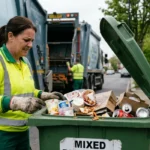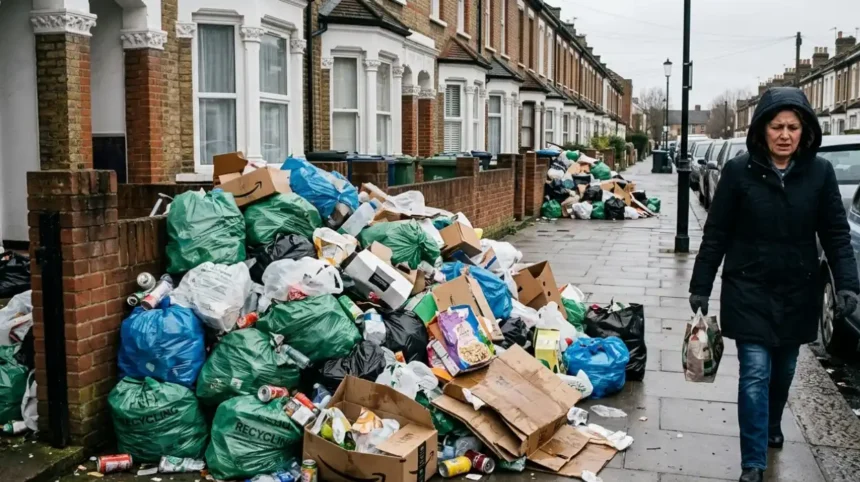
When recycling is not collected in North London and surrounding boroughs, recyclable material accumulates at kerbsides, becomes contaminated, and is diverted to landfill, incineration or illegal export, creating environmental, public‑health, and economic harms.
- Why does missed recycling occur?
- How is “missed collection” defined and documented?
- What happens to recyclable material left uncollected at the kerb?
- How does contamination affect whether recycling is accepted?
- What environmental impacts follow uncollected or misrouted recycling?
- What public‑health and neighbourhood effects occur from accumulated recycling?
- What economic costs do missed recycling collections create for councils and residents?
- How do missed recycling collections affect recycling markets and exports?
- What short‑term responses do councils use after missed collections?
- How frequent are missed recycling collections in urban areas like North London?
- Which legal and policy frameworks govern recycling collection and remedies?
- What practical steps should North London residents take when recycling is not collected?
- What innovations reduce the impact of collection failures?
- What long‑term systemic problems cause persistent non‑collection?
- What evidence links missed recycling to measurable environmental harm?
- How should local policymakers prioritise improvements to reduce misses?
- Real‑world North London examples and implications
- Action checklist for North London residents
Why does missed recycling occur?
Missed recycling collections occur because of staff shortages, vehicle failures, route changes, contamination, contract failures and seasonal demand spikes.
Local authorities schedule collections by route, crew and vehicle; when crews are short‑staffed or vehicles break down, entire rounds are missed in dense urban areas such as Haringey, Islington and Enfield. Contractual failures occur when private contractors lack capacity or when budgets constrain overtime and fleet maintenance. Contamination at the kerb—wrong materials mixed into recycling—also leads crews to reject bins. Higher student populations, multi‑occupancy housing and visitor peaks increase volume per collection point and raise the chance of misses in North London boroughs.
How is “missed collection” defined and documented?
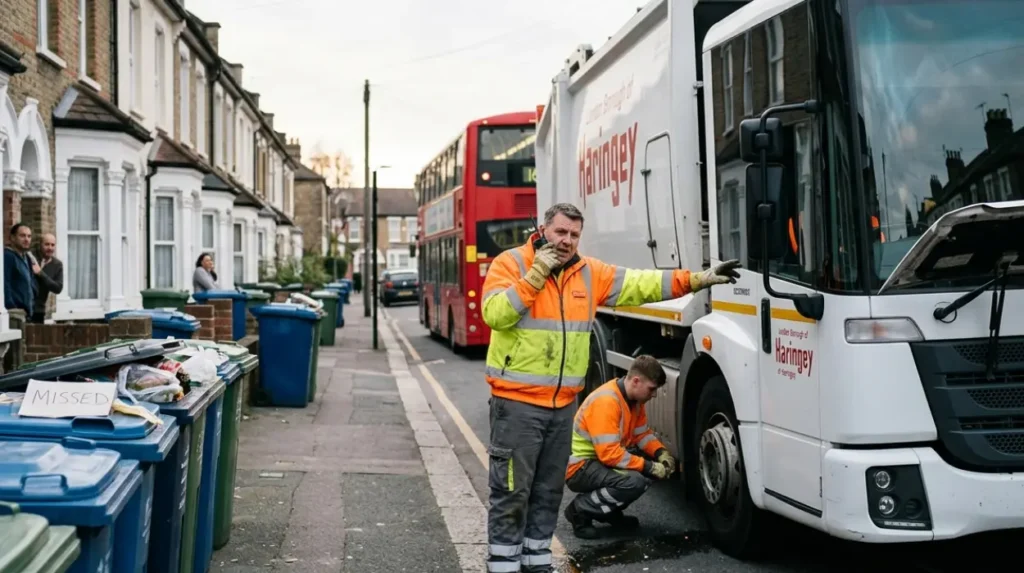
A missed collection is a scheduled service that is not completed on the prescribed day and reported through a council channel within the local reporting window.
Councils publish collection calendars with designated days; a missed collection is recorded when residents report non‑collection via online form, phone or app, typically within two working days. Local authorities log missed collections using unique identifiers for route, street and property, enabling follow‑up, performance reporting and escalation to contractors or fleet managers.
What happens to recyclable material left uncollected at the kerb?
Left uncollected recycling is left to weather, be scavenged, be contaminated by food or rain, or be placed into residual waste by residents—reducing the material’s recovery value.
If material remains until the next scheduled collection, exposure to moisture and street contamination degrades paper and cardboard quality and soils plastic and metal, increasing the risk that a materials recovery facility (MRF) will reject the whole batch. Many residents, pressed by odour or vermin, transfer recyclables to general waste streams or take them to civic amenity sites; both outcomes reduce local recycling rates and increase disposal costs.
How does contamination affect whether recycling is accepted?
Contamination—incorrect items mixed with correct recyclables—causes bins or whole loads to be rejected at the kerb or at MRFs and redirected to residual waste or incineration.
Examples include food waste in paper, film plastic in mixed glass, and batteries in general recycling. Rejection criteria vary by borough and contractor; some crews will red‑tag contaminated sacks and leave them, while others return for a later collection. At MRFs, contamination levels above set thresholds force operators to divert the entire bale to incineration or landfill, eliminating the environmental benefit of initial collection.
What environmental impacts follow uncollected or misrouted recycling?
Uncollected or misrouted recycling increases greenhouse‑gas emissions, adds to landfill and incineration volumes, and raises local pollution and microplastic dispersal risks.
When paper and food fail to be recycled and enter landfill, anaerobic decomposition produces methane, a greenhouse gas approximately 28–36 times stronger than CO2 over 100 years in global warming potential. Plastics sent to incinerators release CO2 and other pollutants; plastics that escape proper management degrade into microplastics that contaminate soil and waterways. These outcomes directly counter borough and national targets for emissions reduction and resource recovery.
What public‑health and neighbourhood effects occur from accumulated recycling?
Accumulated recycling causes odour, attracts vermin (rats and flies), increases pest‑borne disease risk, and creates street‑safety issues from litter and sharp waste.
Overflowing sacks and piles next to bins provide food and shelter for rodents; wet contamination speeds decomposition and odour. In high‑density North London streets, blocked pavements and piled bags increase slip risks and restrict access for people with mobility aids. Repeated misses reduce perceived street cleanliness and produce higher volumes of complaint to local councillors and environmental health teams.
What economic costs do missed recycling collections create for councils and residents?
Missed collections raise council operating costs for return visits and clearances, reduce revenue from sale of clean recyclables, and shift disposal costs onto residents through paid collections or higher council taxes.
Councils expend staff time and vehicle hours to re‑collect, run one‑off clearances and remediate littered streets; contaminated loads incur additional sorting costs or are sent to residual disposal with higher gate fees. Residents optionally using paid collections or transporting material to household waste recycling centres bear direct costs. Repeated failures can also trigger contractual penalties or claims against private contractors, adding to municipal expenditure.
How do missed recycling collections affect recycling markets and exports?
Missed and contaminated recycling reduces supply of high‑quality secondary materials, increases processing costs and encourages exports of low‑quality bales that importing countries reject or poorly manage.
Since importing countries tightened acceptance standards for mixed plastic and contaminated bales in recent years, UK material with elevated contamination is less valuable domestically and abroad. Exports of low‑quality material risk being burned, landfilled, or dumped overseas, shifting environmental burdens internationally and undermining circular‑economy claims.
What short‑term responses do councils use after missed collections?
Councils typically log reports, schedule a remedial collection within two to five working days, place notices on rejected bins and advise use of local household waste recycling centres (HWRCs).
Standard practice includes an online reporting portal and a target response time—often two working days for urgent collections such as food waste, and up to five working days for general recycling. Crews may leave a red tag explaining rejection reasons (contamination, late presentation, access issues). Councils publish guidance telling residents when to leave material at the kerb for the next collection.
How frequent are missed recycling collections in urban areas like North London?
Missed‑collection complaint levels vary by borough and year; urban boroughs with dense housing report higher per‑street incidence linked to staffing, fleet capacity and seasonal demand.
Large metropolitan councils track missed collections per 1,000 households as a performance metric; clusters of repeated missed rounds are more common in dense wards with multi‑occupancy dwellings and narrow streets, where access delays and higher volumes strain resources. Transparent reporting of these metrics aids resident oversight and escalation.
Explore More Help & Resources
How to report repeated missed rubbish collections?
Why does council keep missing bin collections?
Which legal and policy frameworks govern recycling collection and remedies?
Local authorities operate under national waste law and statutory duties to provide household waste collections; producers face extended producer responsibility for packaging design and funding.
Waste management in England, Wales and Scotland is governed by statutory regulations requiring proper handling, recording and reporting of waste. Extended Producer Responsibility (EPR) schemes transfer some cost responsibility for packaging to producers to fund collection, sorting and domestic recycling infrastructure. Councils failing to meet statutory obligations can face scrutiny from ombudsmen and must maintain public records of collection schedules and contact procedures.
What practical steps should North London residents take when recycling is not collected?
Report missed collections promptly via your borough’s portal, keep materials dry and rodent‑proof, avoid contamination, use local HWRCs where safe, and document repeated failures for escalation.
Specific actions: report through your borough site (for example, Haringey, Islington or Enfield online forms) within the stated reporting window; keep food waste sealed in a cool place; flatten cardboard to save space; never place batteries, electricals or hazardous waste in kerbside recycling—use designated drop‑off schemes. If misses recur, take dated photos and log report IDs to present to ward councillors or the local ombudsman.
What innovations reduce the impact of collection failures?
Technologies and service design—route optimisation, bin sensors, communal lockable containers, increased HWRC access and domestic reprocessing—reduce missed collections and their impact.
Real‑time sensor data on bin fill levels enables dynamic routing and efficient redeployment of crews. Lockable street containers reduce scavenging and vermin contact. Investment in domestic reprocessing capacity reduces reliance on exports and improves resilience when kerbside systems are disrupted. Producer funding under EPR can finance infrastructure and public education campaigns to reduce contamination rates.
What long‑term systemic problems cause persistent non‑collection?
Persistent failures stem from chronic underfunding, contractor consolidation, recruitment and retention difficulties, ageing fleets and rising volumes of single‑use packaging.
Council budget constraints limit overtime and fleet renewal; private contractor consolidation lowers local competition and resilience; recruitment challenges in refuse services affect capacity. Rising packaging volumes per household increase pressure on scheduled rounds. These systemic issues require policy change—funding reforms, EPR and domestic reprocessing investment—to create durable service reliability.
What evidence links missed recycling to measurable environmental harm?
Studies and NGO investigations show that a significant share of collected plastics and mixed bales are incinerated, landfilled or exported and poorly processed, increasing lifecycle emissions and pollution.
Analyses of waste flows demonstrate lower effective recycling rates for many plastics than headline statistics imply when contamination and export outcomes are accounted for. Local case reports of prolonged uncollected waste corroborate direct neighbourhood impacts such as increased vermin and public complaints. Reliable municipal tracking of tonnages by stream and contamination rate is needed to quantify harm precisely.
How should local policymakers prioritise improvements to reduce misses?
Policy priorities include stable funding for collection services, investment in fleet and staff, EPR‑funded domestic reprocessing, public education to lower contamination, and transparent performance metrics.
Funding fixes reduce short‑term vulnerabilities; EPR ensures producers pay for packaging end‑of‑life management and supports domestic reprocessing capacity. Education campaigns targeted at high‑density housing reduce contamination and rejection rates. Public reporting of missed‑collection metrics increases accountability and helps target interventions to the worst‑affected streets and wards.
Explore More Help & Resources
How to get a free replacement council bin
How to order a larger rubbish bin in Hackney
Real‑world North London examples and implications
North London boroughs experience higher kerbside pressure due to density and multi‑occupancy housing, leading to concentrated missed collections and higher complaint volumes in specific wards.
Local civic reports show clusters of missed rounds on narrow streets and estates, where bin access and volume management are harder. These local failures exacerbate street cleanliness issues, increase local authority costs and reduce resident confidence in recycling systems. Targeted borough interventions—additional interim collections, resident education and temporary communal containers—reduce short‑term harms.
Action checklist for North London residents
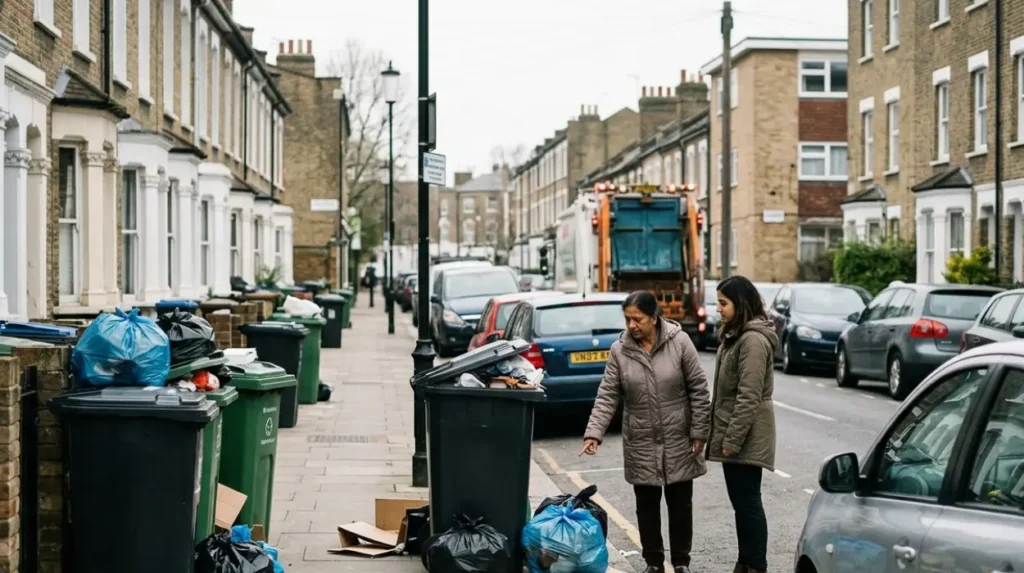
Report missed collections, secure wet waste, separate hazardous items for specialist schemes, use HWRCs when safe, and escalate repeated failures with evidence.
Record report IDs and take dated photos of uncollected kerbside materials; contact your ward councillor if misses persist; keep recyclables dry and flattened; participate in local reuse networks to reduce volume entering kerbside collections.
What happens when recycling is not collected?
When recycling is not collected, recyclable materials build up outside homes, become contaminated by weather or food waste, attract pests, and are often thrown into general waste streams that lead to landfill or incineration.